Showing posts with label Series Review. Show all posts

7/5/24

A Not-So Review: A Good Girl's Guide to Murder

7/05/2024

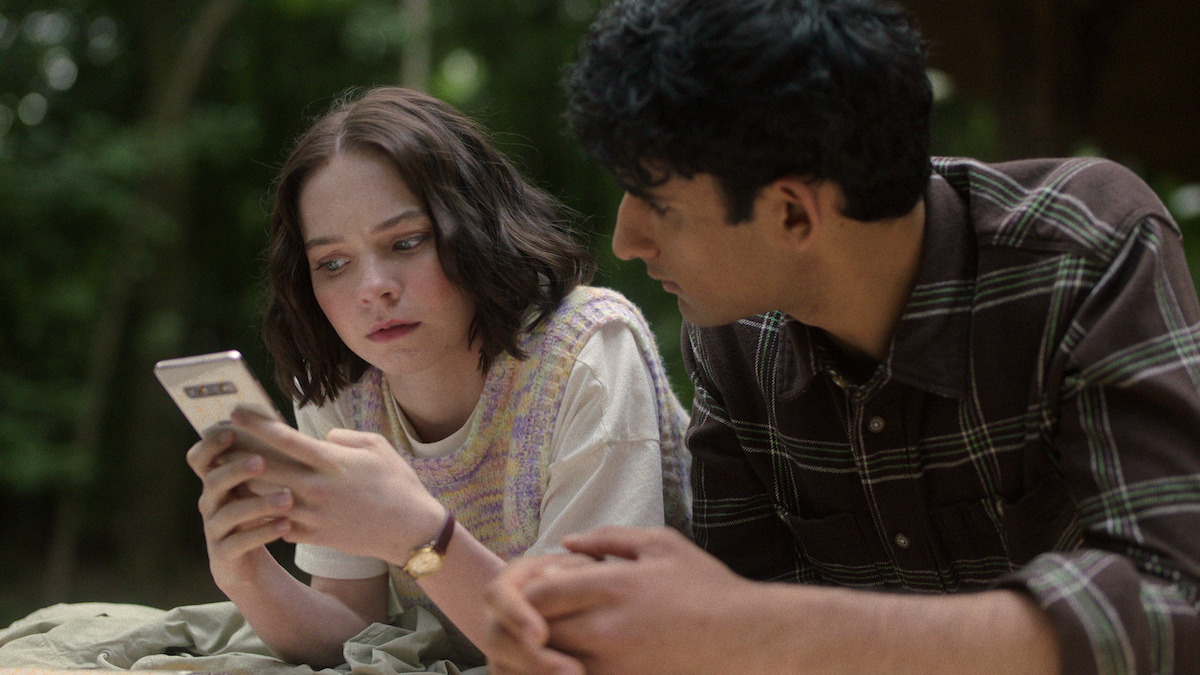
I speak on behalf of those who impulsively jumped into “The Good Girl’s Guide to Murder” without reading the novel first. I AM GUILTY AS CHARGED and sheepishly admit that I let the trailer I stumbled upon in my reels take advantage of my boredom, convincing me to watch it because the leads looked cute together.

Now, I’ve just finished the six-episode series.

It wasn’t what I was expecting. I felt dissatisfied, and I doubt that any potential sequel could compensate for the anticipation it falsely built up due to the hype from the trailers I got from the reelers. Still, I recognize that it was my own impulsiveness that led me to start watching without hesitation. I managed to complete the UK series in less than a week. Although it’s a recent release and not yet available on other platforms, my resourcefulness allowed me to find high-quality copies of the series and download them for offline viewing. After work, I continued watching, not particularly invested, but curious about how the plot would unfold based on what I’d seen on Instagram.

The first episode was acceptable for someone like me who had no background or emotional attachment to the book. The lead character, Pip, whose face seemed familiar, turned out to be the blonde girl from the hit Netflix series “Wednesday.” However, as the series progressed, I found myself becoming less attached to her and the overall storyline. Her acting, along with that of her ‘partner’ Ravi, was mediocre. 


I wonder how my reaction might have differed if I had read the book. Despite occasional facial twitches, Pip remained emotionally distant. Even her British accent, which struck me as off from the beginning, failed to resonate with someone like me who isn’t well-versed in that accent. 


Then there’s Ravi. If the story didn’t require him to act and he could simply grace the whole series with his presence, he’d be just fine. However, that’s not the case. He appears awkward and unconvinced, and the chemistry I thought he had with Pip is actually absent. I couldn’t feel anything from his acting.

Right now, you might think this is just me ranting, and perhaps you’re right, but I can’t hide my disappointment. I’m not saying this is a bad series, but it certainly isn’t a good one either.

Let me highlight a few points:


First, how could Pip find it so easy to engage in conversations with the suspects? After all, it has been five years since the murder. Why did it take her only a few months to connect the dots that the police couldn’t piece together initially?

Moreover, why did the suspects readily confide in Pip, someone they barely knew personally? It’s surprising that they shared information without being overly cautious or suspicious during the interviews.

Then, Pip’s ability to gather evidence seems almost effortless. Whether it was sneaking into houses or attending the Calamity Party, she faced no significant obstacles. Her courage to challenge the police is commendable, but it’s hard to believe that solving a case from five years ago could be this straightforward.

Regarding Ravi, the younger brother of the suspected killer, Sal, I initially thought he would be a revelation when he first appeared on the show and interacted with Pip. His height and looks were eye-catching, reminiscent of characters from the YA books we read. However, despite having less screentime than other characters, he consistently fell short. His facial expressions lacked depth, and his overall demeanor felt lackluster. This wouldn’t have been an issue if he had less interaction with Pip, but it was puzzling to see him appear so laid-back, especially when Pip was already at the peak of her investigation.


“We’re a team,” they convinced each other, but for me, they were too far away from that. The series only showed Pip doing all the work, while the younger brother of the suspect was just there, being a muffin genius. I couldn’t even feel the drive, anger, and frustration from him after losing his brother. He only showed up when it wasn’t even needed. During the calamity party, he should have joined Pip there. I was furious that he made no contributions to Pip, especially considering he wasn’t fired up after losing Barney.

Barney, the sweet angel! How could someone kill a dog? I was truly fuming mad that anyone had the capacity to end the life of such an innocent dog.


In the series, the most surprising revelation came when we discovered, alongside the characters, that their English teacher (who happens to be Pip’s best friend’s father) was the one who murdered Sal. This unexpected twist kept me engaged. Despite having only six episodes, I wasn’t sure I’d make it through if the story unfolded predictably.

Another highlight for me was the
choice of songs. They fit perfectly and deserve a spot on my playlist. Each opening of a new episode is set against a bleak atmosphere, and whoever curated the music deserves kudos!


There, I felt a twinge of sadness knowing that I wouldn’t be able to write an extensive post about this series. The show has immense potential, fueled by the high expectations set by the acclaimed book. Nevertheless, it was a refreshing experience to watch something outside my usual preference, unlike the typical Asian dramas I usually gravitate toward.

3/20/24

A Not-So Review: Lighter & Princess

3/20/2024

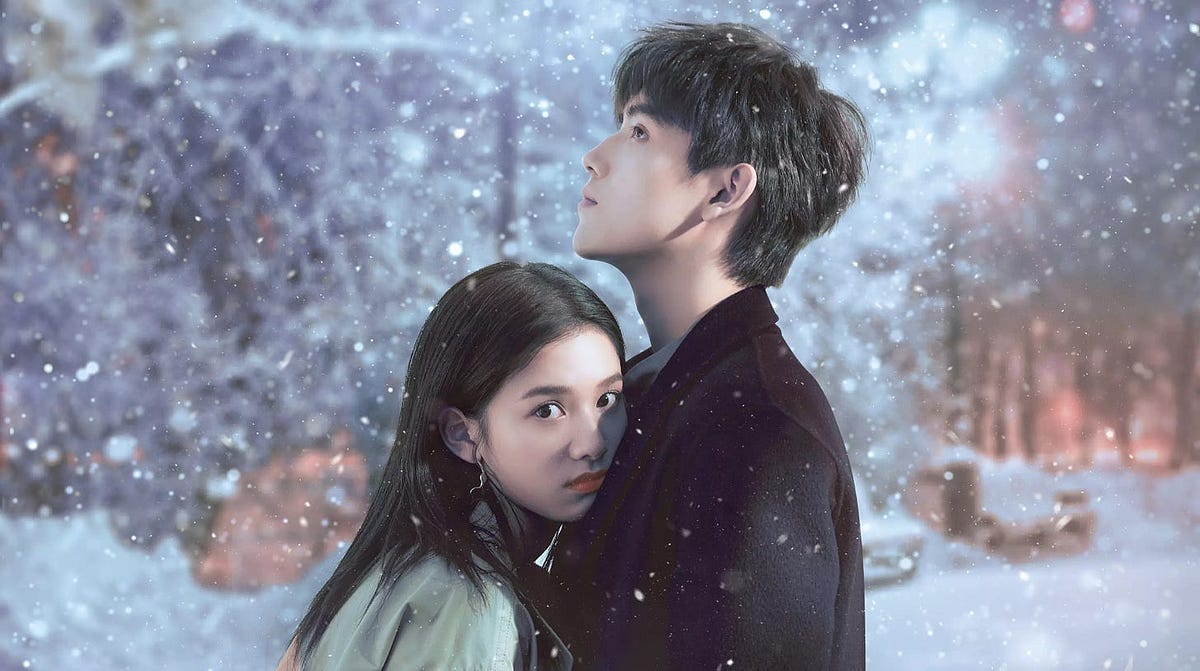
Having recently completed a 30-episode drama series, I thought it would be some time before I could immerse myself in yet another Chinese drama. Spanning 36 episodes, more than two regular K-drama series combined, Lighter & Princess literally had me skeptical. There was no way for me to finish a series that feels like a lifetime to watch UNLESS it would be something truly spectacular, even greater than my then current C-drama favorite, Amidst a Snowstorm of Love. 

First Impression

Debating whether to invest 65 pesos for a month’s worthy subscription on Youku, I clung to the uncertainty. 

Would this series captivate me as much as AASOL, or would it fall short of my expectations? 

Initially, I jumped into this drama with only a vague notion of its premise. The title itself led me to believe it was a fantasy romance drama. The opening credits reinforced this impression, playfully hinting at magic and fairytales. From the title, I envisioned “Lighter” was a prince of lightning, while “Princess” was a damsel in distress. However, it wasn’t until I began watching that the true meaning behind the title dawned on me. “Lighter” was actually the golden zippo-style lighter that Li Xun habitually played with throughout the episodes, which later revealed its sentimental value—a reminiscent connection to his late father. Meanwhile, “Princess,” whom Zhu Yun thought was a teasy nickname given by Li Xun, turned out to be his endearment for her. I appreciated that it took time for me to piece it together, and it was only when Li Xun addressed Zhu Yun as princess for the first time that everything clicked.

Driven by curiosity and the desire to learn from one another, a motley crew of freshmen got together in a campus study group. With only a few scenes set in their dormitory and classroom, their campus life mostly revolved within the confines of their base, which took up more than half of the series. This left me wondering whether the show realistically captured the life of a university student in China. In their sanctum, they toiled away—heads bent over keyboards, fingers tapping out codes as their screen filled their eyes' reflection. Despite my own programming ignorance, I still found myself drawn to the snippets of technical jargon they casually tossed around. It was as though I stood on the periphery, an outsider eavesdropping on their world.

When the Flint Wheel Meets the Flint, the Sparks Fly 

Li Xun, in particular, stood out—a brilliant mind straddling the line between genius leadership and imperious aristocracy. In his case, there was no doubt: he fell to the latter category, ruling with an unapologetic will that either garnered devoted followers, outright critics, or loyal friends. Despite his conflicting personality, others still regarded him with admiration. Perhaps topping the national college entrance exams could work wonders, or maybe it was his good looks? 

He was nonchalant, arrogant, and sharp-tongued. Were it not for his good looks, I bet everyone would not be impressed by his talent. Yet, if we were to shift our attention to the actor who played this character, we couldn't deny how Arthur Chen convincingly breathed life into Li Xun. His lips, taut and unyielding, framed furrowed brows that spoke of intensity. His very stance exuded casual confidence and an unbothered temperament. It was a captivating blend—a magnet for any girl, willing to embrace the weighty responsibility of believing, “I can change him.” 


And then there was Zhu Yun—a delightful blend of naivety, stubborn charm, and a fire that mirrored of Li Xun’s. It seemed almost ironic that Li Xun affectionately and playfully dubbed her “Princess.” Yet, despite her inherent privileges, I didn't feel any blunt display of lavishness from her, particularly in the way she interacted with him. It wasn't also used lamely to enforce tension between them; instead, it lingered as a subtle undercurrent, adding depth to their dynamic. When it comes to her acting, I occasionally sensed that Jing Yi struggled during dramatic scenes. She effortlessly showcased her dorky side alongside Arthur Chen, but when it came to sharing intense moments with him, I found it hard to connect emotionally. Despite this, I can hardly envision any other Chinese actress portraying Zhu Yun as effectively as she did.

From a Spark to a Flame

The enemies-to-lovers trope is a familiar one, often revisited across a myriad of dramas. It's a narrative route that has been so frequently explored that audiences grow accustomed, perhaps even weary, of its predictable beats. However, "Lighter & Princess" manages to reinvent the clichés with its unique charms. While it embraces a storyline that echoes many before it—replete with recycled plot points and foreseeable developments—it introduces a fresh and compelling perspective. 


The chemistry between the main characters is palpable, sparking flames that seem to leap off the screen. Their exchanges, from playful banter to stolen glances and intense gazes, send a thrill through the viewers, giving butterflies in our stomach. Their evolving bond transcends mere romance; it's a metamorphosis. From bantering enemies, they slowly morphs into each other's ally, and eventually, blossoms into something infinitely more profound and beautiful.

Like the familiar revenge-themed dramas, we had the character re-emerging with a singular focus: revenge. After three years of imprisonment, Li Xun embraced the fleeting comfort of a fresh start, which was, in essence, a vengeful resurgence. Zhu Yun, who might seem pathetic, embodies, in my view, the enduring power of loyalty. Even the world seem always ready to turn its back on him, her loyalty to him never once wavered. She proved to him that a princess like her is destined for heaven, as betrayer condemns to hell. Li Xun was indeed lucky to have Zhu Yun; she was more than her lover—she was an important ally and his sole confidante. Without her, I doubt Li Xun could have successfully regained L&P. She not only support him but also steered him away from being consumed by his own fury and vengeance. Indeed, Li Xun had Zhu Yun all along to pull him up...but in that defining moment in Episode 17, this was not so, as Li Xun had made a choice not to be pulled up by Zhu Yun. 


After learning the truth that Fang Zhi Jing was the culprit for the tragic car accident that claimed his sister's life, Li Xun faced a harrowing decision. Driven by a thirst for revenge, he risked it all, including his stakes in L&P and his future with Zhu Yun. This pivotal moment signaled the close of an era where the plot took an intense turn. The aftermath was grim: Li Xun found himself behind bars for three years, Fang Zhi Jing was left partially blinded, Gao Jian Hong took over L&P, and Zhu Yun, in pursuit of a fresh start, departed the country, leaving her shared history and the life she might have had with Li Xun.

The events surrounding Li Xun and Zhu Yun left a profound impact on me. It's unfortunate that the narrative did not delve into his time in the penitentiary shadows. I had hoped for a glimpse into his prison life, to witness the complexity of his emotions—his intense wrath, yearning, fear, and possible remorse. Instead, we were presented with a portrayal of him steadfast in his anger and quest for vengeance. In contrast, Zhu Yun's transformation was stark; she became a shadow of her former self. Her usual bubbly persona was replaced by a hollow emptiness after Li Xun's imprisonment. She completely lost herself, appearing lifeless. Given that Li Xun is human, it was disheartening to see him depicted as unyieldingly strong beyond that critical juncture. Throughout the series, there were only a few scarce instances that revealed his vulnerability, let alone capturing his lowest point. It was as if he deflected emotional blows with practiced ease. His facade remained adamant, even when the world crumbled around him.

Keep The Fire Burning!


By around episode 25, the narrative transitioned from the past to the present, picking up where the initial snippet left off in Episode 1. The anticipation was palpable as their interactions intensified—each glance, every word exchanged—leaving me both impatient and exhilarated. The push and pull between them was masterfully executed, keeping me on the edge of my seat, yearning for the next encounter.

And oh, the tropes again! First, the classic enemies-to-lovers trope which ignited their sparks but then lost by the end of the first chapter. Suddenly, they were strangers again. Yet fate, ever mischievous, intervened once more, pulling them back to being bantering enemies, and finally, a triumphant return to enemies to lovers. Come on, who wouldn't want that?


We saw a parallel narrative in the second chapter of the show. Their bond flourished within the familiar confines of their base, but this time, it orchestrated a reunion in the unassuming corner of a company building called My Heart Flying Network. The intensity surged as they grappled with their desire to stay apart, yet their yearning threatened to break through. Together, with their newfound squad, they replicated the same dedication they once poured into their previous venture, L&P. Despite the initial hurdles and setbacks, they stood their ground, managing to rattle Gao Jian Hong. 

Expectedly, Gao Jian Hong slowly became Li Xun's biggest archenemy. However, it didn't happen in a snap; it resulted from a series of events that pushed him to betray Li Xun. Ranked sixth in the national college exam, Gao Jian Hong was a self-assured student who was open to learn different perspectives from others. From the outset, he expressed his desire to learn from Li Xun. Unfortunately, Li Xun was uncooperative and occasionally made him feel inferior instead of working together with him. Disappointingly, every time he wanted to prove himself to Li Xun, he completely dismissed his effort, which led him lost confidence in himself. That is why, I understand that partially it was Li Xun’s fault for igniting Gao Jian Hong’s envy, which wasn’t present initially. 


With Li Xun’s favor, he assumed control of L&P, seizing this opportunity to avenge himself against him. Initially, L&P aimed to reduce the cancer death rate by creating a system with improved access to medical services. However, it later rebranded as a gaming development company under the leadership of Gao Jian Hong. During his last visit to Li Xun, fueled by anger, he revealed that he was the one who told his sister's whereabouts to Fang Zhi Jing, ultimately leading to her demise. This revelation intensified Li Xun’s desire to confront him beyond the prison walls. Although we didn’t catch glimpses of Li Xun’s life behind bars, we witnessed how L&P had evolved into a prominent game development company. This transformation showcased Gao Jian Hong’s potential, yet I couldn’t help but wonder why the show portrayed him as weak when pitted against Li Xun.

While I recognized that he genuinely feared Li Xun, I believe his programming skills were not adequately showcased. The latter, who had been away from programming for three years, managed to completely disrupt his composure with a single game release. I wish they had portrayed Gao Jian Hong as a stronger adversary for Li Xun, making his revenge more challenging. Unfortunately, instead of intense confrontations between the two, the show opted for an anticlimactic approach. In Episode 36, we learned that he was suffering from a malignant brain tumor. To me, the show did him dirty. Instead of allowing him to face Li Xun head-on, he was diagnosed with a disease that completely defeated the purpose of his revenge. Imagine waiting three long years to get even with Gao Jian Hong, only to be halted midway by the unexpected revelation of a debilitating illness. It felt like the show had sabotaged Gao Jian Hong, when they should have allowed Li Xun to do the job.

Despite these shortcomings, I appreciated that among them, Fang Zhi Jing remained true to his disagreeable nature. He recognized that Li Xun's intentions were to undermine their egos, leading them to make poor decisions that would ultimately contribute to their downfall. It's regrettable that there weren't more clashes between him, Gao Jian Hong, and Li Xun. 


Xu Lina emerged as a character who, I initially believed, a mere pursuer of Li Xun. Despite her marriage to Gao Jian Hong, it was commendable that the narrative did not force her into a romantic attachment with him, nor did it excuse his wrongdoings. She remained steadfast in her willingness to sacrifice everything for Li Xun, a price Gao Jian Hong anticipated upon his return. Xu Lina’s decision to stay with Gao Jian Hong after discovering his illness was something I had expected, but also admired. Her choice to stay with Gao Jian Hong was surely not driven by love but by gratitude and appreciation. After all, Gao Jian Hong had never stopped loving her.

The last few episodes of Lighter & Princess lived up to my expectations. Li Xun and Zhu Yun, having reclaimed L&P, faced their greatest yet familiar hurdle: winning over Zhu Yun’s parents. It’s clear that her parents favored Tian Xiu Zhu, and realistically, he was the preferable match over Li Xun. Yet, Zhu Yun’s stance had always been clear—the ‘ideal’ choice isn’t necessarily the right one, particularly if it feels undeserved. I appreciated the show avoided turning Tian Xiu Zhu into an unwarranted villain, which would have been overkill given the existing conflicts with Gao Jian Hong and Fang Zhi Jing. And, of course, how could I miss out Zhu Yun's parents?


Li Xun was undeniably a flawed character. Yet, it baffled me why he was never given the chance to redeem himself, particularly by Zhu Yun's mother. From her standpoint as a teacher, I understood where she was coming from as cheating was unequivocally wrong. Yet, it remained unclear why she harbored resentment towards him after all this time. He was merely a child who made a mistake, acknowledged his wrongdoing, and sought her forgiveness. Rather than extending forgiveness, she remained resolute, leaving him with the impression that there was no way for him to change for the better. 

They were absolutely unreasonable. It was exhausting for me to watch them sob and completely distort Zhu Yun’s words, making her feel guilty for loving Li Xun. I perceived them as controlling (actually, they really were), even taking over significant decisions in Zhu Yun’s life. In the final episode, we saw Li Xun and Zhu Yun took another chance to persuade her parents. As expected, and to my appreciation, her mother remained firm. Fortunately, this time, Li Xun had learned his lesson and had matured enough to reassure Zhu Yun that it was okay, as they still had a lifetime to convince her parents.


Things turned out quite satisfying by the end of the series. After discovering that a scene where Li Xun proposed to Zhu Yun was deleted, I wasn’t really disappointed. In fact, I thought it was a good decision. It made more sense to me that they opted for a civil wedding instead. This choice supported the scene where Zhu Yun impulsively asked Li Xun to have a baby, which aligned with their decision to start a family.

Overall, it was an enjoyable experience. For someone seeking an idol drama that isn’t too serious, ‘Lighter and Princess’ was an excellent option. As I mentioned, I had recently watched ‘Amidst A Snowstorm of Love,’ which was a fantastic show, so I was pleased that the Lighter & Princess' was just as impressive. 

4/4/21

The Hymn of Death: A Not-So Review

4/04/2021

Whenever I get the feeling of watching something again, there's always a tinge of uncertainty that comes along the same moment. Like last month, I felt like I had been a bum for wandering up aimlessly on Netflix for almost some time. I was literally doing nothing but scrolling here and there on the platform and always ended up lost in the long run of searching. I was not exactly planning to consume another Korean drama series since I already did it with One Spring Night which I never intended but just so happened that it was followed not long after then by Once in a Summer. I actually considered the thought of exploring some other Asian films especially a Taiwanese film, however, I could not find any among the bunch that could match my mood well at that time of drought. 

Basically, I was like on a trial-and-error phase for days. This could also mean that for days I was sleeping my worries away for hardly settling on something to watch. I was not sure if I was just extra picky at that time and was delusional for expecting that the film I wanted to watch will unfold a spectacular scene the very moment it starts. Thus, I decided to just maybe stretch my patience out and give the film that I would watch more time to roll by without the constant pauses of hesitation. After scrolling with the hopes of stumbling upon something, I came across this Korean period drama which I had seen already before but had never actually been interested to see. However, at that time, I clicked it without much conscious thought. The preview automatically played but I decided to further watch some of its clips on YouTube just to know something a little more of this drama. So, after some little exposure from it, I finally decided to watch The Hymn of Death

The moment the series started, there's no really such an exaggerated feeling of discovery, but just a slight nod of acknowledgement. As of writing, I could still recall flashes of image on its pilot episode. Within few seconds already rolling by, I could say I was open still on the possibility that I might back out if ever it will not stir even a slightest interest in me. And surprisingly enough, it actually did.

The film has a bleak image. It opened in a moving ship swaying across the calmness of the ocean. There was a patrol guard on duty, checking each pole of the vessel through the reach of his flashlight. On the top of that scene, the opening credits vaguely flashing by whenever the camera passed by a wall while still following the guard who was then being pulled by the distinct humming lullabies from a phonograph. I should not forget to note how I initially hooked by the camera movement specially when it zoomed out from the back of the patrol guard. From that scene, I was slowly and already getting the groove of the drama just like how the ship was sailing stilly in the course of night without probably anticipating what would unfold thereafter. The patrol guard stopped by an open room. The vinyl playing was the only thing there with life, the rest seemed undisturbed. After turning to another direction, the guard spotted a note beside the suitcase.


There, I already felt a heightened sense of foreboding. The note was not a plain apology but a foreshadowing of what has already happened by the time it dawned on him what was the note telling him. With enlarged eyes, he stormed out the room and went straight to that part of ship wherein he was stopped by the still-like image of two pairs of shoes both aligned to the direction of the comely ocean. 


Tracing the phonograph, the note, and the shoes, I thought about the possibility that they both wanted it. 
The phonograph was playing invitingly, like it was left there playing on its own to draw anyone to the direction of the open room where it was at. Without it, probably, the guard would not locate the note left beside the suitcase. It was placed in a perfect spot to glance upon, as if it was there to be discovered because it had to. Also, it was not even wrinkled, but on the paper, it had there an inky stamp of someone's fingerprint. The way it was written was so casual and composed. It did not evoke even a sense of remorse nor regret, but just a casual apology for leaving such kind of inconvenience to a stranger. And when the patrol guard spotted the pairs of shoes, it was unnaturally aligned. One could have thought that no one attempted to jump off the vessel, however, it was an ocean, and the chance of getting out of their alive was improbable. In addition, no one would definitely jumped into there, unless, they wanted to end their life. Despite his fright, the patrol guard collected his grip and still managed to blow his whistle which then echoed throughout the silence of the night. Perhaps, on their sleep, no one thought that in the midst of it, there were two lovers who were wakeful. And only the pretentiously calmed ocean witnessed their freedom.

After I finished the few episodes of The Hymn of Death, I was left unfinished. I was bombarded a lot with my own wonderings, that's why, for days I had been pondering about their story and the many things that could have happened if only this and that did not happen. What added up more is the fact that I was not aware that the episode I finished watching was already its finale. And although I know everything on its last minute until its ending made sense, I felt like I was still gasping for another queue of episodes, and I was not ready yet to finish their story because the drama had already put me at the peak of anticipation, only to find out that I was still hanging even it was already ended.  

I also found out that The Hymn of Death was inspired by true-to-life events although I was not sure if it has been accurately depicted in the drama. Since it was hard to trace the life of both Kim u-Jin and Yun Sim-Deok due to the limited resources, I will just then set my focus on the drama itself.

There were a lot of striking scenes throughout the course of my watching experience, however, what caught hold of me, was the very few mentions of name of this Japanese novelist. The first time I heard of him, which I failed then to recall immediately (so, I had to re-watch that scene), was when Yun Sim-Deok stepped in the room carefully. As she walked further, there revealed the sightly view of a man who's front onto the sunlit window. He was immersed, and his conviction in every read word, was calm. As soon as he finished reciting the poem, he was caught by the unwelcome voice of a stranger who then mentioned the man behind the poem he was reading: Takeo ArishimaI did not take note of his name. I thought he would just passed by. Not until when I was on the middle of the second episode, that's before the eventual exchange of their unwanted goodbyes, when Kim U-Jin and Yun Sim-Deok were stopped, in the bustling road, by the toss of newspapers in the air. Takeo Arishima was said, committed suicide with his lover who, later I found out, was a married woman. When I learned about Takeo Arishima's life, I could not dismiss the idea that both him and Kim U-Jin were kind of similar in a way especially of their circumstances. 

How coincidental their lives were? 

I was also particularly intrigued by their similarities. Takeo Arishima was, like Kim U-Jin, a son of a wealthy family. However, due to their circumstances, they were grounded by their filial duties and were restricted then to pursue the life they wanted. Both of them sought refuge in the cavern of literariness-- Arishima, with his poems and novels; U-Jin, with his playwrights. In the world where they lived strictly, both of them respectively found their peace through their lovers. In the drama, Yun Sim-Deok became his assurance, the lullaby who calmed his mental cacophonies, the woman he loved but should never loved because...he was already married. Takeo Arishima met Akiko Hatano when he was already widowed. However, the case was, Hatano was the one who's married. Despite the reality, Arishima continued to be her illicit paramour just like Sim-Deok to u-Jin. Because of the piled-up misery, pain and heartaches, they got overwhelmed by the surge of adversities. Both of them were held in their throats and their hands were tied and their voice were silenced, and they could not breathe anymore. By the last episode, U-Jin and Sim-Deok finally met and sailed together to Joseon. This was their whereabouts before the patrol guard heard the phonograph on the first episode. It was connected. 

I was thinking so hard about their composure. They were heavy hearted for sure but they looked strangely relaxed and carefree. Although, I had already had my assumptions with me throughout the series because of what happened in the pilot episode, I was still made to believe that probably they did not do it. They might just took off their shoes and walked around the ship late at night in barefoot. 

But who I was kidding?

When they swayed their bodies along with the gloomy whisper of the wind, their eyes were in between melancholy and bliss. But more than anything, as they finally kissed for the first time, I felt they wanted it, they really did. They wanted their happiness, and the only choice left for them by the world...was to calm their souls. The splash of the water slightly changed the tempo of the nightly lullabies, but despite of it, it was certain enough, that it was their melody hitting the calmness of the ocean and one silent night, there were two lovers who finally found their peace.  


What if Takeo Arishima did not commit suicide with his lover? 

The more I think of it, it seems that Kim U-Jin was a great admirer of Takeo Arishima. And of all the Japanese novelist at their time, why it seems U-Jin had this intersection, although not on a personal level with the novelist, but they really had almost identical happenings especially on their respective later years. Arishima was born ahead of U-Jin, they had almost 19 years gap, but their lives together were still extended over to one another. Arishima might not know or heard about this young playwriter but U-Jin had seemed to have a particular regard to the novelist. And after learning the death of Arishima with his lover, it had almost made me beleive that U-Jin was somewhat religiously following the track of Arishima even in the aspect of death. After being widowed for 7 years, Arishima met Hatano, a married woman and an editor. Like in the story of U-Jim and Sim-Deok, their forbidden love was discovered by Hatano's husband himself. This unfortunately led them to commit suicide by hanging themselves together. It reminded me then on the death of U-Jin and Sim-Deok who, together also, killed themselves by jumping off from the sailing vessel. It was also said that due to isolated location, people struggled to find the bodies of Arishima and Hatano, if it weren't for the notes they left behind probably they wouldn't be discovered. This made me linked to the note which, in the series, was left and placed easily near the phonograph. 

Was it a coincidence?

Or was it U-Jin's obsession to Arishima that made him do the same and almost the exact thing?

I could not help but think about what was going on in the mind of U-Jin. Throughout the series, aside from that emotional outburst he had with his father and few crying scenes, the dominant face I could see through his personality was reservation. Definitely, there was sadness and agony evident in his eyes, the longing and resistance towards Sim-Deok, and anger towards the harsh society, but more than anything else, he was calm and reserved. I could not even hear his thoughts and I could not feel his warmth. Was it because, all through his life, he was restrained by all those unspoken rules? 

I was wondering how he learned about Takeo Arishima. And out of all the Japanese writers, why it seemed U-Jin has this special inclination not only through his works but even on the personal life of Arishima?

What if, there was no Takeo Arishima?

What if, he had another person whom he had a particular admiration to, and not him?

What if, Arishima did not commit suicide with his lover?

These were the few weighty what ifs I had after days of pondering about The Hymn of Death. I was deeply curious about Kim U-Jin really, that I could not dismiss the possibility that he might be obsessed with Arishima. And if ever, my what ifs happened actually, I felt like the ending would still be tragic. They might not end up together and forever, separately and apart, they will be living in a sad life. They would not have still the freedom they wanted. Or maybe I am thinking too much?

Yun Sim-Deok would have a chance still to be much more well-known as a soprano singer. And Kim U-Jin might have left his filial duties and continuously produced many literary works especially playwrights. But they would be unhappy without each other.

While writing this, I could not help but breathe sighs. It was, indeed, a tragic life story. 

In the end, whatever I tried to change with my what ifs, they might not still find their peace. For their peace was with each other, and the only possible way to find it was to be together in the another world where there was a freedom to be just them.

2/19/21

One Spring Night

2/19/2021

I finished watching One Spring Night three days ago.

Earlier today, while having my breakfast with a cup of coffee, I remembered it again.

One Spring Night Official Trailer

I started watching this series maybe around late November last year. However, midway through it, I decided to stop. I can’t exactly say how long I took a break, but it wasn’t until last Christmas Eve that I resumed watching the next three episodes… only to stop again. Weirdly enough, I never felt like it had been ages whenever I picked it up again from where I had left off. However, that doesn’t mean I jumped back into it right away. Sometimes, I had to rewatch the whole thing from the beginning just to take it in and recall what was happening in the current episode.

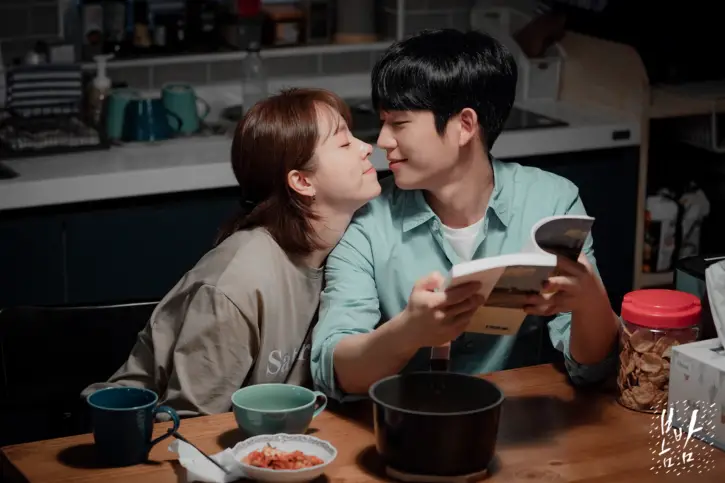
With One Spring Night had an inner conflict with my conscience. I wasn’t sure if I should push through because I didn’t have the energy to finish it. Watching it felt exhausting, almost as if I were constantly out of breath—the scenes were dragging, the pacing often prompted deep, tedious sighs, and I felt weirdly dispirited after every episode. This kept happening to the point where I almost dropped it… many times. But I didn’t. I resumed watching it sometime around the first week of February, and three days ago, I finally reached the last episode. When I finished it, I felt heavy-hearted. Even though it ended on a vaguely happy note, my mind lingered on the bittersweet moments.

Don't Cross the Line

I was...FRUSTRATED. 

I can still recall how I kept muttering curses under my breath because I didn’t want to endure that scene any longer. The tension between the two leads as they faced each other on the street—I just couldn’t handle it. I was literally on the edge of my seat, overwhelmed by the sheer weight of the emotional intensity.

In that very scene, I could feel their vulnerability. Their eyes were speaking volumes. It was painful to watch their courage being bottled up at a moment when they should have dismissed the world and just run to meet halfway. That night, they stood on the same street but seemed to exist in entirely different spheres.

And that phone call? It was the only fragile line of intersection between those spheres.

Easier said than done. I know that thought crossed their minds as well. When Ji-Ho was about to take a leap of faith, Jeong-In's firm "Don't cross the line" stopped him mid-air. Jeong-In wanted that moment too—their moment—but crossing the line together with Ji-Ho might lead them nowhere, and she was scared of stepping into the unknown. Perhaps she wanted some assurance in their uncertainty. She probably didn’t want to lose herself along the way or drag him down, especially since their emotions had already been spiraling out of control.

After watching One Spring Night, it dawned on me that I’m still such a sucker for melodrama. Consuming melodrama is just another way of saying you have the patience to sit through its slow-burn build and seemingly unimportant segments. Because of this, I’ve developed an unusual tendency to be laid-back—perhaps this explains why I take longer than usual to finish a show. Maybe I subconsciously mimic its pacing? Or maybe I don’t.

At first, I felt guilty—big time. As I confessed, I had a lot of interruptions. I watched One Spring Night, then stopped, resumed, paused, and continued; this was my pattern. This isn’t exactly healthy for someone who usually binge-watches, but these instances don’t happen to me very often. So, I decided to embrace it: One Spring Night gave me the assurance to just keep my cool. This show allowed me to see the experience of watching it not as an opportunity to binge but as a chance to take it at a leisurely pace. I didn’t feel pressured to keep watching because I had to; instead, I saw it as something I could enjoy whenever I was ready to absorb it—and that felt more like me. 

One Spring Night Soundtrack Album

Speaking of me, I personally enjoyed the show's soundtrack album. At random moments, I’ll catch myself humming “We could still be happy” without even realizing it. I also love how the songs evoke a feeling of springtime when you listen to them. Each track was often played during moments of solitude, beautifully capturing the characters' silence and considered thoughts, while also highlighting their emotions. The soundtrack has a cozy vibe—perfect for a coffee shop setting. However, one thing puzzles me: why does it only feature English songs?

(If you’re interested, go check out the soundtrack! Pair it with a cup of coffee or hot tea, and you’ll find it makes an already intimate atmosphere even cozier with its springtime feels.)

Why Spring?

Of all the seasons, why does it have to be spring? As soon as I learned the title of the series, it rang a bell. The obvious interpretation aside, I became more interested in the production's choice of this specific title and the symbolic meanings it carries.

In literature, spring is featured more frequently than the other three temperate seasons. Its brevity makes it stand out, which explains why it is so poetically and symbolically pronounced. Spring evokes feelings of distant memories, regretful longing, and a pensive atmosphere. At the same time, it carries familiar symbolism: the beginning of a new life for someone emerging from the harsh cold of winter.

In One Spring Night, much of the filming was reportedly done on spring nights, and in the story itself, spring is what brings the leads together. Their first encounter—in the pharmacy—could even be seen as a spring morning, marking the start of their journey. 

From the very beginning, the story was grounded in meaningful conceptions.

In terms of symbolism, spring clearly represented a period of transition for almost all the characters, marking their journey toward renewal. The story began with each character carrying personal dilemmas that, as the plot progressed, challenged their beliefs and tested their hopes. However, these dilemmas were eventually confronted, strengthening their resolve and gently guiding them toward the tender beginning of a new chapter in their lives.