Since I had nothing else to do after my Wink appointment, I had already decided a few days earlier that I would go to the cinema. I read that the Metro Manila Film Festival had extended the showing of some selected films until the 14th of January, and I didn’t want to miss this last chance to catch at least one entry from the lineup.
Out of all the entries, I chose to watch Green Bones.
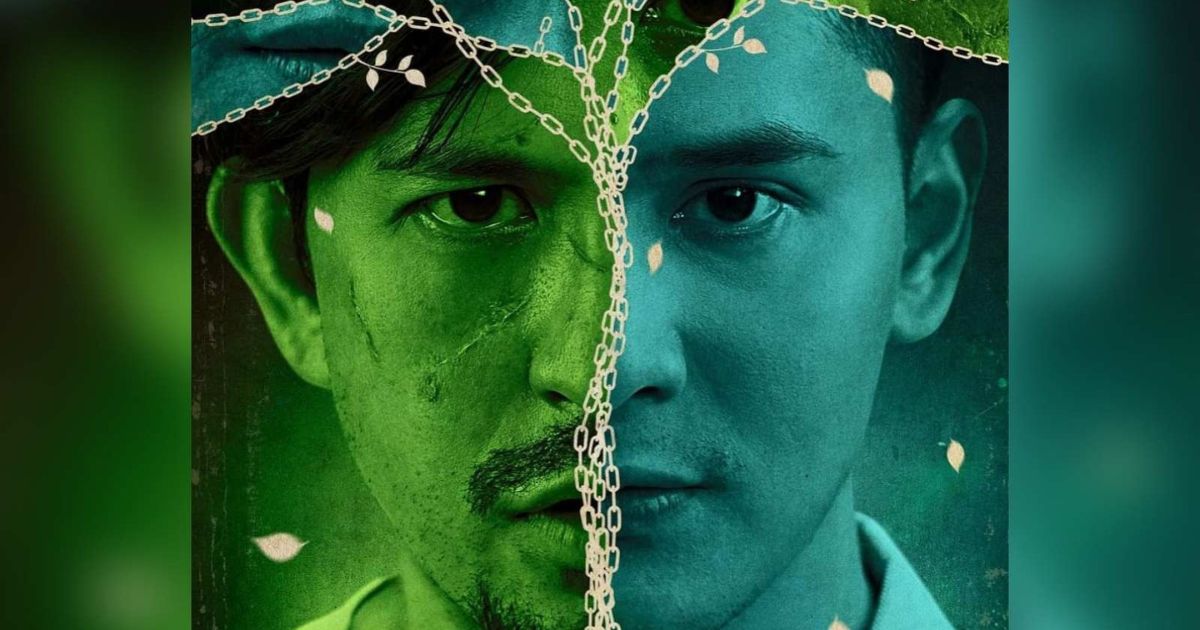
A few days ago, I came across some Instagram reels showing both lead actors taking home major acting awards. On top of that, the film itself won the most-coveted award: Best Picture. Honestly, I hadn’t even heard of Green Bones until I saw those reels—and if it weren’t for the awards they received, I probably wouldn’t have been interested in watching it in the cinema. I’m not really familiar with GMA Films. I’ve kind of been brainwashed by the media into thinking their movies aren’t that great. So if you asked me to name one, I couldn’t. I grew up watching films under Star Cinema. I do know all the actors, especially the leads, from their drama roles, but I’ve never really seen them as the kind of performers who could completely pull you in with their acting.
I was initially planning to watch The Uninvited because of the hype I saw on Twitter. The trailer boasted a star-studded cast: Vilma Santos, Aga Muhlach, and Nadine Lustre. And knowing these actors, they usually pick quality films. But I lost interest when I found out that it didn’t even make it to the Top 4 Best Picture awardees—it only won Best Float, which has nothing to do with the actual film.
My next choice was The Kingdom, mainly because I was intrigued by the unexpected pairing of Piolo Pascual and Vic Sotto. I was impressed that Vic Sotto was making a comeback to the MMFF, this time stepping away from his usual fantasy-comedy niche.
But when I made the conscious effort to check out some Reddit reviews about Green Bones, I was convinced. The majority said it deserved all the awards it won—the actors were a revelation, the film was absolutely worth watching, and GMA Films is finally starting to make a name for itself. People said it was the kind of film that could finally rival Star Cinema and that it bravely tackled the deeply messed-up social justice system in the country. That was it for me—I knew this would be my pick.
Green Bones is the first film I watched in the cinema this year—and it was worth it.
Coming into it, I let go of all my expectations. I pushed aside all the reviews I had read on Reddit. I wanted to come in with a clean slate so I could experience it as it was, without anyone else’s influence. I let my feelings lead the way, to put it simply.
All throughout the film, one line stuck with me—even from the onset of the story:
"I’ll come back to you."
A line I believe became the central theme of the film. It anchored the lives of the characters, as we slowly realized that life isn’t just black and white.
"I’ll come back to you."
Words that many thought were a threat—but as the story unraveled, we saw it was actually a pledge. And in the end, they became someone’s final words.
I'll Come Back to You: The Threat
The movie opened bleakly, with heavy rain pouring down, dimming the sleeping narrows of Manila’s pavements. In the distance, the blaring siren of a police car echoed through the deep night, as the screen was soon graced by the escaping feet of a man they called Crazy Dom. He stood on a bridge, facing the void ahead, earnestly communicating through hand signs. When translated into words, they revealed a brief yet haunting phrase: Babalikan ko kayo!—I’ll come back to you. A phrase the police immediately interpreted as a threat—for catching him and putting him behind bars.
No one knew exactly when he would come back. That’s why the police remained wary of him, always on guard, thinking Crazy Dom was just waiting for the right moment to strike back.
Then the film shifted to the present, told through the voice of a young and passionate prison officer, Xavier Gonzaga, as he set foot in the penal colony of San Fabian—an open-air facility housing inmates charged with unimaginable crimes. It was there that Crazy Dom had been exiled, and where the two would finally meet.
The flashback prologue, at least for me, was a strong hook. From the very start, I was drawn in. Like Xavier, I found myself asking: What happened to Crazy Dom that he turned mute? Was he really threatening the police? Did he really murder his sister?
Did he really murder his sister?—this question probably struck Xavier the hardest. He, too, had a sister who was murdered. That loss became his driving force to become a prison officer, and it led him to San Fabian, especially upon learning of the impending release of Crazy Dom—the man who, according to records, had murdered his own sister.
The first part of the film was told through Xavier’s narration, so the story was framed through his perspective. And that perspective was heavily shaped by the crime reports, by rumors he'd grown up hearing, and by his own grief and trauma. Having lost a sister he loved deeply, he couldn’t wrap his head around the fact that Dom had the supposed audacity to take the life of his own.
I understood why Xavier became so emotional whenever Dom was around—but at times, it felt like he was too intense, to the point that he lost sight of his duty as a prison officer. Throughout this part of the film, his eyes were locked on Dom, watching his every move, always on edge, just waiting for a slip-up. He was desperate to find any evidence—anything powerful enough to revoke the release Dom had long been awaiting. A release that Xavier was determined to block, convinced Dom didn’t deserve it.
But everything soon began to change when he met Betty.
I'll Come Back to You: The Pledge
Here—at the same time as Xavier—we learn that the phrase “I’ll come back to you” was never a threat, not to the police or anyone else. It was actually a lifelong promise Dom made to his niece, Ruth—his late sister’s daughter.
By this point, the narration shifts to Dom’s perspective. We finally hear his side of the story, uncover the truth about the past, and begin to see the inner conflict building in Xavier as he realizes that his hatred toward Dom was unfounded. It was all the result of a broken justice system. Dom wasn’t a criminal. He didn’t kill his sister. He was a victim—one who had been wrongly accused and labeled the murderer.
To be honest, I already had a feeling from the beginning that Dom didn’t kill his sister. Realistically speaking, he's the main character—and usually in stories like this, when the protagonist ends up in prison, it turns out they were blamed for a crime they didn’t commit. They end up spending most of their life behind bars, paying for something they never did. So, the “reveal” in this part wasn’t exactly shocking or unexpected.
However, I still appreciated the way certain details from the past unfolded—especially those shared through Dom and Betty’s narration. There were moments I hadn’t anticipated, and those small surprises helped deepen the emotional weight of the story.
One detail that really stuck with me was that it was Ruth—his sister’s daughter—who taught Dom sign language.
That night, when the police found Dom on the bridge and assumed he was making a threat, he was actually making a vow to Ruth and Betty. They were somewhere nearby, hiding—afraid that Ruth’s father would find her. So Dom entrusted Ruth to Betty for her safety, making that promise with his hands: “I’ll come back to you.”
I'll Come Back to You: The Last Words
The flow of the film, at this point, honestly dipped a little for me because of how some scenes were handled, especially by the main characters. To be real, I was a bit disappointed with how Xavier seemed totally lost after finding out the truth about Dom. Of course, I felt a boost of excitement seeing them finally working together, going up against what Jonathan Cruz and Juanito Velasquez stood for. But it just felt kind of off to see Xavier get overshadowed during the fire scene. Like… where did all his police training go? Suddenly, it was Dom taking charge and leading the rescue while Xavier just stood there watching. That part didn’t sit well with me.
I also started to wonder if the sense of camaraderie in this fictional penal colony in San Fabian was being portrayed a little too idealistically. We were only shown its good side. It would’ve been more believable if the film also showed us other parts of prison life—the kind of inmates there, what they went through, where they came from, and how they ended up behind bars. I get that the focus was on Dom and his small circle, and that wasn’t bad at all, but I think it could’ve added more depth if we also saw the raw side of prison life, not just the injustice of the system.
Still, I really liked how things unfolded towards the end—especially the big reveal about Juanito Velasquez, the head of the colony. That twist worked well. It showed how the people we expect to serve justice can actually be the ones distorting it, especially when the victims are those without a voice, or worse, those who’ve been silenced—literally or figuratively.
In the end, I’d say the film gave us a satisfying wrap-up. I even found the last scene kind of witty. When Xavier visited Dom’s grave, he didn’t find the green bone he thought would be there. Instead, he found a crispy 100-peso bill buried in the soil. I think what that moment was trying to say is, it doesn't matter if someone’s bones are green or not. That’s never been a real measure of whether they were good or bad. The fact that it turned out to be money just added to the irony. And maybe that’s the point—life is full of irony, and sometimes, even in death, we still don't get the clear answers we think we deserve.