Hmmm...

3/21/21

Nosi Nosi Balasi: A Tadbalik Chorus

3/21/2021


There’s a familiar noise that has been a significant part of my everyday routine while working from home. Sitting in my spot by the window, with my eyes fixated on the screen, I can almost imagine the afternoon atmosphere of our neighborhood just by consciously tuning into its cacophonies: kids shrieking, their sounds echoing as they chase each other; engines puffing their breaths roughly on the road; the heavy sound of trains; and scattered voices—some fading into the background, while others resonate across our street, subconsciously trying to outdo one another.

With all this commotion, it seems there’s one noise that has bothered me more than it comforts me. Just before daylight patiently fades away, there’s loud music played pretentiously almost every day—its beats pounding against the speakers, almost unbearable to listen to. At those times, I wish they would play music that lulls the soft seduction of the gloaming twilight, soothing the atmosphere. But instead, they play songs that bang awkwardly in the middle of our bustling neighborhood. I’d be fine if they didn’t turn up the volume to such extremes, but they do it every time, without considering how their music affects others.

Just like last Friday.

I had to listen to another queue of songs that made me sigh with frustration. How could they not resist their impatience and just let each song play until its last melody? I could still feel how exhausting it was just by listening, and I wanted to lift myself up and vent my annoyance. All I wanted at those moments was for something to help push away my sleepy thoughts so I could focus on my work.

But, luckily and oddly enough, I wasn’t in my usual stormy mood that day. I felt slightly at ease since I was already taking my time until my last shift. That’s why, I guess, I found myself singing along with their playlist in my head.

Until, suddenly, a loud Nosi Balasi blared through my ears.

Nosi Balasi was the song from my childhood that I often sang at our karaoke. This song actually made me feel ambitious, falsely convincing me that I was angsty just by singing its chorus with such conviction. When I finally had to pause to catch my breath, preparing to belt out a strong "Nosi Nosi Balasi," I felt so powerful for my age. That’s the effect this song had on me as I was growing up. Perhaps that’s why I never really paid much attention to its lyrics; all that mattered in those moments was how the song made me feel. With Nosi Balasi, I could still feel how strangely tasteful it was to articulate each syllable, as if it were some foreign incantation.

For most of my life, I almost thought that line was a Latin phrase because of its bewitching pronunciation—until sometime in high school when I finally paid close attention to its meaning. That’s when I realized that the lyrics were simply inverted, and it dawned on me randomly.

Nosi = Sino / Balasi = Ba Sila

So, it was that simple. I had the same thought occupying my mind yesterday. While I was on my last work quota, I found myself wondering what could possibly be the reason behind reversing the line Sino Ba Sila. This led my thoughts to expand as I crazily tapped my keyboard, my eyes glued to the screen.

Why are Filipinos so actively invested in slang like this?

Nosi Balasi is just one of many examples of what we call Tadbalik, which is the reverse form of the Tagalog word baliktad. This kind of Pinoy slang apparently started long before the song was even released. The habit of reversing words had actually been used by Filipino revolutionaries to hide their real identities. This can be traced back to the use of pseudonyms by Filipino writers and poets. One easy example is Marcelo H. Del Pilar, who used Plaridel as his pseudonym—a jumbled-up version of his surname.

Even I couldn’t believe that Tadbalik had been in use as early as the 19th century. And if we dig deeper into the deliberate usage of this slang in Nosi Balasi, perhaps it’s not just for its phonetic impact. Whether consciously or not, there could be a subconscious reason behind reversing the words in the chorus.

Nosi Balasi
By SAMPAGUITA

'Wag mong pansinin ang naninira sa 'yo
Basta't alam mo lang tama ang ginagawa mo
'Wag mong isipin 'wag mong dibdibin
Kung papatulan mo'y lalo ka lang aasarin

Nosi, nosi ba lasi
Sino, sino ba sila
Nosi, nosi ba lasi
Sino, sino ba sila

Ituloy mo lang gawin ang gusto mo
Walang mangyayari kung sila'y papansinin mo
Talagang ganyan 'wag mo lang patulan
Wala lang magawa kaya sila'y nagkakaganyan

Nosi, nosi ba lasi
Sino, sino ba sila
Nosi, nosi ba lasi
Sino, sino ba sila

This song was released in 1989, yet it still stands the test of time. Its long-standing presence in every Filipino household is enough validation that it remains one of the best songs, continuing to thrive despite the rise of new generations. I tried researching and looking for any supporting information about the background of this song, but unfortunately, I couldn’t find anything online.

The first verse goes like this:

'Wag mong pansinin ang naninira sa 'yo
Basta't alam mo lang tama ang ginagawa mo
'Wag mong isipin 'wag mong dibdibin
Kung papatulan mo'y lalo ka lang aasarin

To translate, this part means that you shouldn’t mind people who are trying to tear you down as long as you know you're doing the right thing. Don’t think about it or brood over it. If you retaliate, you'll just be picked on more.

This leads to the awaited chorus, where the Tagalog slang Sino Ba Sila is repeated twice, alternating with its original form. Since this word reversal is used as a disguise for someone’s identity, in this song, it serves a different effect.

To disguise means to alter one's appearance in order to conceal their identity. This could also suggest a desire for anonymity, as it seems there’s an effort to remove anything outstanding or familiar in order to remain unknown. In this generation, anonymity is widely used on many social media platforms, especially by those who want to voice their opinions but are afraid of being canceled. However, this has unfortunately gone beyond its original purpose and is often overused and misused by people targeting others. Since it is difficult to uncover someone’s true identity, many feel emboldened to attack others through their posts, which is ironically cowardly. But if we look at it from a different perspective, these anonymous individuals don’t have an identity in that space, and therefore, they are not important. Meanwhile, those who follow you and whom you follow have their names and pictures displayed, reminding you that there are still people you know who are not afraid to show their true selves. While they may seem unimportant, they actually are.

So, I guess "Nosi Nosi Balasi" is reversed to imply that those people whom we question with Sino Ba Sila (Who are they?) are not important. The act of asking who they are is enough to show that we don't know them, probably because they are hiding their true identity. The fact that this act of disguise is used to attack one's reputation, rather than for a creative or revolutionary purpose like our heroes did, is so disrespectful to them. Our history is fascinating, and so is our language. Using it with purpose means carrying it with responsibility. Our language is continuously evolving, which means we must keep up with and adapt to its changes.

There's no harm in change. Just like the song says, as long as you know you are right, then forget their existence, because nothing will happen if you keep focusing your attention in their direction. And whenever you want to fight back, just think backward, and perhaps you might want to consider asking them this in slang: Nosi Nosi Balasi?
3/14/21

Eyes Eyes Eyes Eyes

3/14/2021


People believe that I am a studious person. But, actually, I am not—at least not consistently.

Even I could not quite grasp the reason why I am viewed this way. Not that I am ungrateful for that perspective, but somehow, as I grew up, I learned to accept others' compliments where they are due. If they’re not, I usually shrug it off, because I cannot burden myself with that misapprehension.

Of course, everyone wants at least some soft words from someone.

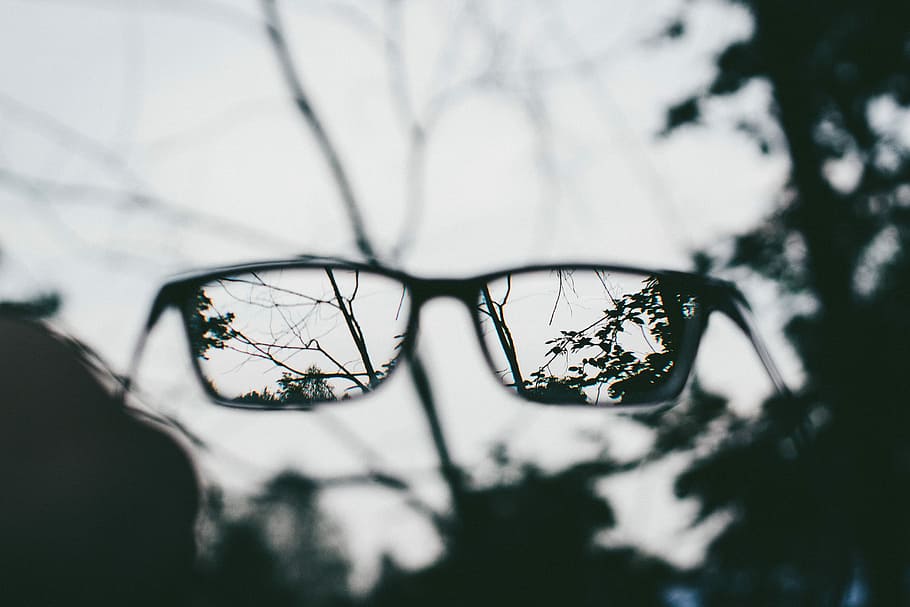
However, in my case, people, especially in our neighborhood, have loosely seen me throughout my growing years as a bespectacled, studious kid, which I thought was weird. Admittedly, I was that kid whose normal eyesight was lost somewhere in her sophomore year for an I-don't-know reason. But I was definitely not the kid (who might have been living in her head) who had to wear glasses because her vision couldn’t handle the immense intelligence people believed she had.

To set the record straight: I am not academically intelligent. However, I have been almost consistently aware of my tendency to be somewhat passionate about things that I find challenging. Therefore, people I know may have interpreted those instances in the past as proof of my intellectual capacity. If only they knew that I didn’t learn how to divide with remainders until I was already in sixth grade. And it was the shameful truth, as a grade schooler, that I had to keep it hidden from anyone throughout my elementary days.

Having to wear eyeglasses was something I thought I would like. I still remember whispering to the heavens, asking if they could slightly adjust my eyesight just enough for me to need spectacles. And that's when I learned to be careful with my unconscious wishful thinking, because sometime during my second year in high school, I started to see the world through a blurry lens. I remember the anxiety I felt the first time I realized that I couldn’t clearly see what was written on the blackboard. It was strange, like I had to figure out some words because I wasn’t sure if I was seeing them the right way. There were times when I mistakenly thought that one word was another, but when I read the sentence in my head, it just didn’t make sense. And for the first time in my life, I felt a surge of uncertainty because I couldn’t see the world the way I used to.

And it was frightening.

But more than anything else, what I realized was that I had to live with guilt at that time because purchasing eyeglasses was something I thought my parents could afford. I remember the hesitation when my mother and I found out how much we had to spend on my first pair of eyeglasses. It was so pricey! I only thought of myself, without considering the consequences that might arise from my selfishness. After that, I decided to apply for scholarships, which I had consistently dismissed despite my mother's insistence that I was qualified. I was confident in my academic abilities, but I knew there were students who deserved my spot more than I did. But thinking about how my parents had to stretch our monthly budget because of the cost of my eyeglasses made me feel deeply sorry for my negligence. I guess that’s the reason I grew up not being flattered by how people saw me as smart just because I wore spectacles, because it reminded me more of how I gave up my eyesight just to experience what it felt like to wear them. I was really immature back then.

I thought I was the only one who felt this way. When I met people who later became my friends, they shared the same sentiments and how they weren’t happy when people assumed they were intelligent just because they wore eyeglasses. They felt pressured because people had already formed a big impression of who they were based on that simple pair of lenses. Instead of being seen as normal, we were viewed as people who were devoted to solitude and boredom. Sometimes, we were even poked fun at for having “two sets of eyes.” But then, even if I still had my normal vision, I feel like people would still see me the same way. Growing up, I noticed how my eyebrows caught people’s attention for being hairless. It was once my insecurity for a short time, but it never became a major issue during my adolescence. I was cool with how they looked on me. But I guess, since it looked strange to someone who had thicker eyebrows, they couldn’t help but pay attention to it to the point where it was unnecessary for them to acknowledge it with a condescending sneer. It was exhausting to listen to their constant insistence that I should apply something to my eyebrows. Like, does it bother them that much? Does it disturb their inner peace? Does it look so disgusting that they can’t even bear it? Or are they simply concerned about their own comfort, which is why they don’t care that I’m perfectly cool with it as it is?

Then it takes me back to my high school days. I could not exactly remember the whole thing, but there’s someone in my circle who reassured me about my eyebrows. She finished her sentence randomly by saying innocently that I might have liked burning the midnight oil every night, and that’s why my eyebrows are so thin. Instead of getting offended by her remark, I was kind of wonderstruck by how she connected my thin eyebrows to me—burning the midnight oil. In our language, the latter is translated as nagsusunog ng kilay, or literally in English, it says "burning the eyebrows." I was in awe of how she thought about it out of nowhere without realizing that she was making sense.

"Burning the midnight oil" is an idiomatic expression used to describe someone who laboriously studies or works late at night, using the light of an oil lamp or candle for illumination. This is similar to "nagsusunog ng kilay" (burning the eyebrows). However, with the mention of eyebrows, the explanation is that since the light from the lamp or candle could not reach far, the person has to lean closer to it to get a steady and much more defined glow. So, their silhouette probably looks like someone who is burning their eyebrows because of their posture. Weirdly enough, I was comforted by this friend's odd association. Perhaps there’s no harm when people make assumptions about you based on what they see on the outside. Since outward features are the starting point for characterization, it’s natural for them to base their assumptions on what they can see through their eyes first. With my eyeglasses and eyebrows—and through their eyes—it’s interesting how everything is initially decided through vision. I just realized how I disliked it when people thought I was smart because of my eyeglasses, yet I was in awe when my friend associated my thin eyebrows with being diligent.

I guess I like it more when people see me as diligent rather than intelligent.

3/10/21

The Reading of Pas Marquez-Benitez's Dead Stars

3/10/2021

Dead Stars, as what Fernandez revealed on her readings, is not only worth a glimmer of tears but a real sense of discovery. Despite years of not having read it, there still lies a certain degree of combined mystery and fascination— the feeling of being exposed repeatedly at something familiar yet it doesn’t fail to give off the sense of new discovery. That is the charm of the short story “Dead Stars” which sprang from the mind of Paz Marquez-Benitez.

We have Alfredo Salazar, the man who, despite the life of luxury he has, is still burdened with this “formless melancholy”. Is it because he impulsively mortgage the hidden possibilities of the future to fill his craving for transient excitement? That the use of force in the hand of Time or of Fate has made him miss the Love? But it is Julia Salas to everyone but Julita only for Alfredo, the woman of his “last spurt of hot blood”. The root of his frequent “neighboring” to the house on the hill that once meant nothing to him. The receiving end of his “something” that he is not free to give. And there’s Esperanza— waiting, the maid who can be in a hurry if only his man does hurry her. The root of Alfredo’s “tumultuous haste” and the receiving end of his “certain placidity of temperament”. In a star-studded sky, which one among shines the brighter? The star that has already been discovered above the “dappled shadow of the trees in the plaza” or the star which has been spotted yet never been discovered above the "open porches of the Martinez yard"?

After the last word has been said, the passage of four years attest that love cannot withstand dignity, expectations and reputation in a society where it is being valued highly. Alfredo marries Esperanza, and he is not somewhere in between wildly unhappiness and wildly happiness— a safe spot for “no stirring up of emotions” which only leads “the man in nowhere”. But that “unforgettable red-and-gold afternoon in early April”, four years ago, repeats itself in the “cool, stilly midnight” of Calle Luz. Julia Salas has not changed much, yet something is gone. Or perhaps, the loss is his?

And as the young moon sets in, he realized that it is all over. The piece of mystery that the other star holds, will be forever in mystery, like Love on his vanished youth— an eternal puzzle that he missed.

Julia Salas, the fire once burned in his heart has now long extinguished. She is Alfredo’s dead love, but she has still a special place in his heart like a star once shone the brightest in the star-studded sky, now long tarnished but still there in its appointed place in the heavens.

3/7/21

Star Apple : An Extraordinary Apple

3/07/2021

If I were still in first grade and you asked me which fruit was my favorite, I would likely answer without much conscious thought: Star Apple.

I used to have a small voice when I was in first grade. (Not that I don’t have it anymore, but it has improved over the years through practice.) I can still recall how my homeroom teacher scolded me for being so bashful whenever she asked me to read something for the class.

They couldn’t hear me.

But I could hear myself—my thoughts—and feel my heart skipping beats whenever I sensed their eyes on me.

They tried to stifle their giggles under their breath as our homeroom teacher patiently asked me if I could even hear my own voice. They had no idea. That’s what I thought. If only they knew that in those moments, I felt like I was hovering between life and death. I was trying my very best to calm my throat so I could gather my escaping voice and let it out. But there was almost nothing. I can still picture myself, stretching my arms to hold onto my desk. I was looking down, and I could feel my knees wobbling with embarrassment. Then I heard our homeroom teacher slipped these words to me:

"Yung pwet mo na lang ata ang nakakarinig ng boses mo." (Maybe only your butt can hear your voice)

And everyone in the room burst into laughter. It wasn’t traumatic. But for some reason, that moment remains vivid... and their laughter—if I were to recall how it sounded—was resounding. I went home that day feeling so down. Having such a small voice was one of my first dilemmas as a kid. It wasn’t cool—it was humiliating. And I didn’t know what to do to make my voice loud enough to be heard. I was determined to overcome it. I hated being looked down upon, yet instead of staying away from the spotlight, I kept being drawn closer to it... and I hated myself for it.

Why did I have that voice?

Why couldn’t I make it louder?

And that embarrassment continued for a long time until that night. I saw my mother in her usual spot in the kitchen. She was preparing our dinner, and I went straight to her—maybe because I wanted to watch her. Then, I noticed an orange plastic bag lying on the tiles. Inside were some unfamiliar fruits I had never seen before. They looked rough, but their violet skin had an oily touch. I asked my mother what they were called while examining one closely. She glanced my way and told me the fruit I was holding was called a "star apple."

The moment I heard the name, a strange force seemed to brush away my worries.

It wasn’t an exaggeration.

It wasn’t my imagination.

When the fruit’s name echoed in my ears, I felt something weird but comforting.

Star apple…

Is there really a fruit like that?

It has such a cool name. Back then, the only fruits I was familiar with were oranges, mangoes, santol, and apples. But this was a different kind of apple—it was called a star apple.

That night, I ate it. And it tasted soooo good! It was sweet, and its white, juicy sap made it even better. While eating it, a thought crossed my mind:

"Baka ito na yung magpapalakas ng boses ko." (Maybe this is what will make my voice stronger.)

After all, it was a star of its kind. And it did not disappoint me.

The next day, I was called on again. Before I opened my mouth to speak, I remembered the taste of the star apple and convinced myself it would help make my voice louder. To my surprise, it actually did. With a confidence that had once been strange to me, I gathered my breath in one place and calmed my heart. I felt my throat and began reading the visual aids in class. I kept reading and reading, dismissing any distractions around me. It felt like I was standing in a different world, and I was the only one there. It was magical. When I finished reading aloud, a burst of applause filled my ears. I returned to reality.

I looked around, and all my classmates were happily clapping in my direction. I was moved. I felt proud of myself.

"I could actually do it."

All that time, I thought I would have a small voice forever and would always be laughed at and scolded by my teacher. What I really needed was the "Star Apple." It was my miracle as a kid. That day, after class, I went home, finally deciding that I now had a favorite fruit. And it was star apple.

3/6/21

Once in a Summer

3/06/2021


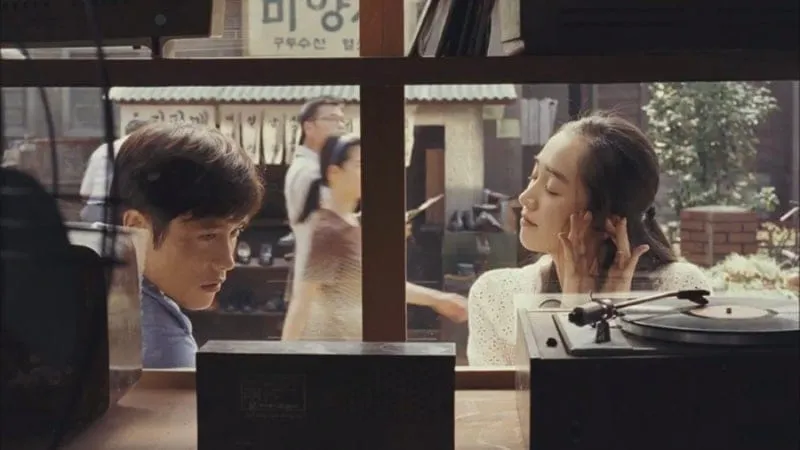
Last night, I watched Once in a Summer.

I had no expectations when I started watching it. I hadn't heard about this film before from anyone I know, which is why I might have been just right in a comfortable spot.  Since the preview of this film wasn't available on Netflix and I was too lazy to search for it on YouTube, I just jumped into it right away. In the first few minutes, I was still trying to find my way into it. Admittedly, I was reluctant to continue watching it, wondering if I should push through, as there was a possibility I wouldn't like it once I was halfway through. 

Once in a Summer started with a slow and somewhat enigmatic buildup. The characters who opened the film disappeared as the story progressed. They had their fair share of moments, especially with Byung-Hun, but I don’t think they had any meaningful exchanges. I was hoping for more of his perspective, possibly a closer look at himself in his later years. I can’t recall if there’s a scene in the film that shows significant details about him in his prime, which I wish had been included. Even small moments of retrospection while he shared his past with Su-Jin were absent. Perhaps I badly wanted to witness his process of recalling those memories—to see the joy and remorse of his past etched into his wrinkled face. Those little details, I felt, were overlooked.

Was it because he was a professor at the time, and there was a deliberate effort to create an air of mystery around him? Or was it a conscious decision to provide minimal details about his older self to place greater emphasis on his youth in the flashback?

The reason I say this is that I noticed how he was portrayed with such care—offering only a few glimpses of his identity, which built a sense of mystery for the audience. During Su-Jin's next visit, he asked her to sing for him. The request felt so random that I immediately thought there must be a deeper meaning behind it. Su-Jin sang hesitantly—she looked awkward, yet displayed a small measure of confidence despite her lack of singing skill. Then, a smile flickered across the professor's face, and it was a moment of discovery. He even jokingly told her not to sing again, which revealed another layer of his character. I had assumed he was a stern and solemn man—his voice had given me that impression. I also thought he might dismiss her again despite her persistence. But when she asked if he wanted them to locate someone he had been longing to meet, he paused, and in that moment, I felt something significant was about to unfold.

A long flashback of events appeared abruptly.

I was slightly taken aback by the sudden shift to the past. I immediately thought about the way it was delivered— it wasn't that smooth, and, in a way, it felt like the first part of the flashback was forced. There was just no "solid" premise for it, in my opinion. Anyway, the flashback started with him sitting with other students, raising their fist in the air. They were shouting, and he looked so reluctant. By the look of it, the film started strong in that scene—it almost excited me.

Almost.

However, I was left there in that spot. 

Hanging. 

I was expecting there to be at least enough protest scenes to significantly set this film apart from others of its kind in a similar genre. Or perhaps, I was hoping to be enlightened on why they started that scene with "that" and what it was meant to convey. I also thought the story’s plot would revolve around that theme, and while it technically did, it was only emphasized as lightly as possible. As soon as the flashback transitioned to their arrival in the village, the focus drastically shifted to his encounters with the lovely Jung-In, which dominated most of the film.

Apparently, they drove out there to help the villagers in their rural tasks. I was not sure though if that was an act of initiative for the sense of service or they were asked to go there in the course of their protest. Whatever it was, as soon as they got there, I saw their genuine assistance to the people and how eventually they grew fond to the warmth of the countryside ablaze with the colors of summer. There's a simple touch of once life in every spectacular views of rural sceneries which effectively accentuated by the use of different shades of orange—a color of nostalgia. 

Throughout the film, the story revolved around Byung-hun's mischievous attempts to catch Jung-In.  He was impish and easy to the eyes especially for the older women in the village. However, he was drawn more to Jung-In when he saw her being scolded by the head of the village and was being whispered about by some people there. So, when he saw her walking along the fields without her usual bright face, he pestered her. Then the sky rained over the place, making both of them run and they stopped over that deserted house to wait for the raindrops to calm. I guess, that moment was the first serious one they had. I remember that I did not understand Jung-In's tale to Byung-Hun about the fish and the stone. But I remember when Byung-Hun gave her a stone with a fish-like carve that night when they missed the last bus and they had no choice but to walk for miles. 

Basically, it would be a simple simple film if it weren't for the light touch of the heightened student protest at their time. I just wish it was elaborately laid down more to add depth to the film and to the relationship between Byung-Hun and Jung-In. But it was actually evident that they wanted to set the focus more on the heartwarming romance of the two, with other concepts being in the peripheral of it all. 

I would like to take note of how their moments in the countryside took up the majority of the film while the one they had as soon as they set their foot in the bustling city of Seoul was so brief. As if it was mimicking the slow and gentle life in the rural by the use of the duration, and the more or less thirty minutes was rendered to their scenes in the city which mimics the fast-paced life people have there. 

The title was also trying to imply a sense of longing. The production could have just called it That Summer or something like that but there's the word "once" which we used when we mean that 'at a time in the past but not now or not anymore". It was like saying that that particular summer just passed by, and unfortunately it was only one summer experience which did not happen again or would not happen anymore because it was already gone— the people, the moment, the chance... 

More than anything else, Once in a Summer is a good film to watch at your leisure. It was not heavy but it could move you to reflect on things especially how its cinematography evoked a sense of nostalgia. It will also give you an idea of how's the life in South Korea was in the year of 1920 especially the tension between the country's regime and the prevailing political demonstration led by the students. 

This film will take you back to simple and old good times that was once so gentle but is almost now improbable to reach.