1/16/26

A Not-So Review: Sinners

1/16/2026


Am I a sinner for missing this movie last year in the cinema when I actually did plan to watch it in the first place?


Sitting in the farther corner of a two-story coffee shop, not even a soul seems to sense the bits and bursts of different emotions tickling around my spot as I finished Sinners on my phone. I was initially planning to complete the movie later tonight, but the kick of matcha and blueberry together with the vegetarian salad I ordered encouraged me to plug my earphones into my phone.


I was more or less 15 minutes away from finishing the movie when I left it earlier because I needed to freshen up for my dental appointment. And here I am right now. Aside from brushing off a LANY song from my head and the voices of strangers catching up in the air, I am feeling a little guilty for leaving my drinks sweaty because I am getting occupied with how I can put my post-movie high into words on my notes app.


The clock just turned 7:38 pm and I am supposed to go home now as I need to feed Pino his dinner. But! But I need to let these emotions out of my system. I need to capitalize on this moment because I feel like, with a little nudge, I am capable of finishing a not-so review of Sinners.


But I am feeling a little cold. The aircon seems to send a shiver into my tummy and now I can feel the air moving inside and finding its way out to fart. Sinners is a good shit! I thought One Battle After Another was my best movie recently, but Sinners walked in so casually with a breeze that I immediately rated it 5 stars and tapped the heart on it on Letterboxd.


I don't know if it's because of the Friday air that put me in a clear mood and therefore made me see this movie. But no, this movie is just really good. The scene where Sammie started strumming his guitar, with his people circling around the juke joint waiting for him. And the sequence after that marked my that's-it moment, an early juncture of the movie that already piqued my interest and could potentially keep me seated until the last second of it.


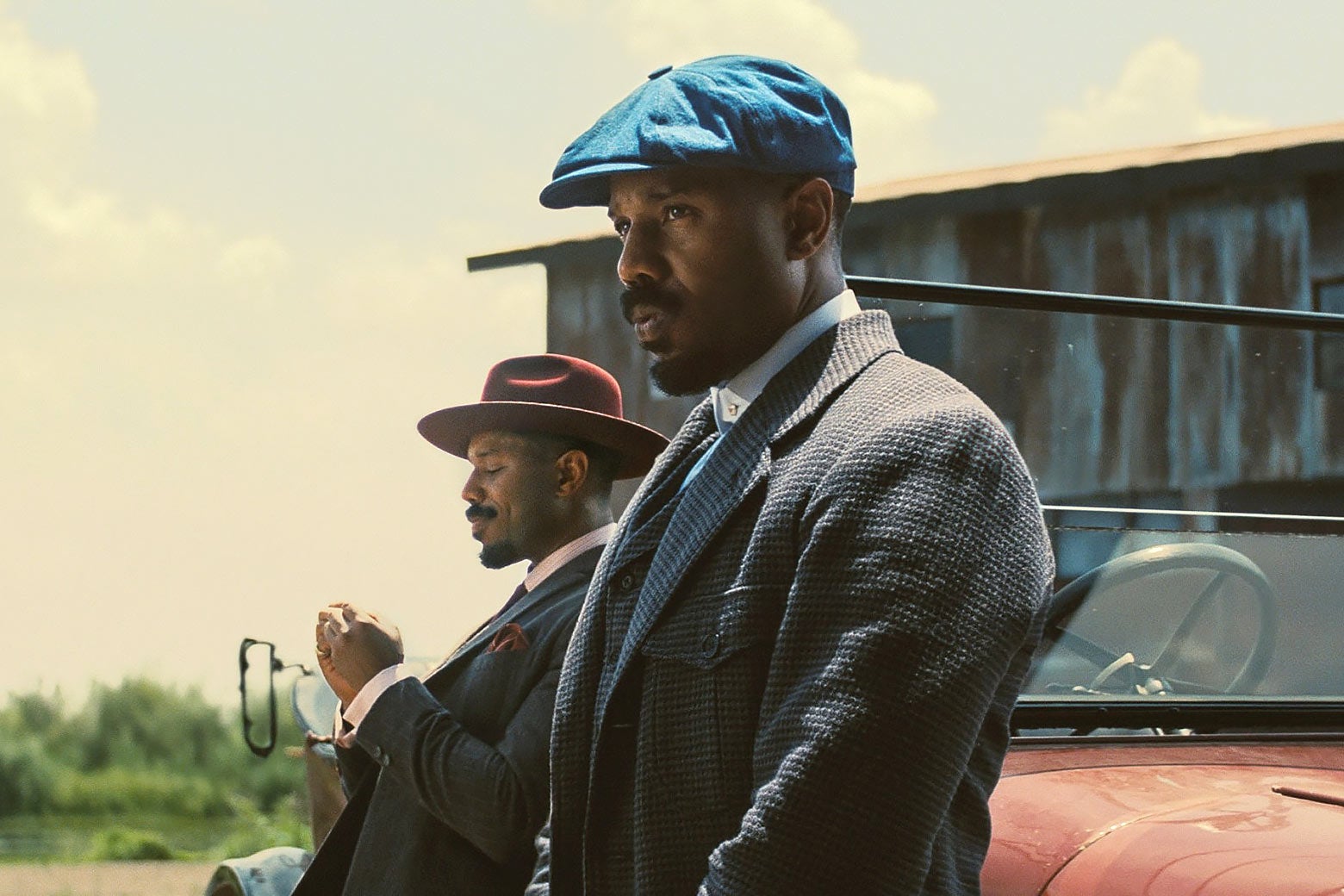
The twins and how they speak captured me first. Or is it the charm of
Michael B. Jordan, who I once thought was the same as Michael Jordan? It was the clip of Nicki Minaj on an award show where she said something along the lines of, “Shout out to blah blah for my outfit tonight. And to Michael B. Jordan who will take it off tonight.” And I have seen several clips online where they named him the most beautiful man.

So seeing him in the movie in two bodies made me think they had someone who looked almost exactly identical to him, or that he just has a twin in real life. Then here's Sammie and his guitar breathing blue melodies behind his father's preaching. When he strummed his guitar and sang behind the moving wheels of his cousin, Stack, I felt a soul in his voice and that made me wonder why his father said demons would follow his music.


The scenes leading up to the night of the opening of the juke joint were so spectacular. The tickling of the piano on Slim's fingers, the bodies moving merrily around the newly bought sawmill, the stealing and meaningful glances between Sammie and Pearline, the grudge and longing of Mary towards Stack, the perfect night that everyone thought would be endless, only to be punctuated by the presence of some suspicious folks.


What a horror it is to be manipulated by your buried fears and have them used against you. Mary got the gold coins for Stack, but the moment they locked themselves in the room was when the joy of the night completely halted.


Music brings people together… and even the dead ones.


The guitar that made Sammie alive is truly what kept him alive.


The ending credits were perfect that they made my salad even tastier. This is what films do, especially the good ones. They make you enjoy and appreciate the little things around you. Damn, even the slices of red pepper tasted so sweet.


I got home half an hour ago as of writing. It is 9:33 pm now. I'm on the edge of the bed upstairs, feeling the softness of the mattress. Pino just got up as Mama went upstairs to hang some laundry. I haven't brushed my teeth yet but I am feeling little joys because I was finally able to write. It has been months.


It's good to be back.


Hope I can come back as often as I can. But I need to take a quick shower now.


TGIF!

10/19/25

I've Lived Through Four Deaths

10/19/2025


The first time I witnessed Death, it was on a random weekday. I was slouched against my grandmother’s well-worn wooden cabinet, TV colors flickering across my eyes. Mama was watching with me, just as absorbed as I was in a talk show whose name I can hardly remember now. I knew I had school that day, my hair was still wet, and I probably had about an hour or so left to get ready for my afternoon class.


And then, without warning, it all happened right before my eyes.


Mama rushed downstairs. The urgency in her footsteps sent a sudden wave of panic through my chest and I didn’t even know what was happening. The TV hosts kept blubbering their lines in the background. I glanced at the spot where Mama had been sitting moments ago, and a shiver ran through me when I realized how much emptier it looked. I was frightened and clueless, my ears throbbing as if trying to catch some hints from the earful murmurings of our neighborhood.


I don’t know exactly how I got my body to move, but in an instant, I was by our gate. My neighbors were there, yet they seemed unaware of me, as if I didn’t exist. I searched their faces, their moving mouths, but their voices were muffled. Despite the unwanted cacophonies, I managed to catch fragments of words, just enough for me to piece them together and regain my bearings.


Patay. 


Ngayon-ngayon lang. 


Tatay.


Doon sa kabilang bahay.


These were the words I caught in the air as I tried to breathe as normally as I could in that insane moment. I may be around eight or nine years old then, but I was already old enough to understand what those words meant. Then, I just found myself running so fast I could no longer feel my legs. I caught up to Mama, and her back was crying. She wasn’t exactly running, but her body moved so quickly that the people we passed blurred into a swoosh of color. I called for her to slow down, but she was somewhere else entirely.


The closer we got to my grandfather’s house, the heavier my heart grew. It stood taller than my grandmother’s hard-earned home, but the height only made it look awkward. Its walls were painted with negligence and damp, and the steep stairs looked slick. The smell inside was fishy, and I couldn’t remember the last time I had visited him. Their room was upstairs. Mama slipped from my mind for a moment when I saw my cousin at the bottom of the stairs with his friend. He was wiping his face with his white sando. He had likely heard the news before we did and had already gone there ahead of us.


Then, a loud series of whimpers echoed through the house. The sound was so raw and painful that I felt another pinch twisted my skin. It was the kind of pain that stays with you. Even now, I can still hear it whenever my memory drifts back to that moment.


When I went upstairs, I saw a tableau of crying women, my grandmother slumped limply on the floor, holding her former husband dearly with her trembling hands. I had always been familiar with the sounds she made: the sharp tsks of her tongue, the breathy psst between her teeth, even the weighty silence of her angry face. But that day, I heard a sound from her I had never known before. I had thought I would never hear her cry, because to me she was a warrior. I had long since accepted the impossibility of her tears, but seeing her shoulders shake from deep sobs felt so foreign that I could never have imagined her cry would sound like that… heartbreaking.


I think that was the first and last time I saw her cry.


While watching my grandmother, I caught a faint but lasting glimpse of my grandfather’s lifeless frame. I can still recall how halo-white he was. His skin held that unusual white stillness. His co-ords looked bleached white, and everything about him was so ethereal that he seemed to camouflage into the white bedding on the floor.


Just as my grandmother stood up, my mother appeared from nowhere. I had been so absorbed in everyone’s crying that I had forgotten who I was chasing when I left our house with the TV still on. The weight of her steps seemed to sink into the floor, so heavy with grief that she had to drag herself toward my grandfather. I thought he was already gone, but he was still hovering between life and death. Maybe, he had returned only to say farewell to his only daughter. With his eyes closed, he gathered what little life was left in him and whispered something to Mama. 


Then everything went completely silent. 


The next moment, Mama was crying so hard. So hard that, even now as I write this, I can’t help but swallow the tears rising in my throat just from remembering it.


I knew my grandfather was dying, and I knew that was why everyone was crying. As for me, I cried only because Mama was crying. My understanding of death back then was shallow. I knew that once you’re dead, you’re dead. What I didn’t know was the weight it leaves on those who remain.


My grandfather’s death didn’t steal away my mother’s light, but whenever I watched her closely, I could see the traces of his death still resting on her. I saw it in the quiet that followed her laughter, in the way her mind traveled somewhere far while she was scrubbing fabric between her hands, even in the stillness as she waited for hot oil to settle when she was cooking something.


I thought that would be the last time — until ten years later, I experienced Death for the second time, this time through my grandmother on my father’s side.


I also had school that day, but only in the afternoon. That morning, I woke to a sound— the kind that pulls you out of sleep before you even know what it is. It was my father’s voice, restrained and trembling, carrying a grief I had never heard from him before. 


Like my grandmother on my mother’s side, I was only familiar with certain sounds from my father — his uncharacteristic sneeze, the crisp whuff of his shirt before he put it on for work, the rhythmic knock of his knuckles on the door, and the steady, almost melodic thud of his hammering. That’s why hearing him cry for the first time felt so strange, like the sound didn’t belong to him at all.


I wasn’t as close to my grandmother on my father’s side as I was to my mother’s. So, even though it came as a shock to hear that she had passed away, I wasn’t as devastated as I thought I would be. Maybe it was because we grew up with so little of her presence. She lived in Davao, far away from us, so it was understandable that we never had the chance to bond as grandmother and granddaughter. We only saw her a handful of times in her lifetime, mostly during her rare vacations to visit us.


Still, the few memories I have of her are fleeting but sweet. I remember her easy yet demure smile, her lovely and soothing voice. Whenever she and Papa sang karaoke, she would always sing “I Have a Dream.” I never sang it myself, yet I memorized the lyrics just from hearing her sing it so often. Even now, whenever I hear that song, it’s her I think of.


Just like how I felt my grandfather’s loss through Mama, I only felt hers through Papa. I guess seeing people out of their usual and familiar temperament, in my parents’ case at their most vulnerable, was something truly heartbreaking to witness as a child. I never used to see them break down, so whenever I did, in those rare moments, I saw them as children—small and unshielded.


After Papa came home, I never saw him cry again. It was as if nothing had happened. We were never close, so I couldn’t begin to guess how he carried his grief. All I know is he carried it in silence. And I can’t help but wonder if he still does.


Then, four years ago, Death visited me for the third time—through Nanay.


She was the grandparent I held closest to my heart. I grew up with her as she grew older with me. I’d met Death twice before hers, but never once did I imagine that one day it would be her I’d be grieving for.


I think it was Nanay's warrior-like demeanor that gave me the otherworldly confidence that she would grow older yet remain the same. I only had one passing thought about her death when I was a kid, when I asked Mama, very innocently, when Nanay would pass away. After that, the thought never came to me again. It slipped so far from my mind that I began to believe it would never happen. So when Nanay became bedridden from senility, I thought it was just a phase and that she would recover in time. 


But that time never came. What did come was her sudden passing on the 28th of April. That night, the neighborhood fell flat, only punctuated with the muffled echoes of our labored breathings. I tried to revive her with gentle urgency, hoping that my clumsy, diffident attempt could buy me a sliver of her life, just enough for her eyes to stay on me even for that thin shred of a moment. 


Her death devastated me the most because I didn’t experience it through someone else’s grief, I went through it alone, inside myself. Then, the silence became the only sound left in me. I thought that grieving for her meant hushing the remaining life in me. I felt like if I smiled too soon, or allowed myself the tiniest flicker of joy, it would mean that I had already forgotten her. That it would mean betraying what I lost and what I would miss, betraying the weight of her passing. So, I choreographed her loss with muted grief, holding it close, afraid to spill it out loud. 


Little did I know, what I was doing was not grieving but imprisoning my capacity to honor what I would miss and praise what I lost—which was her.


I read a short book called The Smell of Rain on Dust by Martín Prechtel. It was a tough read for someone who has just gotten back into reading. It was difficult because it was poetic and philosophical, but mostly because it spoke the truth—and it spoke to me directly. This book helped me start making peace with myself (no, not completely yet). But it helped me forgive the parts of myself that claimed responsibility for everything that happened in my life, and in someone else’s. I learned that grief is not silence, but a sound—a sound of being alive.


They say that when someone dies, a big part of the people they leave behind also dies with them. But for me, it was the other way around. I felt like Nanay left a big part of herself with me, and I carried it with guilt. It was like this automatic reminder every time I’d feel even a tiny spark of joy—or in other words, when I felt like I was “not grieving.” I thought grieving for her meant burying myself in the deepest pit of loneliness, keeping the same grief we felt when she died and carrying it forever. I thought holding on to that loss was how we immortalized her, how we gave her some kind of second life. But that book made me realize I wasn’t grieving. I was punishing myself for her—someone who wouldn’t have wanted that if she were still here. The book says, “To not grieve is a violence to our own hearts and especially to the dead,” and maybe that was true. I wasn’t really grieving because I was hurting myself, and that wasn’t what grief was meant to be.


Grieving is giving back to the life we had with our loved ones. It is celebrating the life we still have ahead, knowing we have eternity to miss them and remember that we once loved. If we do not grieve, we stop remembering them. Missing them is our way of staying connected to them and their memories—whether those memories were joyful, sad, angry, or painful—because all of that is part of who they were.


Everywhere at home reminds me of Nanay. It still stings, but I keep trying to tell myself that the things that make me sad are the same things that keep her near. Maybe I am hurting because I loved her so much. Maybe I have lost so much because I loved her so much. And this pain reminds me that, despite my unwillingness to believe it, my grief for her means I am still capable of loving.

7/5/25

Nomadland

7/05/2025

Waiting for your menstruation to come can mean, for the most part, enduring that icky feeling down there. Like something’s on its way and you can literally feel it... but then it just doesn’t come. That’s exactly how I feel right now. I was supposed to get my period by the end of June. It’s already July, and still, nothing.

I’ve been going through all sorts of insanity and painful cramps this week, like my uterus is mocking me. Cramping as if I’m already bleeding. The familiar tangle of something in my abdomen has been killing me for days, and I just want to get it over with. This stage of the menstrual cycle is the worst. It’s not just gross, it also comes with this weird, inexplicable disgust at my own body. And don’t even get me started on how emotional I’ve been. I AM GETTING SO EMOTIONAL.

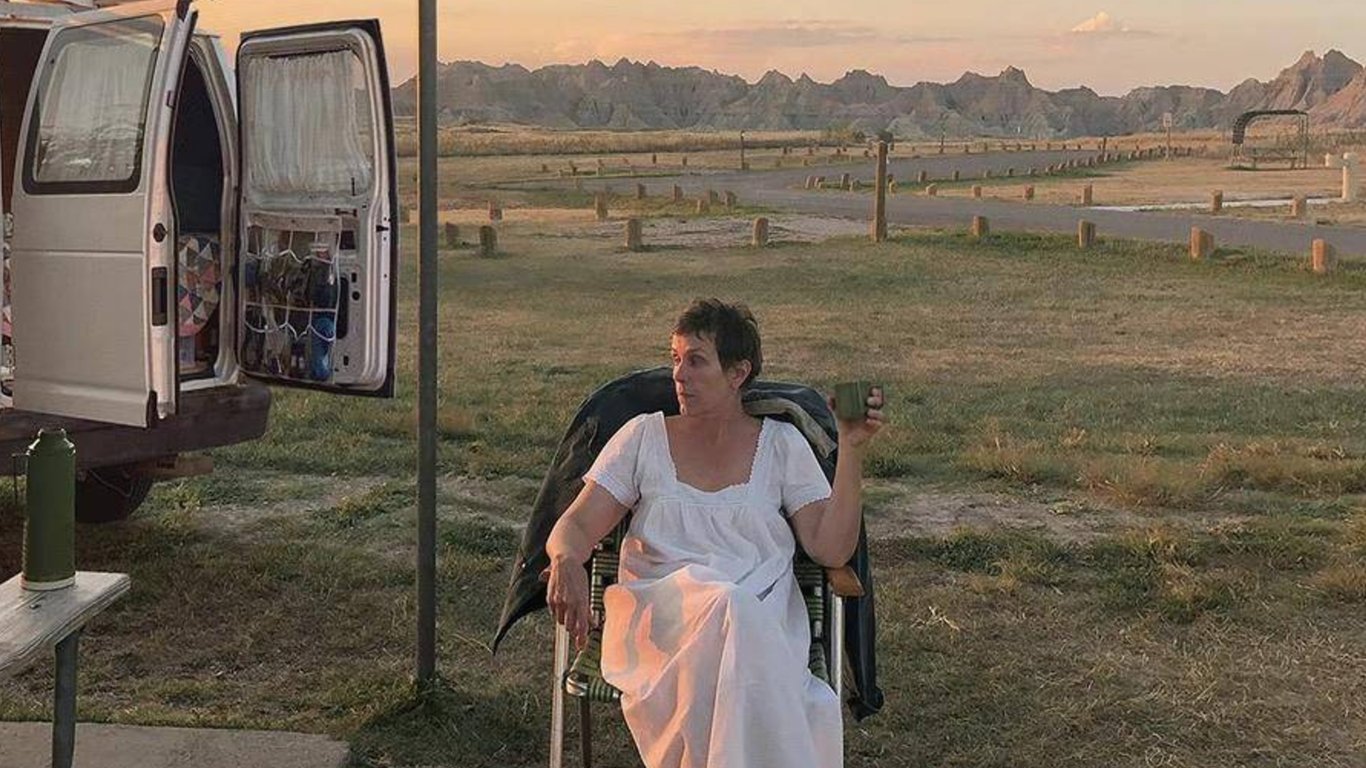
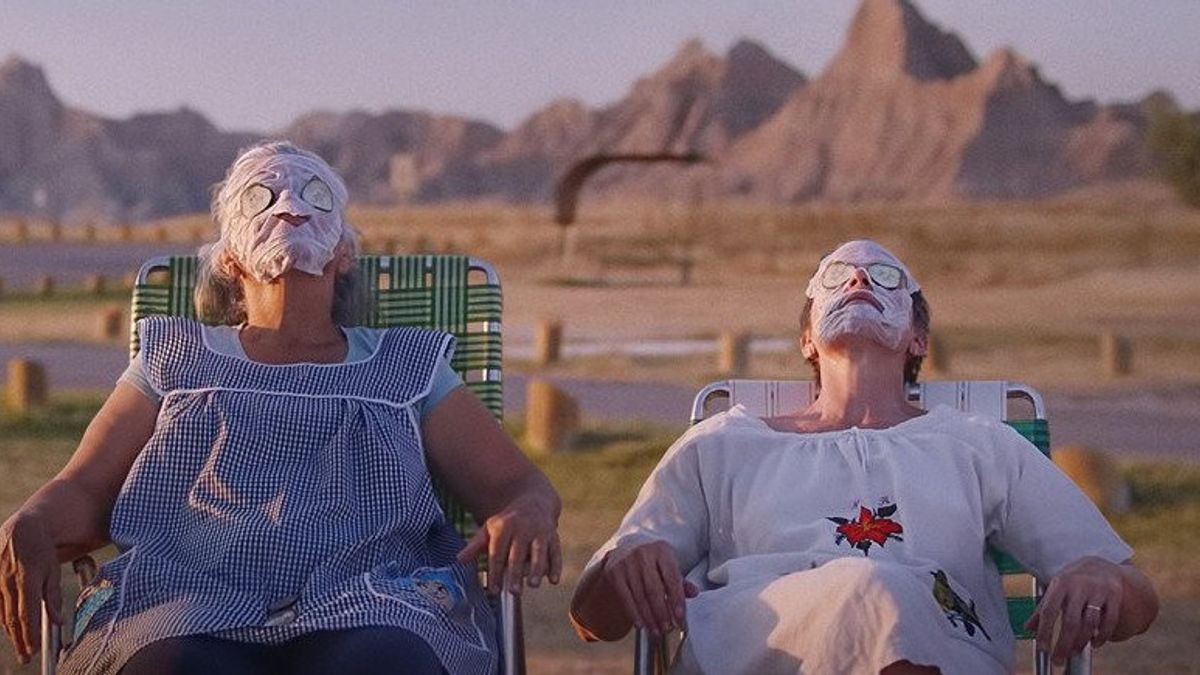
So, after pausing it for days, I finally decided to continue watching Nomadland.

On a normal day, I probably would’ve called it just another melancholic, slow-moving film. But today is not a normal day. My abdomen hurts. I’m not even sure if it’s cramps or just hunger. I woke up groggy from a girls’ night out, and there was nothing left to eat. I spent most of the early afternoon turning the house upside down, trying to clean and organize everything. I was tired... and famished... or maybe just period-ing.

After a not-so-satisfying lunch, I lay down and hit play on Nomadland.

Honestly, the film as a whole isn’t really a tearjerker. It’s flat in some places, kind of boring, maybe even forgettable. But when Dave decided to leave his nomadic life to be with his son, Fern was left alone. Then it hit me. They were never together anyway. Just two people living in RVs. Houseless, not homeless — Fern once said that to a girl. I remember.

And when Dave left, we saw Fern in her quiet moments. She was eating alone in some deserted fast food place, sitting by herself in a near-empty arcade, standing beside a life-sized dinosaur model. And weirdly, I saw myself in her. That’s when the tears started.

I imagined myself older. Face wrinkled. Maybe with shorter hair, because that’s apparently the universal haircut when you reach a certain age. I wondered if I’d even live that long. People tell me I’m still young, that there’s a whole life ahead of me. But during moments like this, I can’t help but picture a future that makes me feel... lonely. Not excited. Just afraid.

Afraid of losing things — my youth and all its what-ifs, the people who shaped me, the places that felt like home. Pino. I can’t even imagine what life would be like without him.

And truthfully, I don’t think I have a life yet. Every day I regret not being bold enough to explore the world. I’m afraid to love because I’m terrified of what I could lose.

Watching Fern at 61, alone, got me thinking. What if that’s me? Would I still enjoy eating alone in public? Would I still feel like myself, even when no one else notices that I was once a 26-year-old who wandered around malls on weekends?

Would I still watch movies alone if my eyesight’s worse and I can barely hear what’s happening?

Would I still come home to Pino? Will he still be there, wagging his tail like mad, standing on two legs just to reach my face? Would my parents still be home? Would they still nod at me when I enter the door?

What about my sisters? They’ll always be two and six years younger than me. Would they already be married, living somewhere else, and watching their own lives unfold while occasionally thinking about our younger days?

And Pino… oh, Pino. I don’t know how I’d ever be ready to say goodbye. I think you’ll be my first real heartbreak, but I also know you’ll always be my greatest love.

These are the thoughts I had while watching Nomadland.

What are we supposed to do when the people and things we love have to go?

This isn’t a typical film review. It’s more like a messy reflection. Despite not loving the film, it still managed to dig deep and pull something out of me.

Nomadland is quiet, melancholic. On a usual day, I’d probably stick with it, maybe complain a little, but I’d finish it. That’s what I like about slow films anyway. They give your mind space to drift. You can zone out and not feel guilty. You don’t need to give your whole attention. It waits for you to return, like a gentle tap on the shoulder.

Getting old is scary. But what’s scarier is watching the things you love slowly disappear. How do you keep going, knowing that time will take them, one by one, right in front of you?

I saw it happen to my grandmother. Time slowly took her — her fire, her memory, her warmth. The warmth that once scared us as kids, but also made us feel so loved. And then one day, she was just… gone.

Once we grow older, do we stop dreaming?

Fern, at 61, hadn’t figured out her life yet. Is that okay? Or should that scare me? Or maybe that’s just what life is. An endless puzzle. A mystery we’re not meant to solve. Just something we keep exploring. Maybe the questions aren’t even there for answers. Maybe they’re just there to keep us moving, convincing us that there’s something to figure out.

Anyway, I think I’ve started to ramble. Never mind.

This is my blog after all. My little corner for nonsense and whateverish.

6/12/25

I'll Come Back to You: A Not-So Review of Green Bones

6/12/2025

Since I had nothing else to do after my Wink appointment, I had already decided a few days earlier that I would go to the cinema. I read that the Metro Manila Film Festival had extended the showing of some selected films until the 14th of January, and I didn’t want to miss this last chance to catch at least one entry from the lineup.

Out of all the entries, I chose to watch Green Bones.

A few days ago, I came across some Instagram reels showing both lead actors taking home major acting awards. On top of that, the film itself won the most-coveted award: Best Picture. Honestly, I hadn’t even heard of Green Bones until I saw those reels—and if it weren’t for the awards they received, I probably wouldn’t have been interested in watching it in the cinema. I’m not really familiar with GMA Films. I’ve kind of been brainwashed by the media into thinking their movies aren’t that great. So if you asked me to name one, I couldn’t. I grew up watching films under Star Cinema. I do know all the actors, especially the leads, from their drama roles, but I’ve never really seen them as the kind of performers who could completely pull you in with their acting.

I was initially planning to watch The Uninvited because of the hype I saw on Twitter. The trailer boasted a star-studded cast: Vilma Santos, Aga Muhlach, and Nadine Lustre. And knowing these actors, they usually pick quality films. But I lost interest when I found out that it didn’t even make it to the Top 4 Best Picture awardees—it only won Best Float, which has nothing to do with the actual film.

My next choice was The Kingdom, mainly because I was intrigued by the unexpected pairing of Piolo Pascual and Vic Sotto. I was impressed that Vic Sotto was making a comeback to the MMFF, this time stepping away from his usual fantasy-comedy niche. 

But when I made the conscious effort to check out some Reddit reviews about Green Bones, I was convinced. The majority said it deserved all the awards it won—the actors were a revelation, the film was absolutely worth watching, and GMA Films is finally starting to make a name for itself. People said it was the kind of film that could finally rival Star Cinema and that it bravely tackled the deeply messed-up social justice system in the country. That was it for me—I knew this would be my pick.

Green Bones is the first film I watched in the cinema this year—and it was worth it.

Coming into it, I let go of all my expectations. I pushed aside all the reviews I had read on Reddit. I wanted to come in with a clean slate so I could experience it as it was, without anyone else’s influence. I let my feelings lead the way, to put it simply.

All throughout the film, one line stuck with me—even from the onset of the story:

"I’ll come back to you."

A line I believe became the central theme of the film. It anchored the lives of the characters, as we slowly realized that life isn’t just black and white.

"I’ll come back to you."

Words that many thought were a threat—but as the story unraveled, we saw it was actually a pledge. And in the end, they became someone’s final words.

I'll Come Back to You: The Threat

The movie opened bleakly, with heavy rain pouring down, dimming the sleeping narrows of Manila’s pavements. In the distance, the blaring siren of a police car echoed through the deep night, as the screen was soon graced by the escaping feet of a man they called Crazy Dom. He stood on a bridge, facing the void ahead, earnestly communicating through hand signs. When translated into words, they revealed a brief yet haunting phrase: Babalikan ko kayo!I’ll come back to you. A phrase the police immediately interpreted as a threat—for catching him and putting him behind bars.

No one knew exactly when he would come back. That’s why the police remained wary of him, always on guard, thinking Crazy Dom was just waiting for the right moment to strike back.

Then the film shifted to the present, told through the voice of a young and passionate prison officer, Xavier Gonzaga, as he set foot in the penal colony of San Fabian—an open-air facility housing inmates charged with unimaginable crimes. It was there that Crazy Dom had been exiled, and where the two would finally meet.

The flashback prologue, at least for me, was a strong hook. From the very start, I was drawn in. Like Xavier, I found myself asking: What happened to Crazy Dom that he turned mute? Was he really threatening the police? Did he really murder his sister?

Did he really murder his sister?—this question probably struck Xavier the hardest. He, too, had a sister who was murdered. That loss became his driving force to become a prison officer, and it led him to San Fabian, especially upon learning of the impending release of Crazy Dom—the man who, according to records, had murdered his own sister.

The first part of the film was told through Xavier’s narration, so the story was framed through his perspective. And that perspective was heavily shaped by the crime reports, by rumors he'd grown up hearing, and by his own grief and trauma. Having lost a sister he loved deeply, he couldn’t wrap his head around the fact that Dom had the supposed audacity to take the life of his own.

I understood why Xavier became so emotional whenever Dom was around—but at times, it felt like he was too intense, to the point that he lost sight of his duty as a prison officer. Throughout this part of the film, his eyes were locked on Dom, watching his every move, always on edge, just waiting for a slip-up. He was desperate to find any evidence—anything powerful enough to revoke the release Dom had long been awaiting. A release that Xavier was determined to block, convinced Dom didn’t deserve it.

But everything soon began to change when he met Betty.

I'll Come Back to You: The Pledge

Here—at the same time as Xavier—we learn that the phrase “I’ll come back to you” was never a threat, not to the police or anyone else. It was actually a lifelong promise Dom made to his niece, Ruth—his late sister’s daughter.

By this point, the narration shifts to Dom’s perspective. We finally hear his side of the story, uncover the truth about the past, and begin to see the inner conflict building in Xavier as he realizes that his hatred toward Dom was unfounded. It was all the result of a broken justice system. Dom wasn’t a criminal. He didn’t kill his sister. He was a victim—one who had been wrongly accused and labeled the murderer.

To be honest, I already had a feeling from the beginning that Dom didn’t kill his sister. Realistically speaking, he's the main character—and usually in stories like this, when the protagonist ends up in prison, it turns out they were blamed for a crime they didn’t commit. They end up spending most of their life behind bars, paying for something they never did. So, the “reveal” in this part wasn’t exactly shocking or unexpected.

However, I still appreciated the way certain details from the past unfolded—especially those shared through Dom and Betty’s narration. There were moments I hadn’t anticipated, and those small surprises helped deepen the emotional weight of the story.

One detail that really stuck with me was that it was Ruth—his sister’s daughter—who taught Dom sign language.

That night, when the police found Dom on the bridge and assumed he was making a threat, he was actually making a vow to Ruth and Betty. They were somewhere nearby, hiding—afraid that Ruth’s father would find her. So Dom entrusted Ruth to Betty for her safety, making that promise with his hands: “I’ll come back to you.”

I'll Come Back to You: The Last Words

The flow of the film, at this point, honestly dipped a little for me because of how some scenes were handled, especially by the main characters. To be real, I was a bit disappointed with how Xavier seemed totally lost after finding out the truth about Dom. Of course, I felt a boost of excitement seeing them finally working together, going up against what Jonathan Cruz and Juanito Velasquez stood for. But it just felt kind of off to see Xavier get overshadowed during the fire scene. Like… where did all his police training go? Suddenly, it was Dom taking charge and leading the rescue while Xavier just stood there watching. That part didn’t sit well with me.

I also started to wonder if the sense of camaraderie in this fictional penal colony in San Fabian was being portrayed a little too idealistically. We were only shown its good side. It would’ve been more believable if the film also showed us other parts of prison life—the kind of inmates there, what they went through, where they came from, and how they ended up behind bars. I get that the focus was on Dom and his small circle, and that wasn’t bad at all, but I think it could’ve added more depth if we also saw the raw side of prison life, not just the injustice of the system.

Still, I really liked how things unfolded towards the end—especially the big reveal about Juanito Velasquez, the head of the colony. That twist worked well. It showed how the people we expect to serve justice can actually be the ones distorting it, especially when the victims are those without a voice, or worse, those who’ve been silenced—literally or figuratively.

In the end, I’d say the film gave us a satisfying wrap-up. I even found the last scene kind of witty. When Xavier visited Dom’s grave, he didn’t find the green bone he thought would be there. Instead, he found a crispy 100-peso bill buried in the soil. I think what that moment was trying to say is, it doesn't matter if someone’s bones are green or not. That’s never been a real measure of whether they were good or bad. The fact that it turned out to be money just added to the irony. And maybe that’s the point—life is full of irony, and sometimes, even in death, we still don't get the clear answers we think we deserve.

6/3/25

Lost in Starlight

6/03/2025

Nothing beats the feeling of starting a movie randomly on a day you least expected to watch, and yet to finish it with a bursting and uncontrollable happy buzz.

Although it wasn’t exactly random, I had been anticipating this movie after coincidentally finding it on the app while browsing for a new set of movies to add to my watchlist. From the trailer, I immediately downloaded an offline copy of it, only to find out upon watching that it hadn’t been released yet—it was only the trailer that I had saved to my library.

I didn’t know exactly how long I had waited for it to be available, but when I checked again last Sunday, the full movie was already out.

Then came Monday. The whole day seemed undecided on whether it would rain or shine, so both happened almost alternately throughout the day. I had just finished my daily practice on Duolingo for my Japanese language lessons, and I wasn’t particularly in the mood to take my usual after-work nap.

“Lost in Starlight!,” I suddenly exclaimed under my breath.

It was actually my first time watching an animated Korean film—if Solo Leveling doesn’t count. I had absolutely no expectations going into it. All I knew was that the voice actors were Kim Tae-Ri and Hong Kyung. That was enough to spark my curiosity. I remembered skimming the synopsis when I watched the trailer, but by the time I sat down to watch it, I had completely forgotten what it was about. Looking back, I think that worked in my favor. There’s a unique kind of joy in discovering something with a blank slate, without any idea of what you’re about to experience. It reminded me of the first time I watched Before Sunrise. I had stumbled upon it years ago while Googling “the greatest films of all time to watch before you die.” It was on one of those lists. I didn’t know anything about it, didn’t even bother reading the plot summary. I just trusted my instincts and pressed play.

Two hours later, I was still in front of the screen—completely moved. I had watched it in low quality on Facebook, but I didn’t care. I was heartbroken by how the story ended, not because it was tragic, but because it was so real. And yet, underneath all that, I felt euphoric. It was the first time I had ever truly loved a movie.

I felt like I had fallen in love—either right at that moment, or during the entire time I was watching it. I couldn’t even place the happiness I felt. It was something I had discovered on my own, without any recommendations or hype, and that made it even more special. I savored every scene, every piece of dialogue. I was stunned that a film—so simple, so stripped-down—could affect me so deeply. No dramatic twists, no flashy visuals. Just two people talking, a story that flowed naturally, moving steadily forward. And I loved every second of it.

And I felt this too after watching Lost in Starlight. I might sound hyperbolic—and I know I am—right now, riding the peak of that post-movie high. This film might not even be that good for others, but I'm speaking from the moment, and I want to capture that here in this blog. I want to document how great this film feels to me, despite the fact there are loads of animated romance films out there I could find and watch.

I’m telling you, it’s been ages since I last felt that “kilig” feeling—that tingling, sensational buzz you get from a romantic film. The last movie that really did that for me was Before Sunrise. After that? I honestly can’t remember if anything else ever hit the same way. And now here I am, gushing over the hopeless romantic vibe of this animated film.

Let me start with the animation. It reminds me of those cyberpunk-style images I see on Pinterest whenever I’m hunting for a new desktop wallpaper. It’s funky, 4K-ish, and has a touch of Spiderverse visuals—but with a Japanese anime twist. It’s not clumsy, where a character looks off when viewed from another angle. It’s polished, kinda dreamy, and clearly futuristic, which makes sense since it’s a romantic sci-fi film. The colors are bursting like a comic book, again giving me Spiderverse vibes. This film is legit high quality—and honestly, every shot looks like it’s made to be screenshot.

The story is definitely not new. When we talk about sci-fi, there are myriads of films—mostly Western—that come to mind. The first one I thought of was Interstellar. It was actually in the back of my mind while I was watching this. So the challenge, or at least what I had in mind early on, was: how could Lost in Starlight be different? What new thing could it offer that would make it stand out and have its own identity? Or would it just be another sci-fi-ish film trying to give yet another perspective on what life might be like in the future and the never-ending expedition into outer space?

To be honest, I actually liked how the film stayed grounded and didn’t get too ambitious in that part. Right from the start, it was clear they weren’t aiming for a full-on sci-fi plot with heavy jargon, random equations, or Einstein name-drops. It wasn’t like that at all. I’d say it’s more of a romantic film than a sci-fi one. The sci-fi elements are just in the background. So if you're expecting something like Interstellar but animated, this isn’t it. But if you’re in the mood to feel butterflies in your stomach, then this one’s for you.

I was seriously blushing while watching them—from start to end.

It didn’t even feel like they were animated. I saw them as real people. The gestures, the expressions, the little movements—it all felt real.

One scene that made me swoon was that night when they had to grab another Coke. They stopped somewhere, rested a bit, and just chitchatted. Nan-young asked Jay about his lifelong passion for music, and Jay said he was waiting for it to come back to him. Nan-young, listening intently, started moving her fingers like tiny footsteps—step by step, inching closer to his elbow resting on the railing. Then she said, “It’s coming back now to you.” Their tipsy faces, especially Jay’s—he was already blushing from her gestures—blushed even more. It was so subtle but it hit me hard.


There were actually several swoon-worthy moments throughout the film that I could talk about—but I’ll keep them to myself so I don’t spoil anything for anyone.

The story was set in 2066, which is about four decades from now. That made me pause and wonder: will I still be alive by then? If so, I’d be around 67 years old. Not too old, right?

What really stood out to me was how far technology had come in their world. There was an airborne public vehicle with a transparent body, and a wristwatch that looked way more advanced than anything we have now. I don’t even remember seeing anyone with a phone in their hand. It made me curious—what will happen to gadgets like our phones after a few more decades? Will they vanish completely, replaced by something we can’t even imagine yet?

One thing that fascinated me was their camera. It could summon the person you were calling, almost like they were there with you—invisible, but able to move around freely and see everything around you in 360 degrees. It felt both magical and slightly eerie.

These were just a few of the thoughts and observations I had while watching.

And then... came the OSTs! Don’t even get me started on those.

Obviously, music plays a big role in this movie, especially since Jay is a musician. I think that one scene where Nan-young played a demo song she accidentally found on Clouds—without knowing it was Jay’s—really marked the moment he realized he was doomed for her. Of all the people in the world, the chances were so slim, and yet the girl he happened to bump into while out on a delivery turned out to be the same person who had downloaded his song just minutes before he deleted it. And it wasn’t just any song—it was Nan-young’s favorite. Small world, right?

I haven’t listened to the full playlist yet. It’s not available on Spotify or even YouTube. Strangely, though, it is on Instagram. I found “Bon Voyage” when I tried adding music to a picture I posted. 

I couldn’t stop talking about how this movie made me feel. Right after watching it, I opened my Letterboxd app, gave it a glimmering 5 stars, and added it to my liked movies without a second thought.


One thing I allow myself when rating a movie is to go with how it made me feel. I don’t try to be too strict or overly objective. I don’t want to judge a film only by its structure, deeper themes, or the technical standards that supposedly make a film “great.” If it moves me, that’s enough.

It honestly makes me feel giddy whenever I find a movie that hits just right. It lifts my mood, makes my day, and even inspires me to write things like this.

Lost in Starlight is a well-made film—and truly impressive for South Korea’s first animated feature. Animation isn’t something the Korean industry is widely known for (yet), but I can see the ambition and heart behind this project. It’s the kind of movie you’ll want to share with your friends—which I already did.