Showing posts with label Personal Narrative. Show all posts

10/19/25

I've Lived Through Four Deaths

10/19/2025


The first time I witnessed Death, it was on a random weekday. I was slouched against my grandmother’s well-worn wooden cabinet, TV colors flickering across my eyes. Mama was watching with me, just as absorbed as I was in a talk show whose name I can hardly remember now. I knew I had school that day, my hair was still wet, and I probably had about an hour or so left to get ready for my afternoon class.


And then, without warning, it all happened right before my eyes.


Mama rushed downstairs. The urgency in her footsteps sent a sudden wave of panic through my chest and I didn’t even know what was happening. The TV hosts kept blubbering their lines in the background. I glanced at the spot where Mama had been sitting moments ago, and a shiver ran through me when I realized how much emptier it looked. I was frightened and clueless, my ears throbbing as if trying to catch some hints from the earful murmurings of our neighborhood.


I don’t know exactly how I got my body to move, but in an instant, I was by our gate. My neighbors were there, yet they seemed unaware of me, as if I didn’t exist. I searched their faces, their moving mouths, but their voices were muffled. Despite the unwanted cacophonies, I managed to catch fragments of words, just enough for me to piece them together and regain my bearings.


Patay. 


Ngayon-ngayon lang. 


Tatay.


Doon sa kabilang bahay.


These were the words I caught in the air as I tried to breathe as normally as I could in that insane moment. I may be around eight or nine years old then, but I was already old enough to understand what those words meant. Then, I just found myself running so fast I could no longer feel my legs. I caught up to Mama, and her back was crying. She wasn’t exactly running, but her body moved so quickly that the people we passed blurred into a swoosh of color. I called for her to slow down, but she was somewhere else entirely.


The closer we got to my grandfather’s house, the heavier my heart grew. It stood taller than my grandmother’s hard-earned home, but the height only made it look awkward. Its walls were painted with negligence and damp, and the steep stairs looked slick. The smell inside was fishy, and I couldn’t remember the last time I had visited him. Their room was upstairs. Mama slipped from my mind for a moment when I saw my cousin at the bottom of the stairs with his friend. He was wiping his face with his white sando. He had likely heard the news before we did and had already gone there ahead of us.


Then, a loud series of whimpers echoed through the house. The sound was so raw and painful that I felt another pinch twisted my skin. It was the kind of pain that stays with you. Even now, I can still hear it whenever my memory drifts back to that moment.


When I went upstairs, I saw a tableau of crying women, my grandmother slumped limply on the floor, holding her former husband dearly with her trembling hands. I had always been familiar with the sounds she made: the sharp tsks of her tongue, the breathy psst between her teeth, even the weighty silence of her angry face. But that day, I heard a sound from her I had never known before. I had thought I would never hear her cry, because to me she was a warrior. I had long since accepted the impossibility of her tears, but seeing her shoulders shake from deep sobs felt so foreign that I could never have imagined her cry would sound like that… heartbreaking.


I think that was the first and last time I saw her cry.


While watching my grandmother, I caught a faint but lasting glimpse of my grandfather’s lifeless frame. I can still recall how halo-white he was. His skin held that unusual white stillness. His co-ords looked bleached white, and everything about him was so ethereal that he seemed to camouflage into the white bedding on the floor.


Just as my grandmother stood up, my mother appeared from nowhere. I had been so absorbed in everyone’s crying that I had forgotten who I was chasing when I left our house with the TV still on. The weight of her steps seemed to sink into the floor, so heavy with grief that she had to drag herself toward my grandfather. I thought he was already gone, but he was still hovering between life and death. Maybe, he had returned only to say farewell to his only daughter. With his eyes closed, he gathered what little life was left in him and whispered something to Mama. 


Then everything went completely silent. 


The next moment, Mama was crying so hard. So hard that, even now as I write this, I can’t help but swallow the tears rising in my throat just from remembering it.


I knew my grandfather was dying, and I knew that was why everyone was crying. As for me, I cried only because Mama was crying. My understanding of death back then was shallow. I knew that once you’re dead, you’re dead. What I didn’t know was the weight it leaves on those who remain.


My grandfather’s death didn’t steal away my mother’s light, but whenever I watched her closely, I could see the traces of his death still resting on her. I saw it in the quiet that followed her laughter, in the way her mind traveled somewhere far while she was scrubbing fabric between her hands, even in the stillness as she waited for hot oil to settle when she was cooking something.


I thought that would be the last time — until ten years later, I experienced Death for the second time, this time through my grandmother on my father’s side.


I also had school that day, but only in the afternoon. That morning, I woke to a sound— the kind that pulls you out of sleep before you even know what it is. It was my father’s voice, restrained and trembling, carrying a grief I had never heard from him before. 


Like my grandmother on my mother’s side, I was only familiar with certain sounds from my father — his uncharacteristic sneeze, the crisp whuff of his shirt before he put it on for work, the rhythmic knock of his knuckles on the door, and the steady, almost melodic thud of his hammering. That’s why hearing him cry for the first time felt so strange, like the sound didn’t belong to him at all.


I wasn’t as close to my grandmother on my father’s side as I was to my mother’s. So, even though it came as a shock to hear that she had passed away, I wasn’t as devastated as I thought I would be. Maybe it was because we grew up with so little of her presence. She lived in Davao, far away from us, so it was understandable that we never had the chance to bond as grandmother and granddaughter. We only saw her a handful of times in her lifetime, mostly during her rare vacations to visit us.


Still, the few memories I have of her are fleeting but sweet. I remember her easy yet demure smile, her lovely and soothing voice. Whenever she and Papa sang karaoke, she would always sing “I Have a Dream.” I never sang it myself, yet I memorized the lyrics just from hearing her sing it so often. Even now, whenever I hear that song, it’s her I think of.


Just like how I felt my grandfather’s loss through Mama, I only felt hers through Papa. I guess seeing people out of their usual and familiar temperament, in my parents’ case at their most vulnerable, was something truly heartbreaking to witness as a child. I never used to see them break down, so whenever I did, in those rare moments, I saw them as children—small and unshielded.


After Papa came home, I never saw him cry again. It was as if nothing had happened. We were never close, so I couldn’t begin to guess how he carried his grief. All I know is he carried it in silence. And I can’t help but wonder if he still does.


Then, four years ago, Death visited me for the third time—through Nanay.


She was the grandparent I held closest to my heart. I grew up with her as she grew older with me. I’d met Death twice before hers, but never once did I imagine that one day it would be her I’d be grieving for.


I think it was Nanay's warrior-like demeanor that gave me the otherworldly confidence that she would grow older yet remain the same. I only had one passing thought about her death when I was a kid, when I asked Mama, very innocently, when Nanay would pass away. After that, the thought never came to me again. It slipped so far from my mind that I began to believe it would never happen. So when Nanay became bedridden from senility, I thought it was just a phase and that she would recover in time. 


But that time never came. What did come was her sudden passing on the 28th of April. That night, the neighborhood fell flat, only punctuated with the muffled echoes of our labored breathings. I tried to revive her with gentle urgency, hoping that my clumsy, diffident attempt could buy me a sliver of her life, just enough for her eyes to stay on me even for that thin shred of a moment. 


Her death devastated me the most because I didn’t experience it through someone else’s grief, I went through it alone, inside myself. Then, the silence became the only sound left in me. I thought that grieving for her meant hushing the remaining life in me. I felt like if I smiled too soon, or allowed myself the tiniest flicker of joy, it would mean that I had already forgotten her. That it would mean betraying what I lost and what I would miss, betraying the weight of her passing. So, I choreographed her loss with muted grief, holding it close, afraid to spill it out loud. 


Little did I know, what I was doing was not grieving but imprisoning my capacity to honor what I would miss and praise what I lost—which was her.


I read a short book called The Smell of Rain on Dust by Martín Prechtel. It was a tough read for someone who has just gotten back into reading. It was difficult because it was poetic and philosophical, but mostly because it spoke the truth—and it spoke to me directly. This book helped me start making peace with myself (no, not completely yet). But it helped me forgive the parts of myself that claimed responsibility for everything that happened in my life, and in someone else’s. I learned that grief is not silence, but a sound—a sound of being alive.


They say that when someone dies, a big part of the people they leave behind also dies with them. But for me, it was the other way around. I felt like Nanay left a big part of herself with me, and I carried it with guilt. It was like this automatic reminder every time I’d feel even a tiny spark of joy—or in other words, when I felt like I was “not grieving.” I thought grieving for her meant burying myself in the deepest pit of loneliness, keeping the same grief we felt when she died and carrying it forever. I thought holding on to that loss was how we immortalized her, how we gave her some kind of second life. But that book made me realize I wasn’t grieving. I was punishing myself for her—someone who wouldn’t have wanted that if she were still here. The book says, “To not grieve is a violence to our own hearts and especially to the dead,” and maybe that was true. I wasn’t really grieving because I was hurting myself, and that wasn’t what grief was meant to be.


Grieving is giving back to the life we had with our loved ones. It is celebrating the life we still have ahead, knowing we have eternity to miss them and remember that we once loved. If we do not grieve, we stop remembering them. Missing them is our way of staying connected to them and their memories—whether those memories were joyful, sad, angry, or painful—because all of that is part of who they were.


Everywhere at home reminds me of Nanay. It still stings, but I keep trying to tell myself that the things that make me sad are the same things that keep her near. Maybe I am hurting because I loved her so much. Maybe I have lost so much because I loved her so much. And this pain reminds me that, despite my unwillingness to believe it, my grief for her means I am still capable of loving.

4/28/25

Nanay's Third Death Anniversary

4/28/2025

Today is my Nanay’s third death anniversary.

It’s been three years, and it still feels strange—strange that she’s no longer here. It feels like only yesterday... but I guess it's a distant kind of yesterday, when she was still in the other room, lying on her wooden bed, its headboard wallpapered with cute teddy prints. She was breathing—heavier than a couple of years before. Her face had thinned with age, eyes unfocused, as if she was seeing more ghosts than people. Even just a sip of water took big, labored gulps through a plastic straw.

I still remember that afternoon. I thought it was just another COVID-filled day. It was the same date as today. Who would have thought that three years later, I’d still be fighting tears over her loss?

It was just another day of tapping and clicking at work. I remember the last long glance I had at her before that night. I had gone downstairs to get myself a glass of ice water. It was summer, and I felt drenched. Nanay was sleeping peacefully. Looking back now, I feel so sad. She had grown thinner than I remembered. She used to be so full of fire for a grandmother: long face, lips always tight, eyes flaring with emotion. She was an Amazona—truly. Born in 1931, a product of traumatic wars, she survived life’s cruelties and had no choice but to be angry at the world. Maybe that was the only way she knew how to live. She had a glorious past behind her, and now the only way to feel her breathe again is to remember the good old days while trying to silence the lingering guilt I still carry from the night I tried to revive her.

Nayyyy!

I let out a long, whimpering whisper of pain through her name. I thought that mumbling it into the dead air of April 28th might somehow fill her lungs again, as if her name alone could breathe life back into her while I kept pumping her chest.

I didn’t understand why they were just standing there beside me, looking down at her frail, unresponsive body—only weeping, only wiping their faces. Why weren’t they helping me call her back to life?

I wouldn’t stop. I kept pressing on her chest, even as the painful knowing crept in that... all the air inside her had already left.

Nayyyy...

One more pump.

Two more. This time, a little faster.

Three, I guess.

They were already holding my wrist to stop me. I looked at them—full of anger, frustration, and a thousand whys. Why weren’t you helping me?

Again.

I don’t remember how many pumps I did, or how numb my wrists had become. The last thing I remember was heaving, hopeless, detached from my own body. I had no energy left, not even to cry. Then... slowly... the cold began to spread through her body. The warmth of her long days had drained away. The fingers I was holding onto—lanky and lifeless—sent a shiver down my spine. In just a split second, she depleted. Her cheeks vanished from her face. Her mouth hung open, softly, as if her spirit had slipped out from there and joined the evening breeze. Her whole frame looked like those skeleton models I used to see in science class back in grade school.

That night, it was hard for me to cry and because of that, I felt like I was a bad granddaughter. We were too busy accommodating visitors to properly mourn her. It was 2022, and we were still under lockdown. And it wasn’t the kind of funeral Nanay deserved.

We offered forced smiles, instant coffee, biscuits, and small, polite words. We were only allowed three days for the wake. And for those three days, we were tired but moving—sad and busy—running papers, counting paper money. Three days felt too short to mourn her, yet weirdly long, like the funeral had gone on forever.

And during those three days, I didn’t cry. I didn’t even peek into her coffin. I didn’t want to let her go. The face I wanted to remember was the one from when she was still alive—the one always frowning, scowling, irritated by life, by the noise of the neighborhood, even by the sound of people breathing. But those faces were also full of endurance, forgiveness, and love. They were the faces that, even after three years, I still wish and pray to see... if only in a nightmare.

If ghosts were real, how I wish she would haunt me. She was a scary Asian granny but she was exactly what I need.

On the last night of her funeral, I cried finally. My body shook from such intense weeping I thought I could die. It was the first time I saw her face since she left. She was pretty (still pretty scary hehe). No amount of cosmetics could hide the loveliness dressed in anger. She looked at peace, as if simply taking one of her routine afternoon naps under the blazing summer sun.

It has been three years, and everything is still so clear to me. So clear that it feels like the Thea who tried to revive her that night never really left that moment...stuck there until today. I can still see her—lost, gawking at that deserted bed, questioning the world and blaming the heavens over and over. She’s still there, with no lights on, alone. Maybe afraid. Maybe already used to the dark. Sometimes she still struggles to take even the smallest step, to open the door and come out.

It has already been three years, and it’s still heavy. Still strange.

Sometimes it feels like she’s just away—maybe on vacation. Maybe she went back to Cebu, her hometown. Or maybe she walked to Baclaran Church to pray. Maybe she’s just strolling around the neighborhood, scolding street kids for being too loud.

Three years have passed, and I’m still here. Still carrying guilt for all the things I did wrong to her.

Nay, I still haven’t had a good cry.

I wonder... when will I be able to?

I miss you… so much that sometimes I wish I were just there with you already.

Why does life make us crumble?

Why does it have to be this hard?

Why does it feel like the only way to live is to survive?

Do I even deserve to be happy—or not, because I was a bad person? Why is it so easy to believe the worst about yourself?

It’s so hard sometimes, Nay.

1/4/25

Imagination: From Play Money to Story Pages

1/04/2025


I can’t quite recall which dream came first, but I know I wanted to be both a cashier and a halo-halo vendor even before I fully understood the concept of a "dream." Like many young girls, I dreamed of having my own toy cash register at home. I remember begging my mom to persuade my godmother—who lived just a short walk away—to buy me one. Back then, it was just a simple play-money cash drawer, nothing like the sophisticated electronic cash registers you see online today with built-in calculators, checkout scanners, weight scales, and even microphones. That little toy was priced at about one hundred and fifty pesos, which felt like a small fortune given our financial situation. That’s why I had to plead with my mom to shamelessly ask my godmother to give it to me as a Christmas gift. To my delight, after two Christmases had passed, my godmother finally handed me the much-coveted cash drawer. She even joked that it would be her last gift, as I’d no longer be a child by the next Christmas.

As for wanting to become a halo-halo vendor, it wasn’t exactly a steady dream. It only came to mind every summer when a lady in our neighborhood became the talk of the town for her delicious halo-halo. She had a way of skillfully layering the ingredients in such an inviting, mouthwatering way, topping it all with a spoonful of ube halaya, a rectangular slice of leche flan, and a generous drizzle of evaporated milk. Watching her work her magic, I wanted to be just like her when I grew up. I imagined myself standing in her spot, wearing an oversized, earth-toned shirt fluttering in the humid summer breeze, with my hands expertly crafting desserts for a crowd of eager kids.

But those dreams were eventually replaced by another when a few of my grade school classmates complimented me on how neatly I had drawn a stick house on my pad paper. That little push was all it took for me to tell my mom I wanted to become an architect. I didn’t realize how naive I was to think that simply drawing a straight stick house qualified me to be an architect. Still, it was quite the leap from my earlier dreams, wasn’t it?

Then came second grade. I remember the same teacher who confidently—but perhaps mistakenly—taught us to pronounce "animals" as aniMOLS. Ironically, she was also the one who convinced me to change my dream to becoming a teacher. No, it wasn’t her pronunciation that inspired me, but a specific moment that stuck with me. One day, she was clearly unwell, coughing between sentences and looking utterly exhausted. Yet, there she was, tapping the blackboard with her stick and dictating words for us to write down. It was the third time in my young life that I found myself admiring someone’s sheer determination. Despite her obvious discomfort, she showed up to teach us. That moment struck a chord deep within me—a calling, perhaps. I wanted to be like her. I wanted to inspire another child, just as I was inspired, by showing how the drive to educate could push through even the physical discomfort of illness. From then on, I held a newfound respect for teachers and their craft. It became a driving force behind my dedication to my studies. I wanted to honor the knowledge and lessons they gave me by not letting them go to waste. For a time, I thought that would be my final dream: to become a teacher.

But then, the summer before fourth grade arrived. One day, I went downstairs to invite my friends—who were renting the room below our house—to play outside. To my surprise, when I peeked into their room, they were completely engrossed in their notebooks, writing furiously. They were so focused they didn’t even look up when I called to them. It wasn’t until I called a second time that one of them finally acknowledged me, only to say they couldn’t come out because they had to keep writing. I felt a little hurt at first, but since they were my only playmates that day, I decided to step into their room out of curiosity. I silently watched them write, their hands moving so fast across the pages that it seemed like the words were pouring out of nowhere. Unable to hold back my amazement, I thought out loud, “Where are those words even coming from?” One of them, without missing a beat, responded nonchalantly, “Imagination.”

Imagination?

It was the very first time I had heard that word. I let each syllable roll on my tongue, trying to link it to something familiar in my memory—anything that could help me define it without having to ask. But I couldn’t find anything. Finally, I asked them directly: what was imagination, and what did it have to do with what they were writing? Patiently, they explained. Imagination, they said, was the ideas they created in their minds—made-up scenarios and worlds—that they poured into words when writing stories. 

At that moment, something clicked inside me. It was the exact same awe I had felt when I watched my teacher coughing at the blackboard, her chalk-dusted fingers unwavering in their duty. But this time, it was as if I was transported to another realm. When I mouthed the word imagination out loud for the first time, I felt as though I had stepped into a universe dotted with countless stars. I saw a unicorn with smooth, milky-pink skin and a single spiraling horn glinting in the light. I saw magic, superpowers, and endless possibilities. That moment was monumental—a catalyst for what would become my lifelong dream. I didn’t start writing immediately, but I became utterly fascinated by words. Literally, every word, everywhere. I began scanning textbooks—whether English or Math—and studied how words formed sentences, and how sentences turned into paragraphs. Even technical instructions in Math books caught my attention. I questioned everything: why were the words in literature so different from those in Math? How were they chosen to suit their purpose?

It was a transformative period for me. By fourth grade, I had written my first story—a Wattpad-like love story about high schoolers navigating friendships, heartbreaks, and the fear of stepping into college. I shared it with my classmates, and their praise was overwhelming. They encouraged me to write more, sparking a confidence I had never felt before. By the time I started high school, I already knew what I wanted to become:

I wanted to become a writer. 

That was always my response whenever someone asked me about my dream. This question was a common one for high schoolers, who, in just four years, would have to choose a course aligned with their aspirations. Unlike my earlier dreams—which came and went quickly—this one stayed with me from the moment I discovered it, lasting well into high school. I was confident it wouldn’t change. It felt final, certain, like the one thing I was truly meant to pursue. So, I kept writing. After school, I spent hours imagining and crafting stories, doing little else. Looking back, I might have seemed like an addict—obsessed with writing and nothing else. I vividly remember gathering the blank pages from my old notebooks, sewing them together to create one thick book to house my stories. I even had a friend once ask how I managed to fill up those thick notebooks with words. Honestly, I had no clear answer. It just felt natural, like a stream that never stopped flowing. There were no dead ends, just an endless surge of ideas waiting to be written. 

Time flew by unnoticed, and before I knew it, I was in my senior year of high school. One of the best memories I have from that time—perhaps the best—happened just before graduation. I ran into my English teacher as she was heading downstairs. She stopped me in my tracks, smiled, and asked about the latest essay I’d written. Then she told me it was great. I don’t quite remember how I reacted at that moment, but I’m sure I thanked her. As we parted ways, I struggled to contain my giddiness. Her words stayed with me, lighting a spark of pride and motivation within me. Not long after that, I had another encounter with her. This time, I approached her with a question that had been weighing on my mind: what course would be best for someone like me, dreaming of becoming a writer? Without hesitation, she suggested Journalism. 

But my entrance exam score wasn’t high enough for me to pursue Journalism in college, so I ended up with my second choice: majoring in English. At the time, it felt like a mistake. It seemed like everyone in this course was in the same boat—people who hadn’t passed their first-choice programs. I resented it at first. It felt like a constant reminder of why I couldn’t study Journalism, and to make matters worse, I had no clue what this course was really about. At one point, I was so frustrated that I seriously considered dropping out and transferring to a more "practical" course. But then, something convinced me to stay. 

And do you know what it was? Writing.

If I’m not mistaken, our first play was based on Greek mythology, though we drew inspiration from the movie Gods of Egypt. I don’t remember exactly what I wrote in the script, but I clearly remember how much I enjoyed the entire process—brainstorming, conceptualizing, writing, and distributing the final output to the production team. It’s always the act of writing that makes me feel seen. I felt that way every time we were preparing a play for our productions. It might sound cringy, but this was when I truly felt like I was living with a purpose. There’s something about having a purpose that makes you feel like a good person—and writing gives me that sense. It helps me find beauty in every little moment and honor it through words. Honestly, if it weren’t for the plays we wrote, I don’t think I would have enjoyed my college life as much. 

Writing saved me.

I thought it would always be that way—saving me every time I fell. But after graduation, life happened. Life gutted me and flung me into a bottomless abyss. At that time, I almost accepted that I would be trapped there—in a dark, lonely pit of life where nothing could save me. Going to work as a first-time employee felt like dragging myself through each day. The moment I stepped outside our house, I felt like I was close to dying. It was as though a heavy cloud hovered above me, pouring rain and thunder, keeping me on the edge of tears, even while simply working at my computer. I always had that lump in my throat that kept my lips sealed because if I opened them, I might burst into tears—and I didn’t want to scare anyone at work. This went on for months—months of just surviving and merely existing. Then, one day in November, our operational manager hushed the office and asked for everyone's attention. She announced that for our year-end party, there would be another friendly competition for all the teams, just like in previous years. This time, however, it would be a short film contest. That meant we had to prepare a script—had to write.

In that very moment, amidst all the excitement, I found myself rising from an unknown yet familiar depth. I realized, in that brief instant, that I had been in a much darker place, and the tension I felt was more intense as I struggled to reach the surface. I was lost in thought, yet I could hear my coworkers encouraging me to lead our team and write the script because they knew I used to write. I felt the rush of air filling my lungs as I nodded absent-mindedly to them. I could hear my heavy breathing echoing in my chest, syncing with the beat of my heart.

I let out a relieved sigh. 

Finally, the relief of breathing freely again. Then, the depth of loneliness was replaced by the gentle pull of gravity, and everything from that point on began to feel brighter and clearer. The heavy cloud above my head dispersed, and was replaced by a spark of hope.

Regrettably, we didn’t win Best Picture, but I did win Best Director. Still, I was beyond blissful. The confidence I had lost after graduation finally found its way back to me. I broke down the walls I had built between myself and my coworkers and started joking around with them. It led me back to my old self—the one who could be good at something once she put her mind to it. From being ranked the lowest, I managed to work my way up. That short film contest helped me trust myself again, and it enabled me to perform at my best at work, eventually earning multiple star awards. Looking back, it produced fruitful outcomes when I was reminded of what gave my life meaning—the same dream that could save me.

Writing has saved me once again. And it always will.

I’m now writing whenever I can, even though I have to force myself sometimes. I still haven’t been able to pursue writing as a full-time profession because I have other priorities right now that can support me financially and help me achieve my other goals. Looking back, I regret putting writing aside while I was focused on my practical work, thinking I could pick it up later. But writing, like any skill, needs to be continuously cultivated. It may not be one of my top priorities at the moment, but that doesn’t mean I’ll let it stagnate, thinking it will magically return to the same state when I pick it up again. For me, writing is about simply writing—nothing fancy, no beating around the bush. I just need to write and keep doing it.

I’ve realized I shouldn’t loathe my current job just because I’m not able to pursue my dream right now. Instead, I can use it as a stepping stone to help me get closer to my goal.

It may not be my time yet. But if that time never comes, I’ll always have my own space to retreat to, open my laptop, and remember that writing will always welcome me back... just like right now, as I’m writing.

8/6/22

Someone died again in the neighborhood

8/06/2022

Not so long ago, a man died in our neighborhood much to everyone's surprise. I was on my usual setup– tapping and clicking, and despite the slurring noises outside our home slowly building up like a wildfire, I did not dare to get an eyeful of the situation. However, last Tuesday, around 3 am in the morning, we were awaken by a howling of a man. It was so loud and woeful that I could not breathe the moment I opened my eyes, I felt like I was being strangled to death as I could taste the sorrow in his voice while he was crying out.

Tulong! Tulong! Tulooong! (Help! Help! Heeeeelp!)

He kept bawling these words repeatedly and it felt so close to my ears even he was there outside. I did not get up as soon as I came back to my senses, I was too afraid of what I might see once I look over the window.

What if he was being murdered on that spot? And someone saw me watching over with such burning curiosity? What if they shoot me without a skip and I'll be dead?

No, I was not being paranoid just because I woke up in the middle of a good night sleep. This is not something new in our neighborhood– being shot like it is a normal thing to do. I waited and listened to any signs of initiatives from our neighbors, if ever someone would take a bold chance to step foot despite the risk.

Then, I heard him again, weeping a familiar name.

Ayong... Tulong—tuloooong. Ayong. Tuloooong. Ayong. (Ayong...Help her—heeeelp. Ayong. Heeeeelp her)

That exact moment, I got up and walked towards the window. It was dark there, almost everywhere, but I knew where his voice was coming from. I could not see anything from where I stood but I saw that more people where starting to take a look of what was happening, all panicky.

Si Ayong, nanigas yung katawan. Nahimatay. (Ayong's body froze. She fainted.)

He was crying still, but we could make out what he was trying to say. She had a heart attack and she needs to be brought to the hospital!

One moment, everyone was just on their sleep, and the next thing happened, we were all became anxious and wakeful.

Just like what happened a month ago, the situation we had witnessed was a shock to everyone. She was Ayong, the owner of the house just across ours. She was a loud woman, she has a blaring voice and reckless personality that I hated so much. For someone who only wants her day at peace, I did not appreciate even once how she always came off with a lack of consideration to her surroundings. She was offensively impolite and ever tactless.

And the night before she had a heart attack, she sure seemed fine. No one would think nor expect that just a few hours after midnight, a sudden cardiac death would happen, and it was to someone who has never seen lifeless ever since she got out of prison.

6/19/22

Someone died in the neighborhood

6/19/2022

There's someone died in our neighborhood. It was all too sudden. I didn't know him and most likely so was he to me. But not's the story about.

It was supposed to be the usual face in our neighborhood where summer energy was on its peak. Everyone was on their spot fanning away their seasonal outburst of grumpiness towards the heat while kids were at their own phase, absorbed and oblivious to any kind of inconvenience. I was also planted to my seat and doing my actual task of listening to a podcast. I was absorbed too but still grounded to the other noises polluting the surrounding. Then I heard a few people panicking about something, the air seemed like it turned dry and heart stopping, and distant voices were trying to reach out something I couldn't make out. But given the jostling nature of our street, I was made to believe that nothing serious happened at that brief moment, like it was just a loud and confused noise and there's nothing worthy from it that I had to stand up and protrude my neck from our window just to check what was commotion I thought was happening. So I went through the day but still carrying that mystery at the back of my head which I felt really happened. That's when I asked my sister when she went upstairs and joined me in our working/study station. They were slouching in the second floor when that happened so I thought maybe they might have heard a little clearer bits of story from outside.

I almost missed tapping that one letter on my keyboard when she flatly told me that someone died from a heart attack. It was the guy named 'Nestor' who I knew of, he was more known as 'pilay' who rides an old-fashioned bicycle around the street as he couldn't walk because of his left leg. I was shocked. He was literally dead. I didn't know him personally but just by thinking that he was sitting there on the street corner while his bicycle, as I could picture it, resting against the wall, and he felt that throbbing pain against his chest and the last thing that everyone knew about he was already hovering between life and death on the ground while the world is still going on oblivious of that one life already being taking out. This reminds me of Virginia Woolf's Death of the Moth which I enjoyed reading back when I was in college. This short story is about the life of the moth which, from the perspective of the persona, was too small to be cared about by the world. When it was close to dying, the persona threw this question out almost like soliloquizing, in a world that so gigantic what is the death of a small specie in it? And when the persona thought that the moth has already lost any signs of life, she looked around and saw that the afternoon rush of autumn was still untouchable. The sky was still bleeding with colors of the season, birds were at their happy state as always, and the treetops were still whooshing its way along with the wind current. And not even a soul realized that a moth has just lost it life.

Thinking about what happened last Friday, how does it feel when you are just only about on your last few breaths before your death? And you are just doing your usual thing, like hanging by in the streetcorner, probably sitting and taking your time to tame any form of growing discomfort due to cruel summer, then after just a few blinks when you feel like you will just take another heartbeat, you're gone. Is this how life also looks like when you still have a long stretch of thread but suddenly something cut it off?

I remember the last part of my reading in Woolf's The Death of Moth when I said that life might be mysterious but at least we have an access on it. Unlike death, words we usually associate with it are just empty adjectives to materialize it but the truth is we don't know what death really is. Just as much as we have no idea when, where, and how does the death would knock us off. The thought might not yet be as scary as living and suffering in life, but can you imagine that you are just doing your normal day and the next that the people around you knows is you aren't breathing anymore?

How about your dreams? Those little whispers of what ifs and when that happens?

How about your secret manifestations in life?

How about your goals in every ten years of life? When you reach 30, 40, 50, and so on.

How about the life you haven't envisioned yet but still you want to experience once you get there?

How about the supposed many chances in life when you can't still figure out yet what you heart truly wants?

How about the many uncertainties you hated at first when you're starting but you know in time you'll realize that these are the things worthy of heart-pounding moments?

How about your dream for yourself? I know, you are still not closing the idea of having your own family, when you can build the home you have been longing for ever since you have already realized that you aren't really at home when growing up. When you can translate your love without judgements and when you can start your life anew with those people who you will entrust your worries and happiness to.

Even as much as we want to die at times, we know that deep in our hearts, we are still hoping for the world to just be gentle with us. We still want this life because of those people who chose us despite the reasons not to. We still want this life because we are not letting of go of that hope that maybe we just have to wait a little longer before we reach that contentment. We still want this life because it is still fun. At the end of the day, we only want nothing but to love and beloved.

5/7/22

I Dreamt About a Double Rainbow

5/07/2022


I know I had a good sleep when I woke up this morning with my dream still lingering in my groggy consciousness.

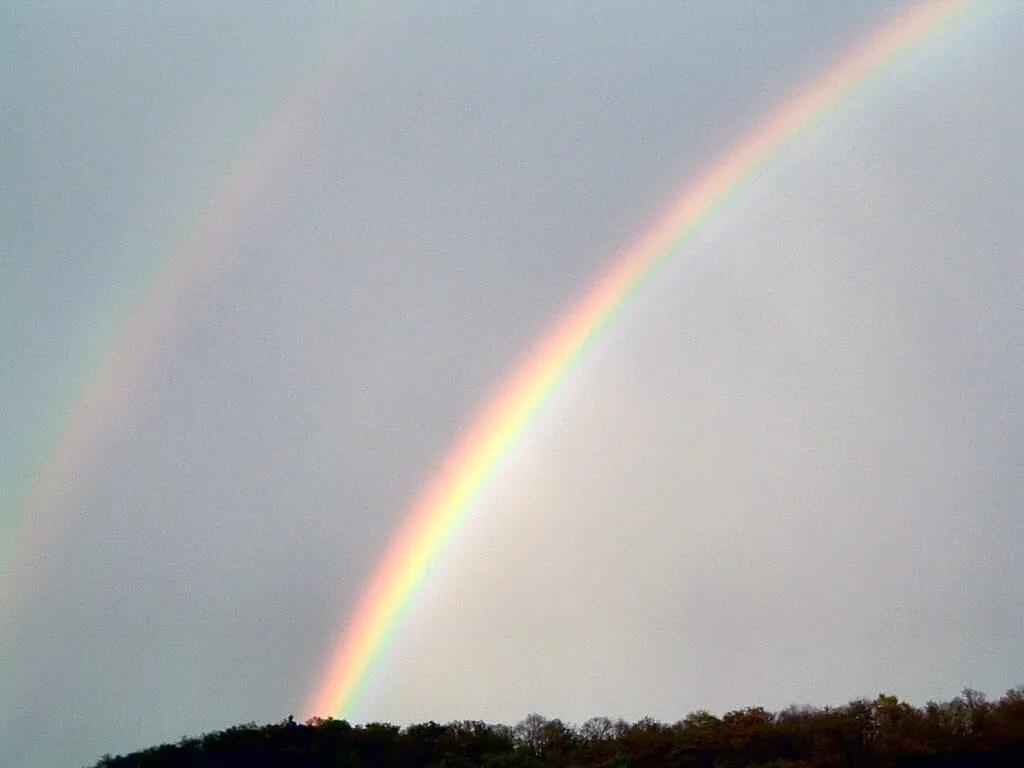
Today, I dreamt about a double rainbow. I was inside our home with my sister and nephew, looking out at the sky. At first, I was the only one who noticed the multicolored arch, but after a few blinks, there it was—another arch of wonder—a double rainbow! My gasp at the sight quickly drew their attention, and just like that, I woke up.

While working earlier, the dream kept crossing my mind. I couldn’t resist the urge to take a quick break and google its meaning—which I eventually did, but only after finishing my tasks. Since I was trying to avoid binge-watching Normal People (I’m on episode 7, by the way), I decided to dive into interpretations of what a double rainbow could symbolize in dreams.

According to what I read (and I read a lot), dreaming of a rainbow often symbolizes a turning point in life or a new beginning. Because seeing a rainbow in real life is so unpredictable, it’s said to represent unexpected changes on the horizon. In short, it signifies a shift in life’s course. How I wish that shift came with a pot of gold at the end of the arch! I mean, wouldn’t it be nice to suddenly be rich?

But what about a double rainbow?

Apparently, seeing a double rainbow in a dream symbolizes harmony, peace, and discovering your life’s purpose. How ironic, considering I’m in a phase where I feel deeply confused about what I want and what I should do. Could this dream be a sign? A nudge to just go through this stage, giving myself room to grow in my new profession, even amidst the uncertainty? Maybe it’s telling me that if I can’t embrace it despite my efforts, I should allow myself the freedom to move on.

One article I found (yes, I read several—what can I say, I needed validation) mentioned that seeing multiple rainbows in a dream indicates making peace with oneself. That interpretation felt both beautiful and comforting. Ever since I resigned from my first job, I’ve been living with a push-and-pull mindset. What if I hadn’t left? Would things be better now? Perhaps I’d be more at ease, enjoying a great work culture with my favorite teammates. But then again, maybe I’d be stagnant—working but not growing. I wouldn’t have faced the daily challenges that push me out of my comfort zone, nor would I have learned to confront fears head-on. And maybe, just maybe, I wouldn’t be writing this blog post or dreaming about double rainbows.

The same article suggested that my dream could reflect my struggles with identity and regrets over missed opportunities—burdens that are weighing me down and stunting my progress. However, the double rainbow is a sign of hope. It signifies that I’ll eventually overcome this phase and realize that the actions I take today will shape my future. Persistence, it seems, is the key to brighter days.

This dream felt as unexpected as a rainbow appearing out of nowhere. I don’t usually indulge in things like dream interpretations—they often feel superstitious. But right now, when my life feels unsteady, I find solace in the idea. Perhaps this small thing is what I need: a breather, a gentle reminder that the universe can offer something vague yet meaningful, disguised as what we’re searching for—a sign, validation, or reassurance. Sometimes, it’s enough to calm the heart and quiet the mind, a reminder that the world isn’t conspiring to overwhelm us. We’re just too caught up in our own doubts, letting them dull our excitement.

I hope to look back on this entry in a few months and see how far I’ve come. By then, I hope I’ll have adjusted to this new chapter of life. After all, there’s no way to deal with it but to face it head-on.

Good luck, friend!