2/28/21

Brownout

Widespread electric power outages—comfortably called "brownouts" rather than "blackouts" here in Manila (and perhaps in other places as well)—were never, not even once, an inconvenience to the eyes of a small child.

For me, it was freedom. One of the peaks, if not the peak, of our childhood memories.

"Brownout"—with a lavish stress on the B and R while the rest of the letters were delivered in an almost easy, negligible manner—was, to me, a cherished occurrence and an invitingly comfortable interruption.

Whenever I picture our experiences during brownouts in retrospect, I always recall our world shutting off, leaving nothing but a spooky sight of jet-black emptiness, mottled with flashes of white flashlights. Then, our street would materialize into a candle-lit pavement, instinctively filled with passionate breaths. Through my eyes, I saw the familiar twinkle of candles dancing among the absences of light. Mosquitoes would rise and clamor, playfully leaping in the air. Our eyes seemed to reach into the mysteries of the darkness, lost in fascination. It was mesmerizing. And in those moments, I wished we could gather like that in the shade… not forever, but at least much longer than usual, just to feel that thrill once more, so alive when we were still absorbed and oblivious to the world.

I also remember how it was always so hot and airless. However, as young and lively as we were, we welcomed this kind of "inconvenience" with nonchalance. Rather than being irritated, we saw it as a chance to play even more. Brownouts were our closest ally when we wanted to stretch out our time hanging out with neighborhood friends.

I suppose the reason why kids have a soft spot for this kind of disruption is that brownouts usually happen at night. And by nighttime, as soon as it got dark, we were no longer allowed to play as we pleased. "Siesta na," my grandmother would say strictly as soon as we got home, looking sour-faced, while we were grimy and stinky from playing. I later learned that "siesta" usually refers to a rest after the midday meal, so I’m not sure why my grandmother used it in the late afternoon. But it was only during brownouts that we could have an exception to play outside. Since it was stuffy indoors, we were allowed to step out for some fresh air, which we often took as an opportunity to extend our childhood just a bit longer, now under the thrill of a dim, shadowed night.


And then there was the "Glow Stick Bracelet" (which I only recently discovered is actually called that). It was popular among the kids on our block, and we used it every time there was a brownout. It cost around five pesos back then, which felt expensive to me at that age. Essentially, it was a glowing stick in pretty colors of our choice that we wore as a bracelet. It was such a sight to behold.

After my last memory of it, I never saw it again, not even until now.

The years rolled on without much notice, and my memories of brownouts slipped away. I suppose that’s because brownouts are now rare where we live. And when they do happen, I find myself getting annoyed by them. In the Philippines, it is consistently hot even when it supposedly shouldn’t be, and the inconvenience of a brownout in this unbelievable heat frustrates me, interrupting my focus on work.

The experience just isn’t the same anymore.

I suppose that’s what happens as you grow up. You lose the warmth that once welcomed this inconvenience, and you no longer have the same energy to find beauty in the darkness. You see it for what it is, without the wide-eyed wonder of a child.

Last year, I discovered podcasts.

They were one of the things I found during the pandemic and have since kept me from sinking into my thoughts or dozing off while working. Currently, I’m listening to a few podcasts—all local ones, if I recall correctly. The last podcast I listened to in February was Ang Walang Kwentang Podcast by Juan Miguel Severo and Antoinette Jadaone, which I think also began during the pandemic.

I think everyone at that time, and even now, was trying to preserve each other’s sanity.

Ang Ang Walang Kwentang Podcast isn’t actually a nonsensical podcast. I enjoy listening to others' personal experiences, whether it's their late realizations, reflections on their past selves, or their views on life’s complexities. In this podcast, I like how humor emerges naturally because of the relatable content. But there’s one episode I haven’t forgotten. I can’t recall which episode it was, but I remember how astounded I felt when they talked about the frequent power outages during a certain period.

They shared childhood memories, especialwaly about being told not to do this or that because of various reasons. Then they discussed how brownouts were so frequent in their time that they happened more often than not, and how parents used these power outages to keep their kids home. I’m not sure if they also mentioned the "Kulto" stories and other urban legends that once effectively kept people indoors.

They delved into this topic and considered different angles, even wondering if these interruptions were meant to keep people from the truth.

What if frequent brownouts were just a way for those in power to lurk in the shadows and control something we had no idea about?

After listening to that episode, it struck me how things that seemed simple to me back then could now be seen in such a deep light… now that I’m an adult.

Because, really, it made sense.

I like how the gentle magic of brownouts when I was a kid could also be viewed as something almost bewitching, like black magic.
Share:

2/19/21

One Spring Night

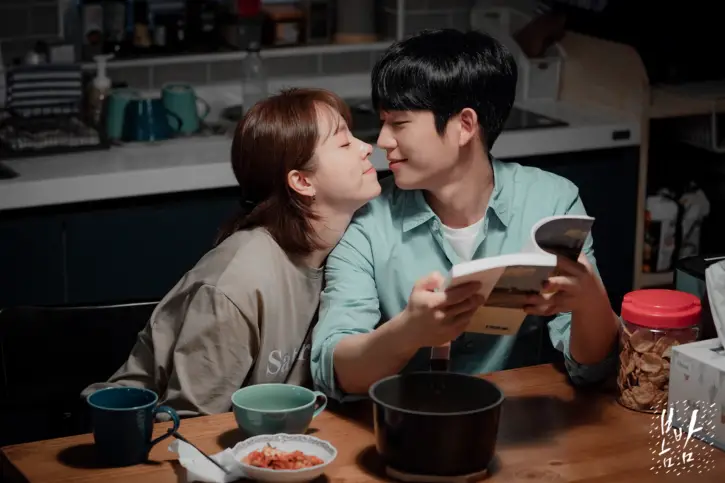
I finished watching One Spring Night three days ago.

Earlier today, while having my breakfast with a cup of coffee, I remembered it again.

One Spring Night Official Trailer

I started watching this series maybe around late November last year. However, midway through it, I decided to stop. I can’t exactly say how long I took a break, but it wasn’t until last Christmas Eve that I resumed watching the next three episodes… only to stop again. Weirdly enough, I never felt like it had been ages whenever I picked it up again from where I had left off. However, that doesn’t mean I jumped back into it right away. Sometimes, I had to rewatch the whole thing from the beginning just to take it in and recall what was happening in the current episode.

With One Spring Night,  had an inner conflict with my conscience. I wasn’t sure if I should push through because I didn’t have the energy to finish it. Watching it felt exhausting, almost as if I were constantly out of breath—the scenes were dragging, the pacing often prompted deep, tedious sighs, and I felt weirdly dispirited after every episode. This kept happening to the point where I almost dropped it… many times. But I didn’t. I resumed watching it sometime around the first week of February, and three days ago, I finally reached the last episode. When I finished it, I felt heavy-hearted. Even though it ended on a vaguely happy note, my mind lingered on the bittersweet moments.

Don't Cross the Line

I was...FRUSTRATED. 

I can still recall how I kept muttering curses under my breath because I didn’t want to endure that scene any longer. The tension between the two leads as they faced each other on the street—I just couldn’t handle it. I was literally on the edge of my seat, overwhelmed by the sheer weight of the emotional intensity.

In that very scene, I could feel their vulnerability. Their eyes were speaking volumes. It was painful to watch their courage being bottled up at a moment when they should have dismissed the world and just run to meet halfway. That night, they stood on the same street but seemed to exist in entirely different spheres.

And that phone call? It was the only fragile line of intersection between those spheres.

Easier said than done. I know that thought crossed their minds as well. When Ji-Ho was about to take a leap of faith, Jeong-In's firm "Don't cross the line" stopped him mid-air. Jeong-In wanted that moment too—their moment—but crossing the line together with Ji-Ho might lead them nowhere, and she was scared of stepping into the unknown. Perhaps she wanted some assurance in their uncertainty. She probably didn’t want to lose herself along the way or drag him down, especially since their emotions had already been spiraling out of control.

After watching One Spring Night, it dawned on me that I’m still such a sucker for melodrama. Consuming melodrama is just another way of saying you have the patience to sit through its slow-burn build and seemingly unimportant segments. Because of this, I’ve developed an unusual tendency to be laid-back—perhaps this explains why I take longer than usual to finish a show. Maybe I subconsciously mimic its pacing? Or maybe I don’t.

At first, I felt guilty—big time. As I confessed, I had a lot of interruptions. I watched One Spring Night, then stopped, resumed, paused, and continued; this was my pattern. This isn’t exactly healthy for someone who usually binge-watches, but these instances don’t happen to me very often. So, I decided to embrace it: One Spring Night gave me the assurance to just keep my cool. This show allowed me to see the experience of watching it not as an opportunity to binge but as a chance to take it at a leisurely pace. I didn’t feel pressured to keep watching because I had to; instead, I saw it as something I could enjoy whenever I was ready to absorb it—and that felt more like me. 

One Spring Night Soundtrack Album

Speaking of me, I personally enjoyed the show's soundtrack album. At random moments, I’ll catch myself humming “We could still be happy” without even realizing it. I also love how the songs evoke a feeling of springtime when you listen to them. Each track was often played during moments of solitude, beautifully capturing the characters' silence and considered thoughts, while also highlighting their emotions. The soundtrack has a cozy vibe—perfect for a coffee shop setting. However, one thing puzzles me: why does it only feature English songs?

(If you’re interested, go check out the soundtrack! Pair it with a cup of coffee or hot tea, and you’ll find it makes an already intimate atmosphere even cozier with its springtime feels.)

Why Spring?

Of all the seasons, why does it have to be spring? As soon as I learned the title of the series, it rang a bell. The obvious interpretation aside, I became more interested in the production's choice of this specific title and the symbolic meanings it carries.

In literature, spring is featured more frequently than the other three temperate seasons. Its brevity makes it stand out, which explains why it is so poetically and symbolically pronounced. Spring evokes feelings of distant memories, regretful longing, and a pensive atmosphere. At the same time, it carries familiar symbolism: the beginning of a new life for someone emerging from the harsh cold of winter.

In One Spring Night, much of the filming was reportedly done on spring nights, and in the story itself, spring is what brings the leads together. Their first encounter—in the pharmacy—could even be seen as a spring morning, marking the start of their journey. 

From the very beginning, the story was grounded in meaningful conceptions.

In terms of symbolism, spring clearly represented a period of transition for almost all the characters, marking their journey toward renewal. The story began with each character carrying personal dilemmas that, as the plot progressed, challenged their beliefs and tested their hopes. However, these dilemmas were eventually confronted, strengthening their resolve and gently guiding them toward the tender beginning of a new chapter in their lives.

Share:

2/14/21

Saying Goodbye to My Most Favorite Eyeglasses Yet


[WARNING: A LONG AND DRAMATIC POST]


A pretty reasonable estimate seems to me that if you have seen me strolling in a public place wearing this eyeglasses, there's at least a higher chance I am in the mood of not seeing the world in a blurry perspective.

That is why, I guess, I was sentimental last Thursday. It was a typical day, the likes when I am in my usual tendency of not looking forward to anything any longer because life for awhile has become steadily somber to me. That day, I was doing my usual click and tap routine in my work, but due to that unwelcome phenomenon which is called "poor connection", my stormy temperament accidentally broke the frame of my eyeglasses when I took it off. I mumbled out a barely conscious DAMMIT WHY IT HAS TO BE TODAY? as I was trying not to let the horror overcome me at another ghastly view of the lens that has just popped out on its frame.

I can still feel the tears sitting on the corner of my eyes. This eyeglasses has seen me off to more vivid and bleak moments of my life for the last two to three years, has accompanied me to that blast concert of iKON, fleeting last moments of my university days, even to my nerve-wracking job interviews. It's been a loyal companion through my drastic shift from being an excited student to an officially lost and out-of-breath adult.

The moment has simply passed and it's time to say goodbye.

On the grey-colored afternoon clouds, I bought a new eyeglasses. After all, we all need a new perspective, not through a rose-colored spectacle but through as it is.

Rest assured, it will be missed. Gone but not forgotten.

Share: