2/19/21

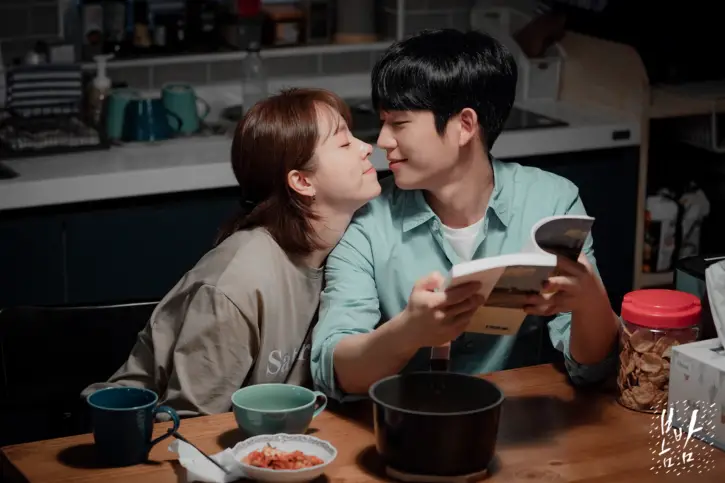
One Spring Night

I finished watching One Spring Night three days ago.

Earlier today, while having my breakfast with a cup of coffee, I remembered it again.

One Spring Night Official Trailer

I started watching this series maybe around late November last year. However, midway through it, I decided to stop. I can’t exactly say how long I took a break, but it wasn’t until last Christmas Eve that I resumed watching the next three episodes… only to stop again. Weirdly enough, I never felt like it had been ages whenever I picked it up again from where I had left off. However, that doesn’t mean I jumped back into it right away. Sometimes, I had to rewatch the whole thing from the beginning just to take it in and recall what was happening in the current episode.

With One Spring Night,  had an inner conflict with my conscience. I wasn’t sure if I should push through because I didn’t have the energy to finish it. Watching it felt exhausting, almost as if I were constantly out of breath—the scenes were dragging, the pacing often prompted deep, tedious sighs, and I felt weirdly dispirited after every episode. This kept happening to the point where I almost dropped it… many times. But I didn’t. I resumed watching it sometime around the first week of February, and three days ago, I finally reached the last episode. When I finished it, I felt heavy-hearted. Even though it ended on a vaguely happy note, my mind lingered on the bittersweet moments.

Don't Cross the Line

I was...FRUSTRATED. 

I can still recall how I kept muttering curses under my breath because I didn’t want to endure that scene any longer. The tension between the two leads as they faced each other on the street—I just couldn’t handle it. I was literally on the edge of my seat, overwhelmed by the sheer weight of the emotional intensity.

In that very scene, I could feel their vulnerability. Their eyes were speaking volumes. It was painful to watch their courage being bottled up at a moment when they should have dismissed the world and just run to meet halfway. That night, they stood on the same street but seemed to exist in entirely different spheres.

And that phone call? It was the only fragile line of intersection between those spheres.

Easier said than done. I know that thought crossed their minds as well. When Ji-Ho was about to take a leap of faith, Jeong-In's firm "Don't cross the line" stopped him mid-air. Jeong-In wanted that moment too—their moment—but crossing the line together with Ji-Ho might lead them nowhere, and she was scared of stepping into the unknown. Perhaps she wanted some assurance in their uncertainty. She probably didn’t want to lose herself along the way or drag him down, especially since their emotions had already been spiraling out of control.

After watching One Spring Night, it dawned on me that I’m still such a sucker for melodrama. Consuming melodrama is just another way of saying you have the patience to sit through its slow-burn build and seemingly unimportant segments. Because of this, I’ve developed an unusual tendency to be laid-back—perhaps this explains why I take longer than usual to finish a show. Maybe I subconsciously mimic its pacing? Or maybe I don’t.

At first, I felt guilty—big time. As I confessed, I had a lot of interruptions. I watched One Spring Night, then stopped, resumed, paused, and continued; this was my pattern. This isn’t exactly healthy for someone who usually binge-watches, but these instances don’t happen to me very often. So, I decided to embrace it: One Spring Night gave me the assurance to just keep my cool. This show allowed me to see the experience of watching it not as an opportunity to binge but as a chance to take it at a leisurely pace. I didn’t feel pressured to keep watching because I had to; instead, I saw it as something I could enjoy whenever I was ready to absorb it—and that felt more like me. 

One Spring Night Soundtrack Album

Speaking of me, I personally enjoyed the show's soundtrack album. At random moments, I’ll catch myself humming “We could still be happy” without even realizing it. I also love how the songs evoke a feeling of springtime when you listen to them. Each track was often played during moments of solitude, beautifully capturing the characters' silence and considered thoughts, while also highlighting their emotions. The soundtrack has a cozy vibe—perfect for a coffee shop setting. However, one thing puzzles me: why does it only feature English songs?

(If you’re interested, go check out the soundtrack! Pair it with a cup of coffee or hot tea, and you’ll find it makes an already intimate atmosphere even cozier with its springtime feels.)

Why Spring?

Of all the seasons, why does it have to be spring? As soon as I learned the title of the series, it rang a bell. The obvious interpretation aside, I became more interested in the production's choice of this specific title and the symbolic meanings it carries.

In literature, spring is featured more frequently than the other three temperate seasons. Its brevity makes it stand out, which explains why it is so poetically and symbolically pronounced. Spring evokes feelings of distant memories, regretful longing, and a pensive atmosphere. At the same time, it carries familiar symbolism: the beginning of a new life for someone emerging from the harsh cold of winter.

In One Spring Night, much of the filming was reportedly done on spring nights, and in the story itself, spring is what brings the leads together. Their first encounter—in the pharmacy—could even be seen as a spring morning, marking the start of their journey. 

From the very beginning, the story was grounded in meaningful conceptions.

In terms of symbolism, spring clearly represented a period of transition for almost all the characters, marking their journey toward renewal. The story began with each character carrying personal dilemmas that, as the plot progressed, challenged their beliefs and tested their hopes. However, these dilemmas were eventually confronted, strengthening their resolve and gently guiding them toward the tender beginning of a new chapter in their lives.

Share:

2/14/21

Saying Goodbye to My Most Favorite Eyeglasses Yet


[WARNING: A LONG AND DRAMATIC POST]


A pretty reasonable estimate seems to me that if you have seen me strolling in a public place wearing this eyeglasses, there's at least a higher chance I am in the mood of not seeing the world in a blurry perspective.

That is why, I guess, I was sentimental last Thursday. It was a typical day, the likes when I am in my usual tendency of not looking forward to anything any longer because life for awhile has become steadily somber to me. That day, I was doing my usual click and tap routine in my work, but due to that unwelcome phenomenon which is called "poor connection", my stormy temperament accidentally broke the frame of my eyeglasses when I took it off. I mumbled out a barely conscious DAMMIT WHY IT HAS TO BE TODAY? as I was trying not to let the horror overcome me at another ghastly view of the lens that has just popped out on its frame.

I can still feel the tears sitting on the corner of my eyes. This eyeglasses has seen me off to more vivid and bleak moments of my life for the last two to three years, has accompanied me to that blast concert of iKON, fleeting last moments of my university days, even to my nerve-wracking job interviews. It's been a loyal companion through my drastic shift from being an excited student to an officially lost and out-of-breath adult.

The moment has simply passed and it's time to say goodbye.

On the grey-colored afternoon clouds, I bought a new eyeglasses. After all, we all need a new perspective, not through a rose-colored spectacle but through as it is.

Rest assured, it will be missed. Gone but not forgotten.

Share:

The Reading of Virginia Woolf's The Death of the Moth


Think about this:

Have you ever been in that moment-- constantly, when you feel belittled by this disturbing idea that you are just a mere speck of sheer opportunities in a world that is so gigantic?

Perhaps, you have been there when it seems like you are just... too small, so little to be worth consideration. As if you are just something embossed as lightly as possible with nothing but life.


The Death of the Moth, a timeless literary composition of Virginia Woolf written in 1942, plunges into the consequential aspects of two opposing and competing forces of existence-- life and death. This is probably Woolf's attempt to somehow give semblance of order to the ever chaotic concomitance of life with death, as both are presently beyond most of our capabilities to understand.

Right in the beginning, Woolf has succinctly specified which moths in particular are used as a metaphor of human mortality.

"Moths that fly by day are not properly to be called moths..."
The present specimen which supposed to be a nocturnal bead of life in the dusky view, rather excites with its unflagging gusto the countryside ablaze in colors of autumn. It has also described as neither as gay as the butterflies nor somber as their own species. They are more likely in between two contrasting emotions, thus making them seemingly contented with life. Despite the distinguishable gap of two different creatures, both humans and the moths are of that similar vibrant energy which inspires them to go on with their respective lives. However, a perceived insignificance evokes a loose impression that a little in size comes with a little of worth. As this passage reveals:

"One was, indeed, conscious of queer feeling of pity for him. The possibilities of pleasure seemed that morning so enormous and so various that to have only a moth's part in life."

So, just as the world is so big, what are humans to begin with? What remained for us but to do similar things over and over again as if we are programmed to labor persistently during our lifetime for that sense of survival and existence. Thus making us as marvelous and pathetic as the moths. As the persona watches the little excursion of the moth, she also gets distracted upon the movements outside his compartment- the stillness of the season, the rolling in from the fields, and the mischievous soaring of the rooks around the treetop. Then, a parade of thoughts promptly dawns on her as she witnessed the sudden stiffness of the moth. She watches its little attempts to resume his spritely dance but the faltering flapping of his wings settles him into feeble helplessness. And the persona stretches out her pencil then lays it down after, flashing upon her that she stands no chance against the close proximity of the death to the piteous creature on her window. Just as life had been strange a few minutes before, so death now as strange. Then she seemed to say, 

"Death is stronger than I am." 

It is evident that the persona's sympathy goes with the side of death, not really glorifying it but acknowledging the real deal that nothing can outlive Death. But this conviction has been abolished when she said herself that,

"Again, somehow, one saw life, a pure bead." 

Reconsidering this time that putting a fight on life despite the prevalence of death, makes life itself worthy.

During our lifetime, we have been there on that certain spot not bothering to have an equal consideration to the other side since it is out of our sight. Since death seems so distant and inaccessible this evokes a sense of foreboding in us as it is unknown to our perception. But life's ultimate meaning remains obscure unless it is reflected upon in the face of death. 

Share: