

9/9/24

18×2 Beyond Youthful Days

9/09/2024

If there's one thing that drew me to this film, it's Greg Hsu.

The Taiwanese actor, who seems to be on a roll this year, has once again delivered another ray of sunshine. He’s back in his sweet spot—effortlessly portraying characters with his boyish charm, which always syncs perfectly with the colors of summer.

The first time I saw him, he played the quirky yet well-intentioned Li Cheng in the Chinese remake of the hit Korean movie The Wedding Day. He did justice to the character, making it easy for me to recognize him when I coincidentally stumbled upon a fan-edited video. The clips were probably pulled from one of his previous films or dramas. Despite my curiosity about his filmography, I hesitated at the time to dive in. After all, I wasn't really into Taiwanese dramas. However, one random night, I felt the urge to finally watch the drama series that had been buzzing on Twitter—Someday or One Day. I suppose this has always been his signature: effortlessly summoning his boyish charm, making it hard to believe he’s twice the age of the roles he plays. Greg Hsu, exuding the warmth of summer, is actually 33 years old. I had to look it up after watching his latest film, just to confirm he was at least close in age to Jimmy from 18×2 Beyond Youthful Days. I was partially right—Jimmy in the present is 36, twice the age he was when he first met Ami one random summer day, just as he was late again to his part-time job.

He was playing basketball alone, the sweltering summer afternoon only intensifying his frustration and making his expression even more sour. Another day, another disappointment. He had thought that working at a KTV bar would bring him closer to a summer romance, but instead, he found himself opening one door after another, revealing a mix of customers: annoying students, drunken uncles, kissing couples, and weird groups of friends—everyone at their silliest. Not a single door ever revealed a cute girl he could impress. What a bummer! His dream was simple and nothing extraordinary: he just wanted to enjoy his summer vacation before heading off to college. Was that really too much to ask?

But as the ball rolled away after a missed shot, he was stopped by a refreshing gust of summer air—along with a cute "breeze" from Japan, who introduced herself as Ami. A pocket-sized traveler, kawaii as they say in her language, with a gummy smile, and the very person he'd been longing to meet. Finally, it seemed the universe had answered his wishful thinking! He was more than ready to fall in love.

Kaya Kiyohara, the actress who played Ami, was a new face to me. However, something about her seemed familiar, as if I’d seen her somewhere before. Throughout the film, she was bubbly and always smiling, almost convincing me she'd stay that way forever. After losing her wallet, though, she had no choice but to find ways to make ends meet. She knelt in the temple and whispered her prayers, but it seemed fate was determined to challenge her. Then she spotted a KTV bar, and that’s where fate led her to the rolling ball—and to Jimmy.

How fortunate she was that the boss of the KTV bar knew how to speak Japanese. Feeling sympathetic toward her situation, he welcomed Ami as a new member of their crew. Jimmy, a die-hard fan of the anime series Slam Dunk, also knew a bit of Japanese. This connection even pushed him to study the language more so he could communicate with Ami, who didn’t know how to speak Taiwanese.

For more than half the film, everything was going smoothly. Nothing major hinted at any upcoming revelation or twist that would completely turn the story around, and it was clear that the production wasn't aiming for that kind of narrative. Predictably, like many films in this genre, we eventually reached the point where things started to go downhill for Jimmy.

Ami had to go back to Japan.

Switching between past and present, we catch glimpses of Jimmy’s life. At the start of the film, we had a sense that he had lost his business, and a video of him had surfaced and spread online. While still in Japan, he decided to travel, having no clear idea what life had in store for him next. Along the way, he met people who offered him generosity, kindness, and valuable life lessons. As we approached the end and Jimmy reached his final destination, we learned, despite his hopes, that he would never see Ami again. One thing I noticed was how effortlessly Jimmy found people willing to help him during his travels in Japan. First, he met a cook who also happened to be Taiwanese and grew up in the same city as Jimmy. The friendly man accompanied him on a nighttime stroll, where they had a deep conversation about life. Next, he met a Japanese net café clerk who was playing a game he had created. When she learned that Jimmy wanted to attend a lantern festival, she offered him a free ride. Then, Jimmy encountered an 18-year-old traveler who invited him to hop off the train to experience the snow, which reminded him of the Japanese romance film he had watched with Ami 18 years ago. That movie night, he had missed the chance to hold her hand because he was too engrossed in the story. Lastly, he met an elderly man upon arriving in Ami’s hometown, who also offered him a ride. The man revealed that he knew it was Jimmy who had accompanied Ami on her trip to Taiwan.

It was then that we finally learned what happened after Ami returned to Japan. After Jimmy passed his university exam, he moved to Taipei for college. There, he found new friends and a group of people who shared his interests, allowing him to pursue his dream. Meanwhile, Ami’s condition was revealed—she was bedridden, suffering from a terminal illness. A series of flashbacks showed that despite her illness, she continued sketching, and her final work was given to Jimmy when he met her mother. The heartbreaking truth was finally revealed: Ami had passed away. She died on the day Jimmy received the phone call and broke down. From there, we saw how Jimmy’s life unfolded after her death. He achieved his dream, but his grief consumed him. He dedicated all his energy to his work, which led to great success but eventually slipped away as he got fired from his own company.

The dream Jimmy had been searching for at the beginning, he finally found after losing Ami, but he lost it again when he lost himself. He only rediscovered himself when he began traveling, just as Ami had done. It was true what Ami said to him when they went to a lantern festival: Let’s meet again after we realize our dream.

Despite its predictable storyline, I still enjoyed the film. One thing I’ve noticed is that I don’t get as excited about romance films as I used to. On the other hand, I wonder if both actors had chemistry, or was it just me who didn’t feel it? Still, I’d like to commend Greg Hsu—he has this contagious energy that makes his films enjoyable, even when they lack something. As for Kaya Kiyohara, she was a revelation. Throughout most of the film, we only saw her with her signature gummy smile, and I wondered if that was her usual disposition. But later on, when we finally saw her break down during her private moments, it was clear she had been suffering all along. She was so good at hiding it, but when she broke down, it was heartbreakingly beautiful. As much as she excels at smiling, she’s just as powerful in her emotional scenes. Though she wanted to be with Jimmy, circumstances prevented her from doing so.

Ami made Jimmy’s youth unforgettable. She was the one who made his summer memorable and left a lasting impact on his life.

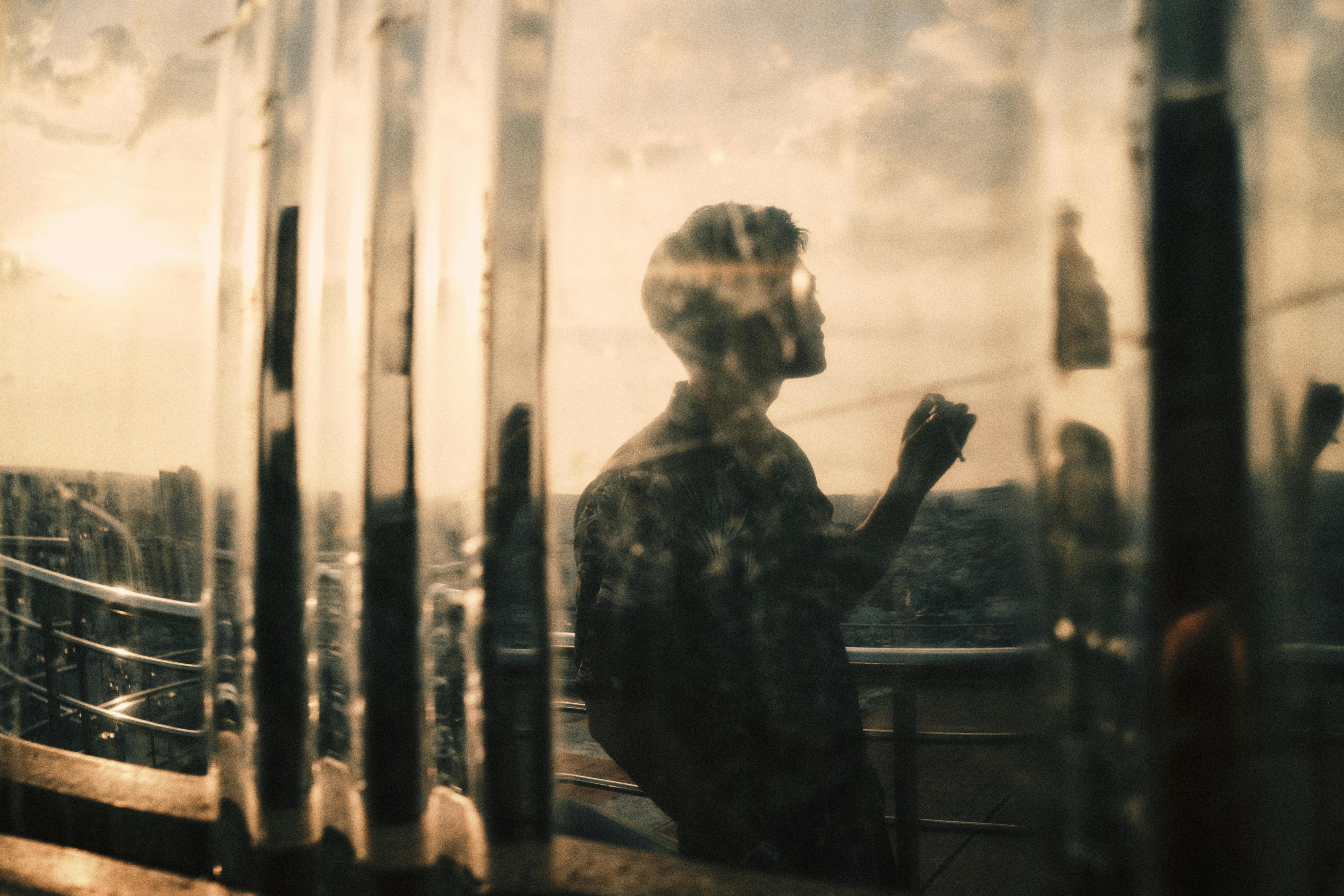
9/2/24

Puffs and Hopes

9/02/2024

He went to the terrace,
lit his cigarette,
breathed in another hope
as he puffed a mouthful of smoke.

He stooped a little,
whispered about his life like a riddle,
puffed a mouthful of smoke,
as he breathed in another hope.

He stared into the distant sky
recalled how many has already been his countless tries,
breathed in another hope
as he puffed a mouthful of smoke.

He heaved a sigh,
wondered whether he would cry or die,
puffed a mouthful of smoke,
as he breathed in another hope.

He looked down the empty road,
felt it in his heart the heavy load,
breathed in another hope,
as he puffed a mouthful of smoke.

He watched the passing moment,
wondered how his time quickly went,
puffed a mouthful of smoke
as he breathed in another hope.

He stood straight, eyes forwarded,
Said to himself, tired but hopeful, but I am needed
puffed the last mouthful of smoke
breathed one more hope.

8/21/24

Exhuma

8/21/2024

Earlier this year, I met Vanessa and Elah for an afternoon dine-out. It was the first time we had met after a long while (the last time was at Ryan’s post-birthday celebration in Bulacan, and Elah wasn’t there). It was quite funny that we set our get-together on the very last stretch of Holy Week. This meant some establishments were still closed, there was no traffic but fewer transportation options available, including train commutes, and the roads were eerily deserted, almost like a red carpet welcoming serial killers after months of hibernation.

This was the exact scene that greeted us in the afternoon at SM Sta. Mesa upon our arrival. It was breezy and muted, with a few plastic bags adding to the unfamiliar horror of the area, which was probably riotous with a busy crowd and honking roads just a week ago. Still, it was peaceful to walk down the once-familiar sidewalk with Elah, who was with me at PUP, along with the rest of the squad. This sidewalk was no stranger to our rigorous footsteps during those moments when we felt like marching our way to the air-conditioned mall. It was usually packed with sweaty scholars, briskly walking in their sun-touched shirts, hoping that the vicinity would cool down their deep worries as striving students and laborious commuters. But that day, we were neither of these; we were promoted to slaves for capitalism (in case the term “money whore” is not appropriate). Such a promotion is also lawfully bestowed along with an annual holiday break (if the employer follows Philippine holidays) to reflect during Holy Week. Since Elah, Vanessa, and I were all available, we took the chance to finally catch up. I met with Elah first at PITX, and together we journeyed along the people-less route to SM Sta. Mesa.

We were supposed to meet around 2 pm. As expected, the prettiest girl always arrives late. It wasn’t clear, however, if she should come one hour past the discussed time. We were finally complete at 3 pm.

Of course, to compensate for her beauty, Vanessa offered to shoulder a portion of our combined bill. We ate in a Korean-inspired restaurant, and I only enjoyed the taste of tteokbokki. Initially, we planned to go to the cinema and watch the then-trending Korean movie called Exhuma. However, to our surprise, it was no longer available for showing. Our plan was disrupted, and with no other option left, we decided to just fill our disappointment with Korean dishes.

Four months later, I found myself rating the same film with four stars on Letterboxd. While writing my mini-review on my IG story, I breathed a sigh of disappointment:

Exhuma was yet another film that I wish I had seen in the cinema.

Despite the lingering thoughts left with me, I still found myself satisfied with how the film concluded. Sure, I didn’t completely understand the gruesome history of the Japanese general and everything entailed. Yet, it didn’t feel like there was a big hole in the story for that reason. Perhaps it was the overall experience that convinced me that this wasn’t enough of a hindrance to liking the film.

I guess I have seen a handful of faces of horror across different movies that, throughout the years, I no longer feel the chill of seeing a ghost when I watch a horror film. Of course, I still get haunted to an extent, but I feel disappointed that it can only do so on a surface level.

I get scared, but what’s next about it?

Usually, I will just sleep the horror away, and like any other film, it will be a forgettable experience. However, with Exhuma, I felt at ease with the discomfort and was driven by curiosity.

I appreciated that the ghost in Arc 1 was not the usual ghostly face to jump scare people. It was inexplicably fuzzy and kind of shadowy but still looked like a human form. I really liked that it mostly appeared in the reflection of mirrors. By doing this, I tended to be more attentive to the scene, especially when there was a chance for me to spot the ghost in a reflection. This touch of interaction, whether intentional or not, made me engaged in the course of the first act.

The readily thrown shaman jargons from the outset might throw someone off. As for me, it wasn’t an issue but turned out to be a source of curiosity. I was also genuinely amazed at how they performed the ritual (if that’s what they call it) in an authentic way. It was, yes, performative, but it felt like an honest ritual that wasn’t made just to impress the viewers for another layer of entertainment. Kim Go Eun has proved her artistry once again in this film. I couldn’t see a peeping trace of her previous characters, and she gracefully introduced Hwa-Rim to us. She had a bold disposition and seemed to be very focused on something when she set her mind to it. And with Go Eun’s acting, I had a glimpse of how a shaman looked and how they drove bad spirits away. She didn’t look awkward performing the ritual, and her devouring the pig’s clotted blood was truly mesmerizing.

Of course, the whole cast was exceptional and provided great support to Go Eun. I got honestly distracted whenever Lee Do-Hyun flashed his tattoos, as they were such a perfect match for his man bun. This film almost convinced me to become his fan. And the Feng Shui Master, Sang Deok, who I later found out after searching the cast, was the Old Boy!!! (I haven’t seen it, but his face is familiar). Was it a star-studded film then?

Regarding the Japanese general, I actually liked that it was a giant instead. I didn’t find it corny as some redditors revealed in their testimonies. Even the fireball was really cool and such a unique element for a horror story.

I guess my age might be a factor for this reasoning, but I really enjoy films when they are intentional but not too overt with their theme. When one hears horror, the first thing that comes to mind is probably ghosts, demons, and exorcism with loads of jumpscares to scare the hell out of you. And throughout the years, more and more productions have been dutifully serving them to the cinema. Sadly, not everything they put out there has lived up to what horror means. With Exhuma, I really appreciated that it has a combination of Japanese and Korean folklore, ghosts in a nebulous form, family traditions and superstitions, Feng Shui, and shamans. These elements were effectively executed to create a horror masterpiece in a day and age where this genre is starting to lose its core and value.

If you are into this kind of horror, I strongly recommend Exhuma for you to try.

8/8/24

Maharaja

8/08/2024

One good thing about lurking on Facebook, after getting tired of hopping between Instagram, Reddit, Twitter, and occasionally Pinterest, is the rare luck I find while scrolling through my feed. It’s been ages since I frequently used this platform whenever boredom struck me. It used to be my go-to app when I wanted to binge on contents and posts, regardless of their relevance to me. Since I migrated to Twitter and eventually Instagram years ago, my perception of Facebook shifted, and I found it no longer catered to my social media needs.

It was just recently when I felt the need to use it again. Basically, I only access it through my web browser (my pride won't let me install it again) when I want to check notifications and share my blog posts. While there, I also spend some time scrolling. Since updating my settings and only following pages I like, I enjoy seeing good content that I don't usually come across on Twitter or Instagram. Like a couple weeks ago, I came across movie suggestions where a particular film was mentioned and was showered with praise in the comment section.

"The best film yet this year".

"This film had me on the edge of my seat".

"The plot twist!"

These are among the many reviews I saw on Facebook. My urge to watch it intensified when I also saw a Reddit post discussing the film, and I didn’t find any strikingly negative comments. That’s why we decided last Monday, while having dinner, to finally give this film that everyone has been talking about— Maharaja —a shot.

Maharaja is a 2024 Indian film about a barber who seeks vengeance after his “Lakshmi” is stolen by three masked burglars. To everyone’s great surprise, this “Lakshmi” is neither a prized possession nor a family member. It is a used dustbin, lovingly stowed in one spot of their home like a deity figure.

The film opens ludicrously— with familiar Bollywood sounds, slapstick sequences that sometimes fall into dry amusement, and a rather hurried start. The next thirty minutes, or perhaps the entire hour-long runtime, seemed intended to contort our faces into the ugliest expressions possible as we tried to make sense of what was happening. I felt like another ten years had been added to my age due to the stress of trying to figure out where the film was leading me. It all started—or rather, the film made us believe it started—after his daughter left for a sports camp. I thought it would be a typical night for Maharaja, but there were rubble and debris all over his house, and amidst it all, he lay on his side, unconscious and obviously wounded.

After he regained consciousness, he went to file a complaint at the police station. It was revealed that his house had been burglarized, but what concerned him most was his “Lakshmi,” their cherished dustbin. This threw the entire police station into chaos, as they were convinced he was a madman. Who on earth would file a complaint over a dustbin? It would make sense if it had jewelries or was made of gold or some expensive material. However, it was just a goddamn dustbin!

The inspector didn’t believe him (who would, really?), but when he was willing to spend his money for its sake, they started to humor him. They began their investigation, and the inspector formed a team to help him replicate the dustbin and eventually get the money they wanted. However, as they made progress, and the story unfolded, the truth slowly emerged, and things began to fall into place.

It is especially true that we tend to project an emotional connection to items that hold sentimental value and specific memories by giving them names. I experienced this, particularly during my childhood, when I used to name my Barbie dolls in an effort to make them feel real and relatable. I would always choose fancy names like Tiffany, Chloe, and Margo, which suited their appearances perfectly. However, as I grew older, certain things sadly faded into the past. While some people might still have the tendency to name their personal belongings, I no longer do so, as life has changed.

That’s why, despite it raising a few eyebrows, I understand that Maharaja naming a not-so-special dustbin might stem from an emotional bond that has yet to be revealed from the outset of the story.

But why "Lakshmi?"

Lakshmi was introduced to us early in the movie. It was a used dustbin, with no signs of its once shiny iron skin. Despite its weary appearance, it was clear that Maharaja and his daughter Jothi no longer treated it as a mere dustbin, but with an almost sacred reverence-- akin to a deity figure. And to my surprise, upon researching it, Lakshmi is actually a Hindu goddess that symbolizes wealth, fortune, and prosperity. In the story, as we found out the truth in the end, we could say that the dustbin was indeed a fortune as it was the one who saved Jothi from death.

We could say that “Lakshmi,” the name of their dustbin, played a huge role in the story. It piqued our curiosity and drew us into the mystery. Why was Maharaja so desperate to recover this seemingly ordinary dustbin? What secrets did it hold that made him willing to spend a fortune just to have the police track it down and return it to him?

Initially, the inspector and his team thought Maharaja was a madman. However, through relentless investigations, they soon realized that the barber was hiding something about the dustbin. Maharaja wasn’t crazy; he was after something, using them more than they were using him. If it meant making his plan easier to execute, Maharaja was willing to spend his fortune for it.

The answers were yet to be revealed, but one thing was certain: Lakshmi was no ordinary dustbin, and Maharaja was definitely hiding something beneath it. Later in the story, we discovered that Lakshmi wasn’t actually stolen; he had hidden it under his daughter’s hospital bed. This scene also revealed what really happened to him and his daughter that night when we found him unconscious at home. It wasn’t a burglary, and he wasn’t beaten up. Everything was due to revenge, leading to a series of revelations and twists.

The film wasn’t linear. The story deviated from what we initially thought or what they led us to believe, strategically weaving the past and present to baffle us. Honestly, I was tricked, and the whole time I still had no idea what was going on until Selvam spotted a familiar gold necklace with a footprint pendant, just after Jothi confronted him. This was the monumental juncture in the film where the truth and the anticipated twist were finally revealed.

I would say the build-up of tension and the anticipation of the twist were all worth it in the end. It wasn’t lame and definitely deserved the buzz it generated across the internet.

Is it worth the hype? Yes, definitely. Maharaja is the kind of film people can enjoy when they have no idea what to watch during their spare time. The night we watched it, I was bored. Since I had nothing else to do, I decided to give it a shot, hoping it would meet my expectations set by the hype. This film can stir your curiosity and maybe even pique your interest—it’s a good choice when you want to spend 2 or 3 hours on something thrilling. If you’re not too strict with technicalities, you can overlook some of the action scenes. I wasn’t expecting the few gore scenes, as the film initially didn’t seem to head in that direction.

Is it the best film of the year? Surely not. Among all the films in this category so far, there could be one better than Maharaja. It is worth the hype but somewhat overrated. It has an interesting plot but could improve in terms of execution and production. With a bigger budget, the CGI could be more realistic, and the action scenes more thrilling. The intention to intensify the trajectory was there, but unfortunately, it fell flat due to poor CGI effects, making the scenes feel cheap and unexciting. The sound effects during punching, kicking, and stunts also sounded unrealistic and quite distracting.

Overall, Maharaja is a 3/5 film for me. The plot is very interesting. The inclusion of Lakshmi, a dustbin, as a decoy to keep viewers engaged and thinking is commendable. The fact that this is a revenge drama with a unique element like a dustbin is intriguing. The non-linear narrative helps build tension and keeps the story a big jigsaw puzzle for the viewers. Sadly, the execution was the biggest issue and could have made it a near-perfect film if the action scenes were more realistic. Despite these lapses, Maharaja still offers an enjoyable experience.

7/28/24

Begin Again

7/28/2024

It is partially true when I said on my Letterboxd review that I watched Begin Again because I wanted to listen to "Lost Stars" by Maroon 5. It is partially false, however, to think that I watched it solely because I was still the same teenage girl who was still carrying a torch for Adam Levine.

Although, I no longer fancy the band's frontman as I once did, I still have with me that instinct for playing Sunday Morning on Sunday mornings, even without the excuse of "rain is falling". This song, or perhaps the band itself, reminded me to continue watching Begin Again after it had dawned on me that I hadn’t finished it. In my mind, I had to listen to “Lost Stars” no matter what.

From where I left off...Dan walked out of the restaurant after Gretta made a comment about his relationship with his daughter, Violet. She chased him outside, and they had a little set-to, which I thought would escalate into a heated exchange. However, Gretta realized she had crossed a line, ran after Dan, and hugged him from behind.

That scene, it was cheesy.

The last thing I wanted was for them to develop any romantic feelings for each other. So, although I expected her to stop him before he crossed the road, I still hoped she wouldn’t go as far as hugging him. And yet, she did.

Every time they were close to kissing, I found myself mumbling “nononono” frenetically, as if that would stop them from getting touchy-feely. After they made up, they talked about Dan’s life and how he ended up in a lonely apartment, away from his daughter. This sparked another lark for the two as they went for a late-night stroll, connected only by their playlist. As the night progressed, they grew even closer… so close that Gretta invited Dan over to her friend’s place. As they felt the growing awkwardness as they stood face to face, Steve popped out from his kitchen and spoiled the moment(which I was very much happy about).

From Strangers to More Than That but Less Than This

Since we’re already on this topic, I was pleased with how the film concluded Gretta’s relationship with Dan. When it was revealed that the parcel he received from her was his splitter, I knew that returning this sentimental item was the unspoken closure they needed to move forward, this time without each other’s company.

The same sense of closure was also evident when Gretta decided to attend Dave’s concert. The venue was packed with a smoky crowd, looking impatient, as they stood there waiting. They had no idea that Dave would surprise them with the ballad version of his song "Lost Stars," which was Gretta's original arrangement.

I would say, the final sequences from that were my most and only favorite part of the film. I even jested that I only watched "Begin Again" just so I could listen to "Lost Stars." Whenever I hear this song, a lingering despair slowly hushes within me, tapping into my deepest guilt, inexplicably making me reflect and feel bad at the same time. And when Dave erupted with a soothing "Please, don't see..." the air felt like it heaved a sigh of relief, and all worries momentarily suspended, expelled with newfound hope.

Gretta looked so happy.

Then, as he glanced in her direction and spotted her standing, his eyes sparkled, and he gestured for her to join him on stage. However, as soon as the crowd cheered when the song reached the bridge, Gretta realized that too much had already changed. She decided to leave the venue, emotions pouring out but with a hint of hope for new beginnings, while Dave continued to perform the song, understanding that this was the closure they needed.

As for Dan, I was extremely happy that he got back together with his wife. Unlike with Gretta, I liked how subtle their chemistry was throughout the film. There were little moments they shared that, if we looked more closely, we realized they still cared for each other. What Dan and his wife had was a familiar and comfortable bond that transcended beyond marriage.

I honestly didn’t like the thought of Dan and Gretta ending up together. After all, Gretta came from a five-year relationship that unfortunately wasn’t justified in the storyline, as they made Dave look like a shallow, flat, and one-sided character. If he was meant to be an asshole, and obviously that was their intention, they should have built that up to make him one. Instead, people attacked the actor, Adam, himself (which was understandable), since we were only presented with a side of him that was unlikable, so this hatred was unintentionally directed and projected onto the actor playing the character.

As I said, the meet-cute trope doesn’t always have to end like other romantic films. Two strangers in a third place can remain strangers, become acquaintances, or, like Gretta and Dan—a heartbroken singer-songwriter and a frustrated music label producer—turn into friends.

Gretta, a singer; Keira, an actress

All this time, I thought Begin Again was a film about two people who meet as strangers and, for some inexplicable reason, bond over the course of a night by revealing each other’s playlists.

I remember the scene where Dan asks Gretta about her playlist and says, “You can tell a lot about a person by what’s on their playlist.” This brought me back to how the film started.

When Steve pressured Gretta to come up to the stage—unprepared and heartbroken—she had no choice but to give in to the roar of the crowd. Awkwardly, she took the guitar and dedicated her song to anyone who’s ever been alone in the city, delivering it in a somewhat whispery manner. The moment she started singing, I realized that Keira Knightley, the actress, could sing, but she was obviously not a professional singer.

Pardon the roughness of my words as I am thinking over my head while writing this: Of all the actresses who could act and sing, why did they choose Keira for this role?

I was honestly distracted every time they were recording because her lips were acting more than they were singing. I could hardly connect with her songs as there was nothing to feel about them, which was the opposite of what Dan felt that night when he spotted Gretta regretting she took the stage to bore the people with her singing.

I tried to see the beauty of this film as everyone was saying. However, I felt like they were biased because of how lovable Keira was, failing to see that her charm was best suited for period dramas and not in the colorful city of New York—acting to sing.

I also didn’t appreciate that whenever they were recording a song, her voice sounded so unnatural. Don’t get me wrong, the songs were all promising and easy to listen to, but I was really distracted by the way she sang them. It felt honestly empty to me, so I could hardly connect with the story of her compositions.

My Verdict

Overall, Begin Again is a good film to watch in your spare time. If you’re not too critical of Keira Knightley’s singing, the film offers an enjoyable experience as it delves into the lives of two people whose dreams were tarnished by failures. Plus, the songs are great and relatable, especially “Lost Stars,” which I believe most people know.