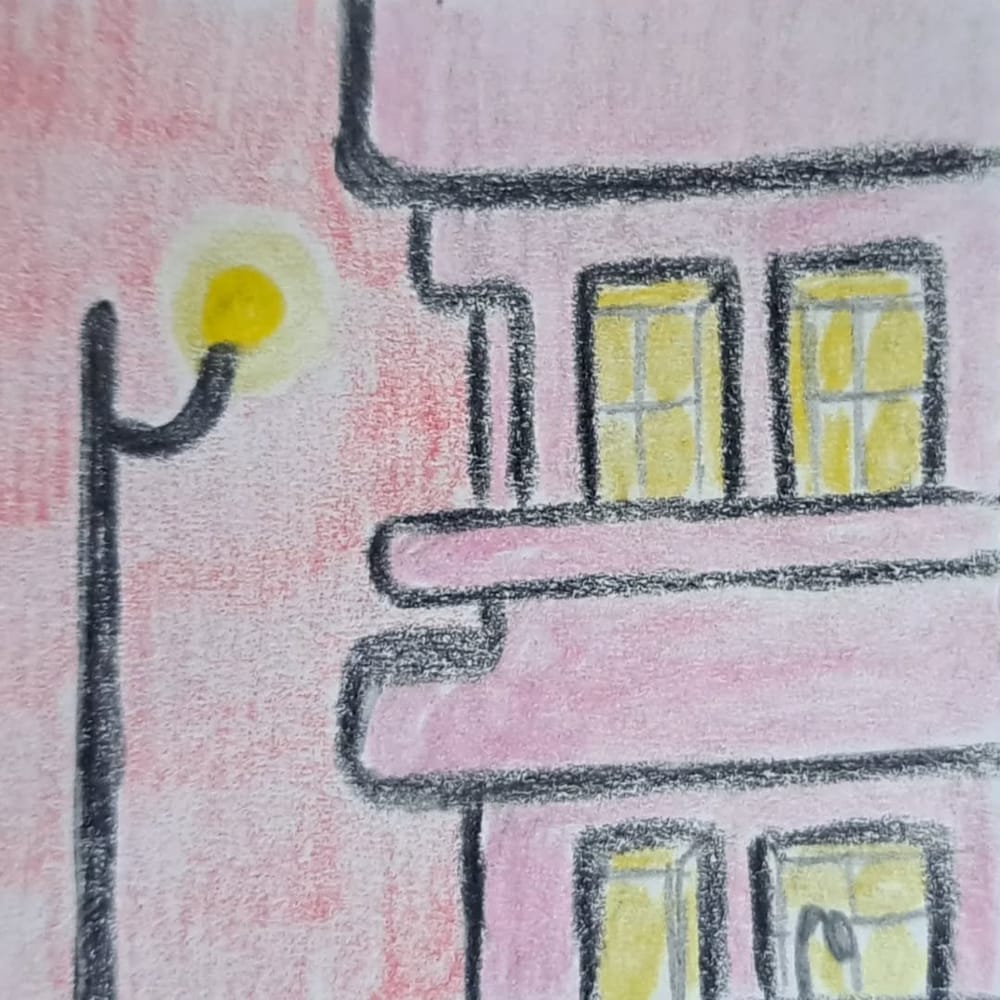
Ugly Art 3
Aetovahteia
1/08/2025
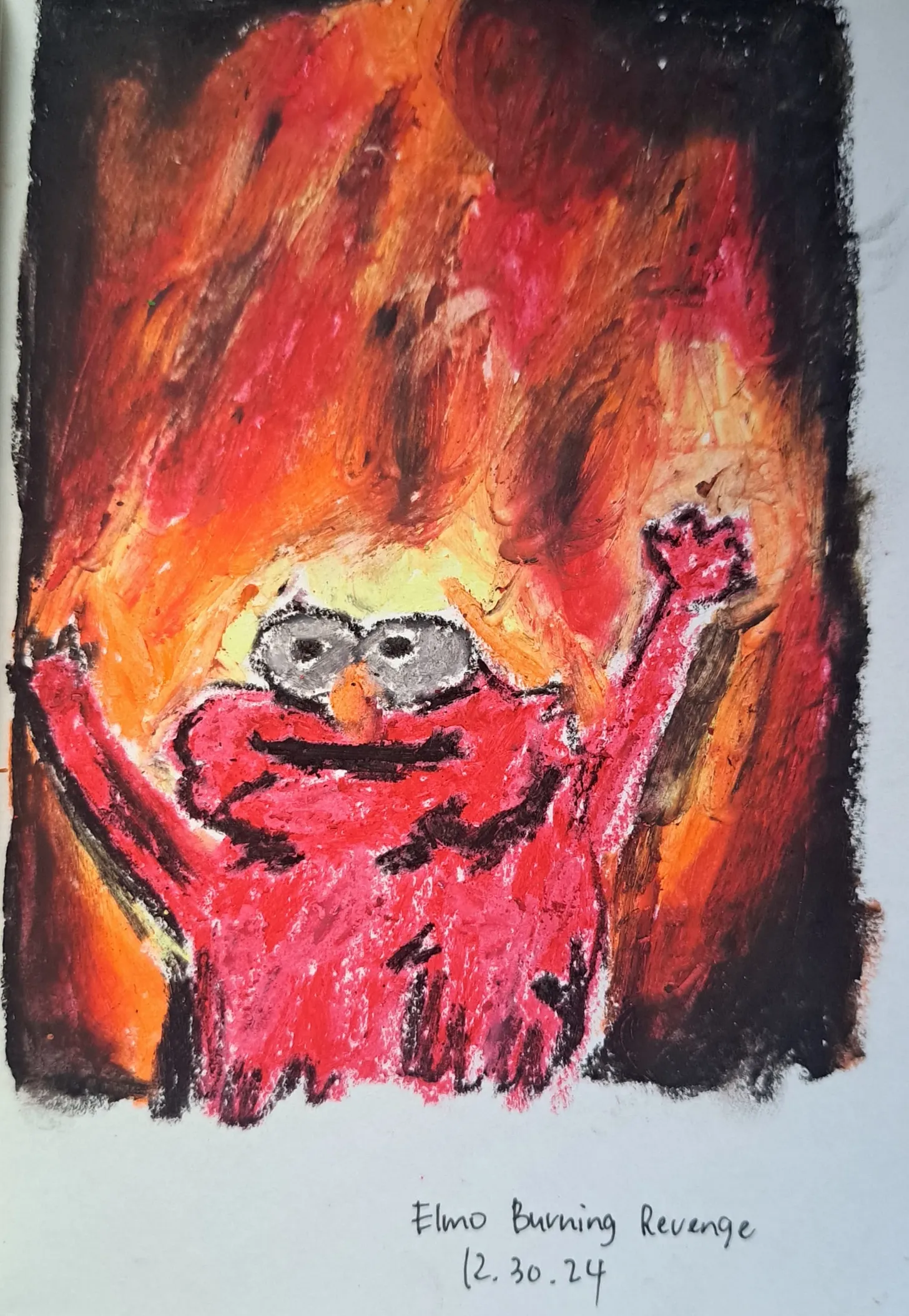

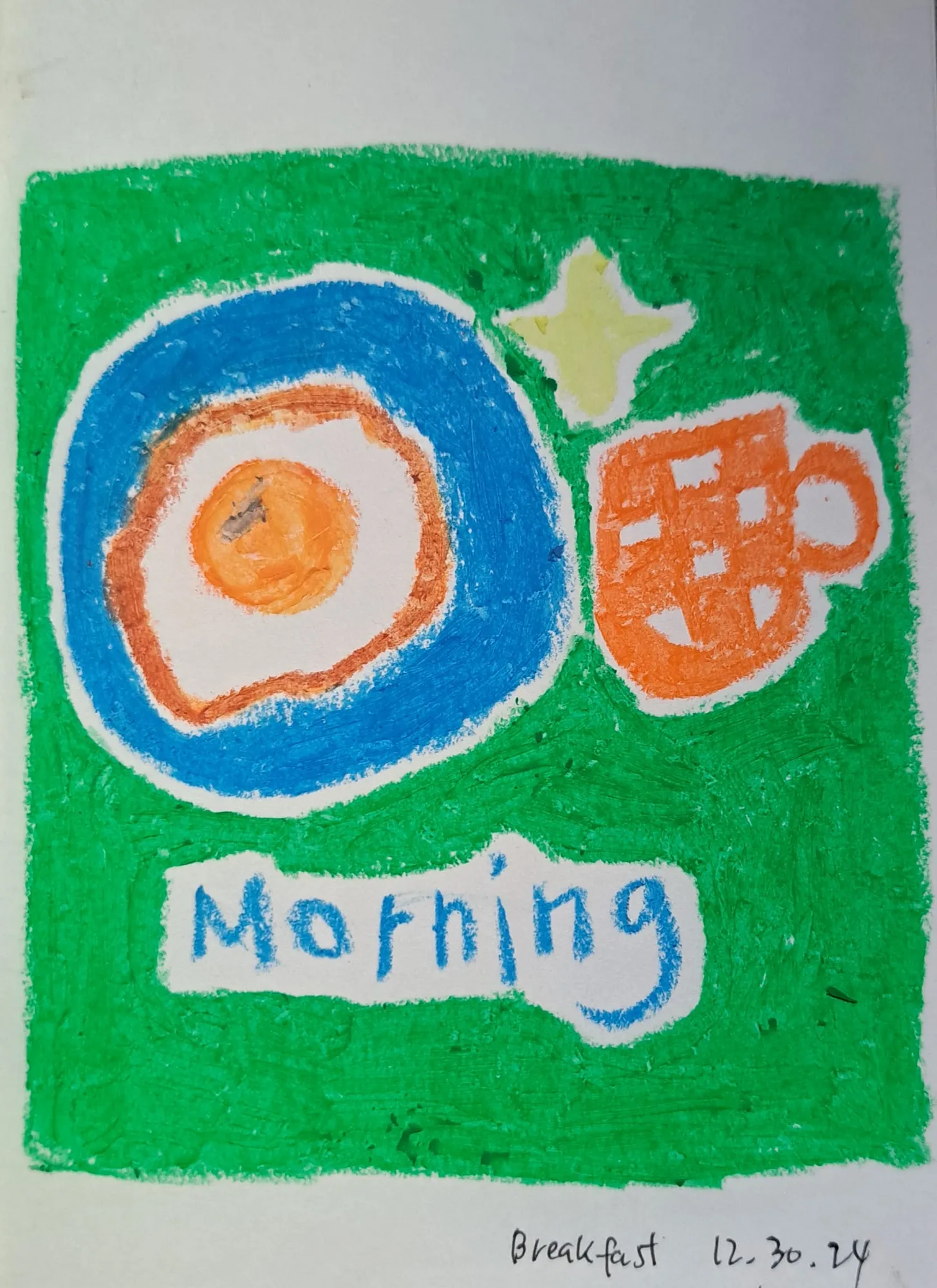
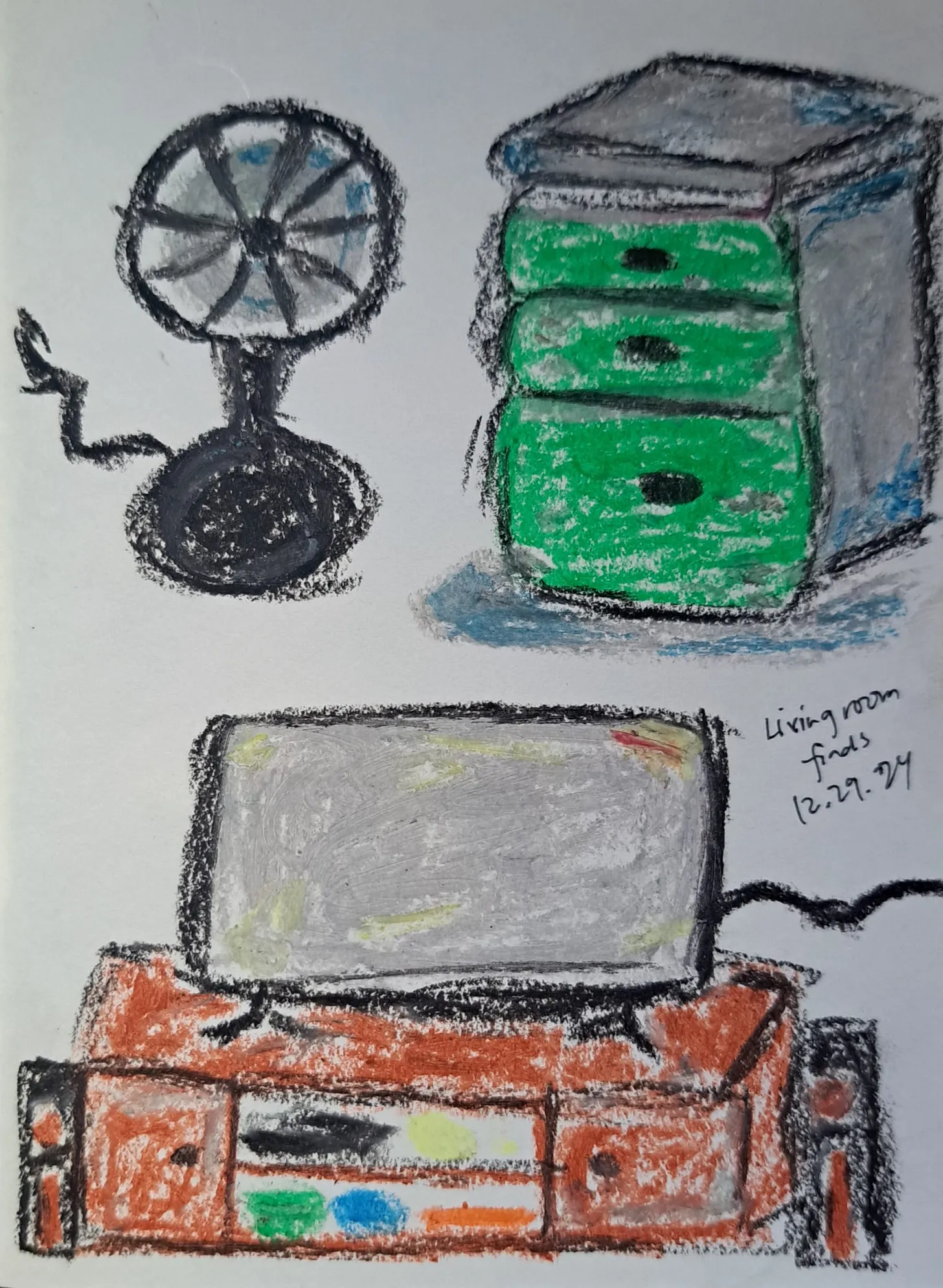



I can’t quite recall which dream came first, but I know I wanted to be both a cashier and a halo-halo vendor even before I fully understood the concept of a "dream." Like many young girls, I dreamed of having my own toy cash register at home. I remember begging my mom to persuade my godmother—who lived just a short walk away—to buy me one. Back then, it was just a simple play-money cash drawer, nothing like the sophisticated electronic cash registers you see online today with built-in calculators, checkout scanners, weight scales, and even microphones. That little toy was priced at about one hundred and fifty pesos, which felt like a small fortune given our financial situation. That’s why I had to plead with my mom to shamelessly ask my godmother to give it to me as a Christmas gift. To my delight, after two Christmases had passed, my godmother finally handed me the much-coveted cash drawer. She even joked that it would be her last gift, as I’d no longer be a child by the next Christmas.
As for wanting to become a halo-halo vendor, it wasn’t exactly a steady dream. It only came to mind every summer when a lady in our neighborhood became the talk of the town for her delicious halo-halo. She had a way of skillfully layering the ingredients in such an inviting, mouthwatering way, topping it all with a spoonful of ube halaya, a rectangular slice of leche flan, and a generous drizzle of evaporated milk. Watching her work her magic, I wanted to be just like her when I grew up. I imagined myself standing in her spot, wearing an oversized, earth-toned shirt fluttering in the humid summer breeze, with my hands expertly crafting desserts for a crowd of eager kids.
But those dreams were eventually replaced by another when a few of my grade school classmates complimented me on how neatly I had drawn a stick house on my pad paper. That little push was all it took for me to tell my mom I wanted to become an architect. I didn’t realize how naive I was to think that simply drawing a straight stick house qualified me to be an architect. Still, it was quite the leap from my earlier dreams, wasn’t it?
Then came second grade. I remember the same teacher who confidently—but perhaps mistakenly—taught us to pronounce "animals" as aniMOLS. Ironically, she was also the one who convinced me to change my dream to becoming a teacher. No, it wasn’t her pronunciation that inspired me, but a specific moment that stuck with me. One day, she was clearly unwell, coughing between sentences and looking utterly exhausted. Yet, there she was, tapping the blackboard with her stick and dictating words for us to write down. It was the third time in my young life that I found myself admiring someone’s sheer determination. Despite her obvious discomfort, she showed up to teach us. That moment struck a chord deep within me—a calling, perhaps. I wanted to be like her. I wanted to inspire another child, just as I was inspired, by showing how the drive to educate could push through even the physical discomfort of illness. From then on, I held a newfound respect for teachers and their craft. It became a driving force behind my dedication to my studies. I wanted to honor the knowledge and lessons they gave me by not letting them go to waste. For a time, I thought that would be my final dream: to become a teacher.
But then, the summer before fourth grade arrived. One day, I went downstairs to invite my friends—who were renting the room below our house—to play outside. To my surprise, when I peeked into their room, they were completely engrossed in their notebooks, writing furiously. They were so focused they didn’t even look up when I called to them. It wasn’t until I called a second time that one of them finally acknowledged me, only to say they couldn’t come out because they had to keep writing. I felt a little hurt at first, but since they were my only playmates that day, I decided to step into their room out of curiosity. I silently watched them write, their hands moving so fast across the pages that it seemed like the words were pouring out of nowhere. Unable to hold back my amazement, I thought out loud, “Where are those words even coming from?” One of them, without missing a beat, responded nonchalantly, “Imagination.”
Imagination?

It was the very first time I had heard that word. I let each syllable roll on my tongue, trying to link it to something familiar in my memory—anything that could help me define it without having to ask. But I couldn’t find anything. Finally, I asked them directly: what was imagination, and what did it have to do with what they were writing? Patiently, they explained. Imagination, they said, was the ideas they created in their minds—made-up scenarios and worlds—that they poured into words when writing stories.
At that moment, something clicked inside me. It was the exact same awe I had felt when I watched my teacher coughing at the blackboard, her chalk-dusted fingers unwavering in their duty. But this time, it was as if I was transported to another realm. When I mouthed the word imagination out loud for the first time, I felt as though I had stepped into a universe dotted with countless stars. I saw a unicorn with smooth, milky-pink skin and a single spiraling horn glinting in the light. I saw magic, superpowers, and endless possibilities. That moment was monumental—a catalyst for what would become my lifelong dream. I didn’t start writing immediately, but I became utterly fascinated by words. Literally, every word, everywhere. I began scanning textbooks—whether English or Math—and studied how words formed sentences, and how sentences turned into paragraphs. Even technical instructions in Math books caught my attention. I questioned everything: why were the words in literature so different from those in Math? How were they chosen to suit their purpose?
It was a transformative period for me. By fourth grade, I had written my first story—a Wattpad-like love story about high schoolers navigating friendships, heartbreaks, and the fear of stepping into college. I shared it with my classmates, and their praise was overwhelming. They encouraged me to write more, sparking a confidence I had never felt before. By the time I started high school, I already knew what I wanted to become:
I wanted to become a writer.
That was always my response whenever someone asked me about my dream. This question was a common one for high schoolers, who, in just four years, would have to choose a course aligned with their aspirations. Unlike my earlier dreams—which came and went quickly—this one stayed with me from the moment I discovered it, lasting well into high school. I was confident it wouldn’t change. It felt final, certain, like the one thing I was truly meant to pursue. So, I kept writing. After school, I spent hours imagining and crafting stories, doing little else. Looking back, I might have seemed like an addict—obsessed with writing and nothing else. I vividly remember gathering the blank pages from my old notebooks, sewing them together to create one thick book to house my stories. I even had a friend once ask how I managed to fill up those thick notebooks with words. Honestly, I had no clear answer. It just felt natural, like a stream that never stopped flowing. There were no dead ends, just an endless surge of ideas waiting to be written.
Time flew by unnoticed, and before I knew it, I was in my senior year of high school. One of the best memories I have from that time—perhaps the best—happened just before graduation. I ran into my English teacher as she was heading downstairs. She stopped me in my tracks, smiled, and asked about the latest essay I’d written. Then she told me it was great. I don’t quite remember how I reacted at that moment, but I’m sure I thanked her. As we parted ways, I struggled to contain my giddiness. Her words stayed with me, lighting a spark of pride and motivation within me. Not long after that, I had another encounter with her. This time, I approached her with a question that had been weighing on my mind: what course would be best for someone like me, dreaming of becoming a writer? Without hesitation, she suggested Journalism.
But my entrance exam score wasn’t high enough for me to pursue Journalism in college, so I ended up with my second choice: majoring in English. At the time, it felt like a mistake. It seemed like everyone in this course was in the same boat—people who hadn’t passed their first-choice programs. I resented it at first. It felt like a constant reminder of why I couldn’t study Journalism, and to make matters worse, I had no clue what this course was really about. At one point, I was so frustrated that I seriously considered dropping out and transferring to a more "practical" course. But then, something convinced me to stay.
And do you know what it was? Writing.
If I’m not mistaken, our first play was based on Greek mythology, though we drew inspiration from the movie Gods of Egypt. I don’t remember exactly what I wrote in the script, but I clearly remember how much I enjoyed the entire process—brainstorming, conceptualizing, writing, and distributing the final output to the production team. It’s always the act of writing that makes me feel seen. I felt that way every time we were preparing a play for our productions. It might sound cringy, but this was when I truly felt like I was living with a purpose. There’s something about having a purpose that makes you feel like a good person—and writing gives me that sense. It helps me find beauty in every little moment and honor it through words. Honestly, if it weren’t for the plays we wrote, I don’t think I would have enjoyed my college life as much.
Writing saved me.
I thought it would always be that way—saving me every time I fell. But after graduation, life happened. Life gutted me and flung me into a bottomless abyss. At that time, I almost accepted that I would be trapped there—in a dark, lonely pit of life where nothing could save me. Going to work as a first-time employee felt like dragging myself through each day. The moment I stepped outside our house, I felt like I was close to dying. It was as though a heavy cloud hovered above me, pouring rain and thunder, keeping me on the edge of tears, even while simply working at my computer. I always had that lump in my throat that kept my lips sealed because if I opened them, I might burst into tears—and I didn’t want to scare anyone at work. This went on for months—months of just surviving and merely existing. Then, one day in November, our operational manager hushed the office and asked for everyone's attention. She announced that for our year-end party, there would be another friendly competition for all the teams, just like in previous years. This time, however, it would be a short film contest. That meant we had to prepare a script—I had to write.
In that very moment, amidst all the excitement, I found myself rising from an unknown yet familiar depth. I realized, in that brief instant, that I had been in a much darker place, and the tension I felt was more intense as I struggled to reach the surface. I was lost in thought, yet I could hear my coworkers encouraging me to lead our team and write the script because they knew I used to write. I felt the rush of air filling my lungs as I nodded absent-mindedly to them. I could hear my heavy breathing echoing in my chest, syncing with the beat of my heart.
I let out a relieved sigh.
Finally, the relief of breathing freely again. Then, the depth of loneliness was replaced by the gentle pull of gravity, and everything from that point on began to feel brighter and clearer. The heavy cloud above my head dispersed, and was replaced by a spark of hope.
Regrettably, we didn’t win Best Picture, but I did win Best Director. Still, I was beyond blissful. The confidence I had lost after graduation finally found its way back to me. I broke down the walls I had built between myself and my coworkers and started joking around with them. It led me back to my old self—the one who could be good at something once she put her mind to it. From being ranked the lowest, I managed to work my way up. That short film contest helped me trust myself again, and it enabled me to perform at my best at work, eventually earning multiple star awards. Looking back, it produced fruitful outcomes when I was reminded of what gave my life meaning—the same dream that could save me.
Writing has saved me once again. And it always will.
I’m now writing whenever I can, even though I have to force myself sometimes. I still haven’t been able to pursue writing as a full-time profession because I have other priorities right now that can support me financially and help me achieve my other goals. Looking back, I regret putting writing aside while I was focused on my practical work, thinking I could pick it up later. But writing, like any skill, needs to be continuously cultivated. It may not be one of my top priorities at the moment, but that doesn’t mean I’ll let it stagnate, thinking it will magically return to the same state when I pick it up again. For me, writing is about simply writing—nothing fancy, no beating around the bush. I just need to write and keep doing it.
I’ve realized I shouldn’t loathe my current job just because I’m not able to pursue my dream right now. Instead, I can use it as a stepping stone to help me get closer to my goal.
It may not be my time yet. But if that time never comes, I’ll always have my own space to retreat to, open my laptop, and remember that writing will always welcome me back... just like right now, as I’m writing.

Later this year, I decided to challenge myself to live more slowly. The decision, which started as just an idea, came to me randomly after I watched a YouTube shorts from one of the few channels I’m subscribed to.
Honestly, before coming across the "live slowly" practice, I had tried similar approaches countless times in the past, and I failed every time. It was always easy at the start because the idea itself was motivating, but as time went on, my biggest enemy turned out to be consistency. Whenever I felt tired, I’d subconsciously and reflexively reach out for my phone, as if it had become an extension of me—a habit so deeply ingrained that it was far harder to break than I had anticipated. So, when I decided to try it again, I was worried I’d fall back into the same pattern and end up with the same disappointing outcome. And, to be honest, there were moments when I did. When that happened, I’d guilt-trip myself and feel like a huge disappointment. I would even go as far as hating myself for not staying consistent. However, during those tough moments, I realized I needed to stop being so hard on myself. Instead of seeing my slip-ups as failures, I started viewing them as reminders that I could pick up where I left off. I understood that to make the practice consistent, I had to turn it into a habit. But I also had to accept that I might be tempted or fall short along the way. Sure, I could be disappointed in myself or even frustrated, but I had to remember that giving in didn’t mean giving up. Missing a day didn’t mean I couldn’t try again tomorrow—and that’s what really mattered. That’s where I went wrong before: every time I failed, I’d let guilt consume me and decide to stop altogether. Looking back, I realize I only liked the idea of living slowly, but I wasn’t truly committed or disciplined enough to stick with it.
Now, I appreciate the process so much more. I’ve learned that I need to let go of the idea of perfection. I have to allow myself to fail but also to stand back up afterward. It’s okay to feel disappointed, as long as I bounce back. Slipping up shouldn’t be an excuse to stop permanently. Instead, I remind myself that there’s always another day to start over. I guess that’s the reason why I’ve been relatively successful since I started doing it. It took a lot of maturity to learn how to be gentle with myself. And gentleness, I’ve realized, is one of the essential ingredients for embracing a slower way of living.
Living slowly is actually subjective and doesn’t literally mean moving at a slow pace. It’s about finding your own rhythm and living life with focus and intention. This involves decluttering everything you no longer need and keeping only what adds value to your life, your time, and your well-being.
By doing so, you ease your perspective and quiet your racing thoughts. It gives you a clearer view of the bigger picture and helps you recognize the things that truly enhance your life.
(side note: you may check this playlist to know more about "slow living.")
As the year comes to a close, I’ve reflected on four important "D's" I’ve learned in 2024, particularly after embracing slow living. Here they are:
All this time, I thought the idea I had about "decluttering" was accurate, until I learned it was only partially correct when I binge-watched her videos on the subject. I used to think that the act of literally throwing your old stuff away—without much thought—was already decluttering. I remember seeing the term online, perhaps in an acquaintance's IG story, where it was mentioned. Although I believed I looked up its meaning, I didn’t fully understand it at the time, as I was only fascinated by the definition I found on Google. The word itself sounded endearing, and I didn’t put much effort into understanding it beyond its literal sense.
So, when I watched her videos, I learned that "decluttering" isn't just about "throwing things away," but rather a therapeutic process. It's about stepping back a little to gain a broader perspective—like looking at your room from a distance. Then, you walk toward your closet, open each drawer, and reveal the piled-up clothes. You stare at them and decide, as you scan each item, whether you still need it. If you’re still using it, then you need it. If not, ask yourself: Is it wearable? Can it be donated? If yes, donate it. If not, maybe you can repurpose it—perhaps turn it into a rug or something useful. If it's beyond repair, that’s when you can throw it away.
Decluttering isn’t just about the physical action; it’s a thought process. It involves asking yourself what you can donate or dispose of. This assessment helps you measure the value of things in your life and whether they take up too much space—whether in your closet, your room, or your life in general. By letting go of some things, you create room for new things, or simply more breathing space, making your environment easier on the eyes.
As the creator said, "Decluttering is not just an act of minimizing, but a way to carefully edit our lives."
Last August, I did my first major decluttering. It took me about three days to finish everything—from sorting through house clothes, outgrown PJs and shorts, discarded shirts, outdated jeans, to other old items. In total, I donated five boxes and two bags to Caritas Manila, Inc., our chosen charity.
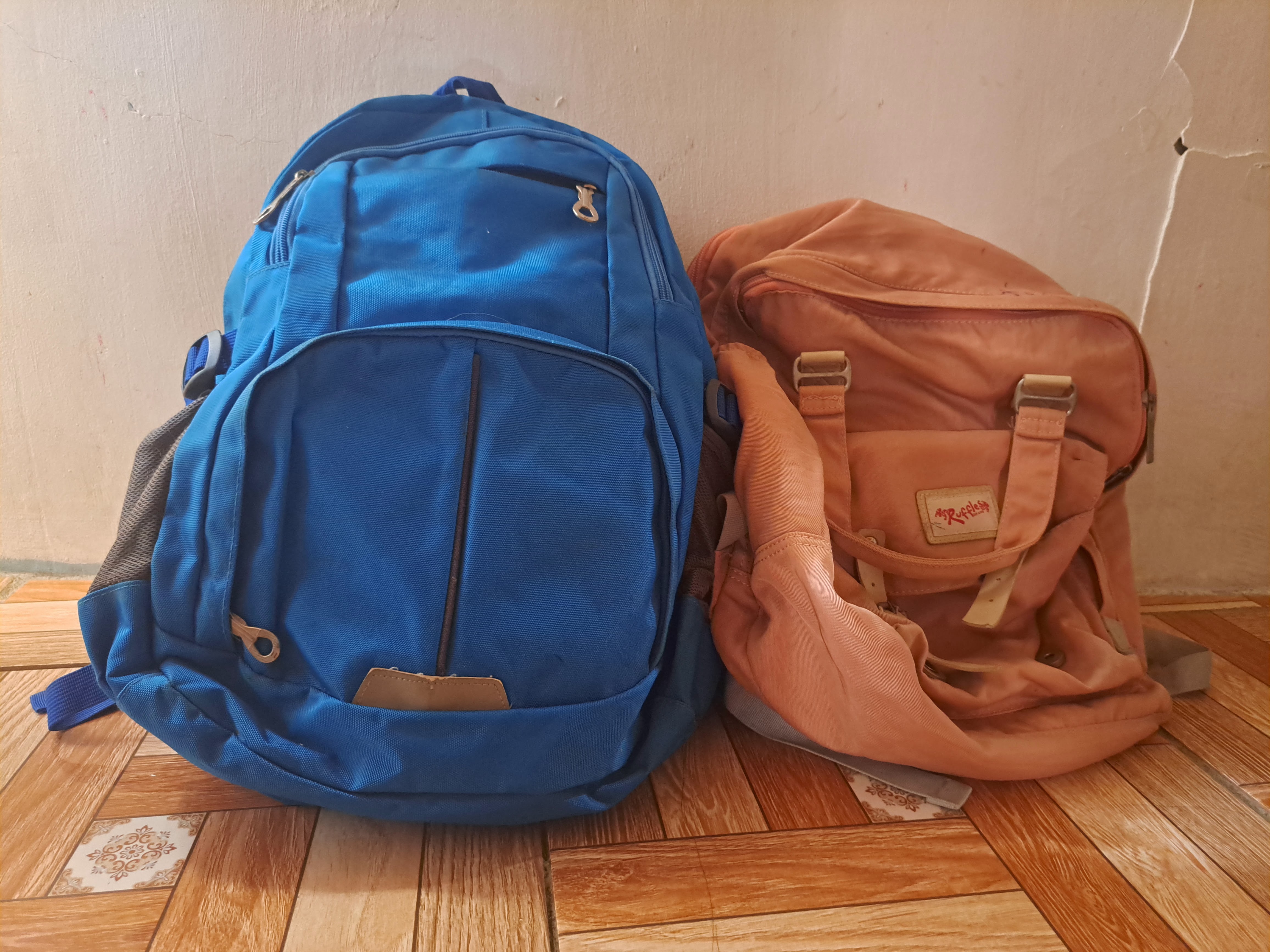

I wasn’t expecting it to feel this good to do these kinds of tasks. When I started decluttering my things, I felt physically exhausted, yet oddly fine with it because I was genuinely enjoying the process. At one point, I became so engrossed in sorting clothes, categorizing them, and folding them neatly into boxes that I didn’t realize I had been at it for more than three hours straight. My stomach was growling, and my body wanted to collapse onto the tiled floor, but I didn’t want to stop because my mind wasn’t as tired as my body. Seeing everything scattered on the floor, with boxes wide open and bags waiting lifelessly to be filled, I felt motivated to clear it all out. At the same time, I wasn’t in a rush—I was perfectly at ease with taking my time to go through the process.
It truly felt rewarding to do this every once in a while. The fact that I could enjoy it while also helping others made it a win-win for me. Now, I’m decluttering again. It’s not as much as before, but there are still items I feel would be better donated than left to sit in our closet, taking up space.
I’m looking forward to sending these items to the same charity. In our own small way, we’re able to extend a bit of help to those in need, and that thought alone brings me so much joy.
If you wish to donate as well, please find their contact details below for your reference, along with additional notes:
Address: 2002 Jesus Street, Pandacan, Manila
Contact Numbers:
Email: donatedgoods@caritasmanila.org.ph
Additionally, I made a separate donation of old books I had, which I dropped off last October (or possibly late September) at Ayala Triangle. You may check this link for more information.

2024 has honestly been so cruel to me. I went through a lot this year and found myself back in the same pit of loneliness. Everything came at me all at once, and I was on the brink of giving up again. This year, for the first time, I hated myself for how I looked. Whenever I caught a glimpse of myself in the mirror, all I could see were my blemishes, dark spots, acne marks, textured skin, dead eyes, crooked teeth, and lips that always seemed to refuse to smile at the world.
To uplift myself, I sought solace in hoarding cosmetic items to conceal my imperfections, which had never been insecurities before. I also started intermittent fasting in hopes of becoming skinnier, thinking those outfits I saw online would suit me better if I lost weight. However, I wasn’t happy doing it. It felt like torture—a punishment I imposed on myself. I skipped breakfast every day and limited the amount of rice I ate. While I did lose some weight, I looked sad... and old. The situation at home didn’t help either. Every day, I woke up and sighed, bracing myself for another day—unsure if it would be peaceful or filled with anger.
Of course, the situation didn’t drastically change when I started living more slowly. I still have the same messed-up family dynamics, plagued by old issues. I still dislike how I look, and I still sigh whenever the thought of living like this hits me hard. However, I realized that I had to climb out of this pit unless I wanted to be consumed by the darkness. It’s a scary place—no one wants to be there—but sometimes, you’re trapped there against your will. The way out isn’t going back to where you entered; you have to go through it to find the exit.
I’m not sure if I’ve found the exit yet, but I’ve tried to navigate the darkness until I glimpsed slivers of light. I was reminded of an essay I once wrote about allowing ourselves to feel emotions other than happiness. It doesn’t mean we should settle there and drown in them. Yes, there are other emotions, but we shouldn’t embrace them so deeply that we prefer them over happiness. So, despite the heaviness, I started dragging myself out almost every weekend to have fun—even if it was just by myself. I went to the cinema alone to watch movies. I visited parks to read and observe people. I started listening more to my body and realized that the best diet for me is having a healthy relationship with food. Ultimately, what helped me the most was finding ways to decompress.
Yes, 2024 has been cruel to me, but it has also been fruitful. Looking back, I see how much I’ve grown this year. I found myself in many uncomfortable, even cringy, situations because I decided to finally put myself out there. I became brave enough to live for myself, even though it was so incredibly hard. I learned to take bigger risks without dwelling on whether the outcome would bring big rewards or not. Essentially, I allowed myself this year to let loose—to free my thoughts and intentions, to prioritize myself, and to be kind, gentle, and more forgiving toward myself.
I mentioned earlier that my biggest challenge whenever I decide to start something is consistency. Honestly, I can declutter and donate, do a digital detox, and decompress whenever I want—but the real question is, can I sustain these habits without discipline?
I believe the reason I’ve been relatively successful in adopting slow living is my discipline, which stems from the goals and motivations that inspired me to start in the first place. This discipline has kept me grounded whenever I begin to veer away from the path I should ideally follow. To continue practicing the first three lessons I’ve learned, I need to place even greater emphasis on cultivating and reinforcing this discipline.
This is something I intend to carry with me into the coming year and beyond. My goal is not only to sustain it but to continue mastering it in the years ahead, ensuring it becomes an integral part of my lifestyle.